



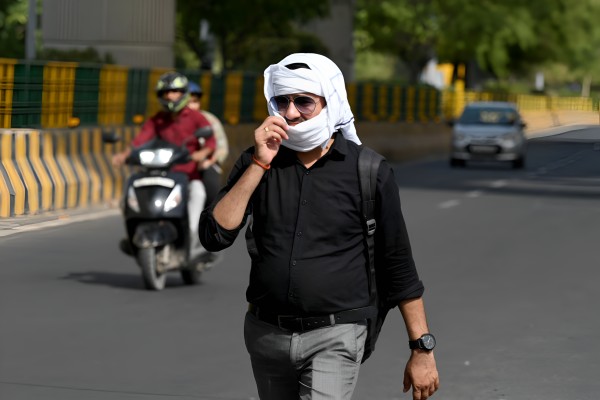

New Delhi: With temperatures in Delhi-NCR exceeding 40 degrees Celsius, authorities have sounded yellow alerts for heatwaves as air quality levels continue to decline. The overall effect of rising heat coupled with poor air quality is posing a threat to the health of residents.
The alert follows reports of temperatures exceeding 40 degrees Celsius, signalling the onset of intense summer conditions. Residents have been advised to avoid direct sun exposure during peak afternoon hours.
India Meteorological Department (IMD) issued a warning of heatwaves prevailing in some areas of Delhi-NCR over the next few days, with maximum temperatures predicted to be higher than average levels. Experts said the increase in temperatures is being influenced by dry westerly winds and clear skies.
According to the IMD, the maximum temperature during April 20 and 21 will be 41 degrees Celsius, while the minimum temperature will stay at 21 degrees Celsius. The skies will remain mostly clear, with no immediate weather disturbances. However, the situation is expected to deteriorate from April 22 onward.
On April 22, the temperature could rise to a high of 42 degrees Celsius with the minimum temperature rising slightly to 22 degrees Celsius.
The air quality index (AQI) of Delhi has fallen under the “poor” bracket, with rising particulate matter levels compounding the effects of the heatwave. This combination could potentially trigger respiratory and cardiovascular problems.
Moreover, there is an expected increase in humidity levels, which will reach 70 percent on April 24. This will be accompanied by a sultry atmosphere.
In Delhi, an AQI of 282 was recorded in Anand Vihar, 226 in Ashok Vihar, and 218 in Bawana, all falling under the ‘poor’ category. Meanwhile, Aya Nagar reported an AQI of 169, which remains in the ‘moderate’ range.
In Noida, AQI levels were also concerning, with Sector 1 recording 233, Sector 116 at 209, Sector 125 at 185, and Sector 62 at 182.
Poor atmospheric circulation and rising dust concentrations have exacerbated poor air quality. The outlook for the immediate future suggests that the problem will not dissipate unless there is a shift in wind patterns.
Authorities have appealed to citizens to maintain proper hydration, dress in light clothing, and take precaution against heat-related illnesses. Schools and work environments have been advised to take necessary precautions to safeguard individuals from potential harm during periods of extreme heat.
Given the anticipated continued rise in temperature and the deterioration of air quality, authorities will continue monitoring the situation and may release additional warnings if conditions worsen.
(DD News)