




Virendra Pandit
New Delhi: With his ongoing war against Ukraine bleeding Russia, its President Vladimir Putin is seeking new tax revenue to fund the conflict as budget deficit is ballooning by the hour, the media reported on Thursday.
This year, Moscow’s deficit hit the 5.8 trillion rubles (USD 72 billion) mark through August, almost 50 per cent higher than last year’s figure and above the already revised target of 4.8 trillion rubles.
With Russia’s invasion of Ukraine, which started in February 2022, intensifying the strain on state finances, Putin is reaching for cash to fund his government and the war, squeezing tax revenue from an economy that’s increasingly skewed toward the military, while civilian needs take a back seat.
The country’s 2027-2029 state budget, which will be taken up Thursday in the rubber-stamp parliament, is accompanied by a string of tax hikes announced after the September parliamentary elections.
While last year the Kremlin went for a broad tax increase, raising value-added taxes at the cash register and making more small businesses pay VAT, this cash grab hits a narrower segment: mining companies and better-off citizens with investment income, property sales and bank accounts.
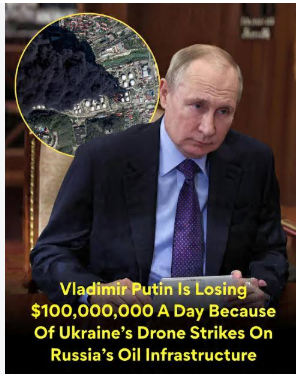
The budget deficit this year has swelled beyond forecasts due to lavish military spending and tepid economic growth amid Western sanctions, high interest rates for non-military companies, labour shortages and relentless Ukrainian strikes on oil refineries and export terminals.
The government proposes a 20 per cent-30 per cent windfall profits tax on mining companies that have benefited from prices rising since last year. That will hit companies producing iron ore, nickel and gold.
Another measure imposes higher rates of 13 per cent to 22 per cent on income from interest, dividends and proceeds from selling property. Such income is currently taxed at 13 per cent for amounts under 2.4 million rubles (USD 29,800) and 15 per cent above that.
Other proposals to take effect on January 1 include a 100-ruble per parcel charge and 22 per cent VAT on formerly tax-free foreign goods worth less than 200 euros that are bought online. There’s also a 35 per cent tax on dividends paid into restricted accounts for foreign investors from “unfriendly countries”.
Russia’s economic numbers don’t look that bad – on the surface. The government predicts growth this year of 0.6 per cent of GDP, not great but not a recession either. Unemployment is at a record low, and the government carries very little debt.
Earnings from oil exports have held up thanks to higher global prices caused by the war in Iran. The revised deficit for this year will come in around 3 per cent of GDP, according to Finance Minister Anton Siluanov.
That is more than the 1.6 per cent achieved last year, but smaller than in many other countries. For instance, the US booked 5.8 per cent of GDP last year. Russia is roughly equal to the EU average of 3.1 per cent.
But that isn’t the whole story. Due to sanctions that forbid banks and investors from dealing with Russia, the Kremlin can’t tap international bond markets. And Russia’s domestic financial resources have already been extensively drawn down.
One way is to borrow from Russian banks through bond sales. But that came under stress this summer when banks balked at the low interest rate. Sales resumed after the government offered better terms.
The government has already tapped the banking system by having banks fund the war with loans to defense companies, shifting the true costs of the war off the federal budget and onto the balance sheets of banks and state-controlled companies, according to the Kyiv School of Economics.
Another pot is the National Wealth Fund, a reserve built up from oil and gas export earnings. But the fund’s liquid assets available for spending, such as Chinese currency and gold, have dwindled to 1.7 per cent of GDP.