




Virendra Pandit
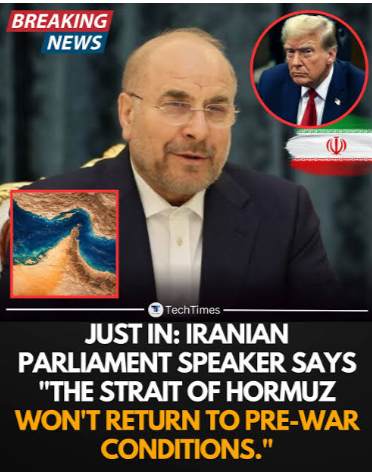
New Delhi: Iran’s Parliament Speaker and chief diplomatic negotiator with the USA, Mohammad Bagher Ghalibaf, has said that the Strait of Hormuz will “never return” to its pre-war status following the US-Israel war on Iran, asserting that Tehran and Oman have reached an understanding on overseeing the strategically important waterway, the media reported on Thursday.
In an interview with Al Jazeera on Wednesday, he said the understanding with Oman was part of Iran’s seven-point proposal to the US to end the eight-month-long ongoing conflict, which started after the US-Israeli strikes killed Iran’s former Supreme Leader Ali Khamenei, and many more, on February 28, 2026.
Ghalibaf signalled that the future arrangements governing the Strait of Hormuz would be different from those that existed before the war.
Rejecting the notion of unrestricted international access to the waterway, he argued that its regulations fell under the jurisdiction of the countries bordering it.
“There are no ‘free waters’ (international waters) there, and the 1982 rule (UN Convention on the Law of the Sea) does not apply to the strait … The regulations within the Strait of Hormuz are governed by the laws of the two littoral states that border it.”
On the prospects of diplomatic negotiations with Washington, Ghalibaf said Tehran had conveyed its response to the US through Qatar, which was acting as a mediator, and had laid out seven conditions for entering peace talks.
He said Iran was now awaiting an official response from the US, adding, “The ball is now in the American court.”
Outlining Tehran’s demands, he said they included lifting the US-imposed naval blockade and sanctions, releasing frozen Iranian funds, ending hostilities on all fronts and making an explicit announcement that the war had ended.
According to Ghalibaf, these demands were part of the 14-point Memorandum of Understanding signed in June, and their implementation was necessary before Iran could enter negotiations with the United States.
He indicated that Tehran remained open to an agreement if Washington adhered to the understandings already reached and avoided making additional demands.
“If America limits itself to what has been agreed upon without making excessive demands or engaging in behaviour that breeds distrust, then, naturally, reaching an agreement is possible,” he said.
However, Ghalibaf identified the lack of trust between the two countries as the principal obstacle to a diplomatic breakthrough.
“What stands in the way of an agreement is our lack of trust in the United States,” he said.
The chief Iranian negotiator also spoke about possible diplomatic efforts involving Russia, claiming that US officials had asked Russian President Vladimir Putin to facilitate direct negotiations with Tehran during their visit to Moscow.
Warning against any renewed American military action, Ghalibaf said US President Donald Trump would face another defeat if Washington launched fresh attacks against Iran.
He also pointed to potential political pressure on the US administration from the new Congress, which is scheduled to take office in January 2027.
Ghalibaf said Iran was determined to move beyond a prolonged situation of “no war and no peace,” stressing the need for a sustainable deterrent capability, including military capabilities.
His remarks come as Tehran links the resumption of negotiations with Washington to the fulfilment of its stated conditions, while also signalling that any post-war arrangement would involve a changed framework for managing the Strait of Hormuz.
The Iranian Parliament Speaker’s comments on the waterway underscore its central place in Tehran’s proposed post-war arrangements, with Iran maintaining that the strategic passage would not revert to the conditions that prevailed before the conflict.