




Virendra Pandit
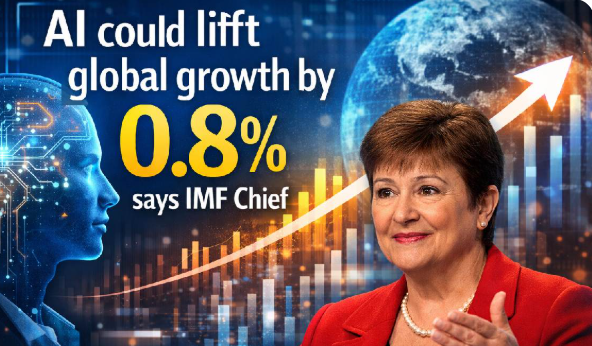
New Delhi: Raising concern about the unfolding situation globally, International Monetary Fund (IMF) Managing Director Kristalina Georgieva has urged the world governments to act urgently to address challenges from an unbalanced AI boom, a prolonged energy shock, and record debt piles.
Ahead of the annual IMF-World Bank meetings in Bangkok next week to host economy chiefs from around the planet, she said on Wednesday in prepared remarks in Singapore, that the rush to develop artificial intelligence is delivering a growth spurt that’s so far confined to a handful of countries.
Meanwhile, the squeeze on key commodity supplies due to the ongoing conflicts in the Middle East and Ukraine is set to continue into 2027, and soaring bond yields have left governments that amassed too much debt under mounting budget pressure, Georgieva said, calling advanced economies the “worst offenders” on the latter count, the media reported.
“The AI building boom is inflationary. The energy and food shocks are inflationary. Tariffs, defence spending, and high public debt can be inflationary,” she said, and called for a “prudently hawkish bias” on the part of central banks, adding countries that have gotten used to running large budget deficits are in for “some very tough political choices.”
The weeklong Bangkok gathering of top finance ministers and central bank governors takes place against a backdrop of turbulence in sovereign debt markets, as yields on US, European and Japanese bonds hit multi-decade highs. Total global debt has now surpassed USD 365 trillion, according to the Institute of International Finance.
“Policymakers had a relatively easy ride over the last 17 years as for all that time interest rates were stuck below GDP growth rates,” Georgieva said. “Higher interest rates now put an end to that.”
By contrast, the wave of AI investment — and expectations for the economic gains it will deliver — keeps propelling stocks to new highs, and has delivered record exports for Asia’s powerhouse producers of chips and other equipment.
The bond selloff got underway after the US and Israel attacked Iran in February 2026, choking off fuel supplies and raising costs worldwide.
Georgieva said the energy shock has been “large but contained” so far. But she warned that “price pressures may build further as demand rises with the approach of the Northern hemisphere cold season and as countries replenish reserves.”
The AI buildout is adding to energy demand, and it also risks widening economic inequalities, she said.
“Growth in AI-related trade reflects the investment boom in economies embedded in its value chain,” she said, but “it largely bypasses most others.”