




(Guru Prakash Paswan)
There is a simple question India must ask itself in 2026: if equality is a constitutional promise, why should the law governing the most intimate aspects of a citizen’s life depend upon the community into which that citizen is born?
I am reminded of a remarkable moment in the Constituent Assembly. When the proposal for a Uniform Civil Code was debated, the objection was raised that India was too vast and diverse for one civil code. Dr BR Ambedkar’s response was characteristically constitutional: India already possessed a common body of law covering almost every aspect of civil life — contracts, transfer of property, and much else besides. The one area where uniformity had not yet penetrated, he observed, was marriage and succession — what he called the “little corner” civil law had not yet entered.
But Ambedkar was also pragmatic. He understood that constitutional transformation requires social legitimacy and explained that the provision did not require the State to impose a code upon every citizen overnight. This was not a retreat from principle. It was Ambedkar’s characteristic combination of constitutional ambition and institutional prudence.
Article 44 is not an accident
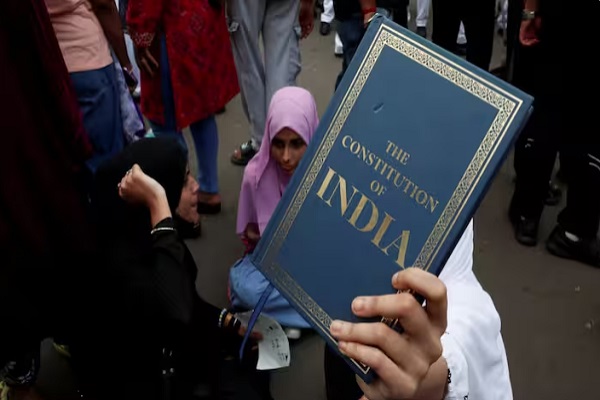
Article 44 of the Constitution states: “The State shall endeavour to secure for the citizens a uniform civil code throughout the territory of India.” These words were not inserted casually. They emerged from an extensive Constituent Assembly debate in November 1948 on Draft Article 35, later renumbered Article 44.
Ambedkar defended the provision. So did K.M. Munshi and Alladi Krishnaswami Ayyar. Women members of the Assembly, including Hansa Mehta and Rajkumari Amrit Kaur, saw personal-law reform through the prism of equal citizenship.
Munshi’s intervention deserves particular attention. He questioned the assumption that marriage, inheritance and succession necessarily belonged to the protected core of religion and pressed the Assembly to progressively separate religion from secular social relations. His question — what these matters truly have to do with religion — remains as sharp today as it was in 1948. His larger concern was that a secular democracy cannot permanently allow separate civil regimes to determine citizenship rights merely because citizens belong to different religious communities.
Supreme Court kept returning to Article 44
The judiciary, too, has repeatedly returned to this unfinished constitutional agenda. In Mohd. Ahmed Khan v. Shah Bano Begum (1985), the Constitution Bench expressed regret that Article 44 had remained a “dead letter”. In Sarla Mudgal v. Union of India (1995), Justice Kuldip Singh described Article 44 as an unequivocal constitutional mandate and a step towards national consolidation, criticising successive governments for failing to make meaningful progress. In Lily Thomas v. Union of India (2000), the Court clarified that these observations did not amount to a judicial direction compelling Parliament to act.
(Dr Guru Prakash Paswan is Assistant Professor at Patna University, National Spokesperson of BJP, and author of works on constitutional history and Dalit political thought. The views expressed are personal)