




Virendra Pandit
New Delhi: Days after the highly-publicised bonhomie between US President Donald Trump and his Chinese counterpart Xi Jinping, Taiwan has said although the issue of American arms sales to it remained unchanged but the USD 14 billion package remains on hold, the media reported on Tuesday.
Taiwanese Defence Minister Wellington Koo’s remarks come as concerns mount that President Donald Trump could halt arms sales to Taiwan. Analysts said they expect US arms sales to continue, though there may be a pause in the short term
Koo said on Tuesday that existing US arms sales to Taiwan remain unchanged, and that Taipei remains in talks with the US over individual deals. A record USD 14 billion arms package to the island nation, however, remains stalled.
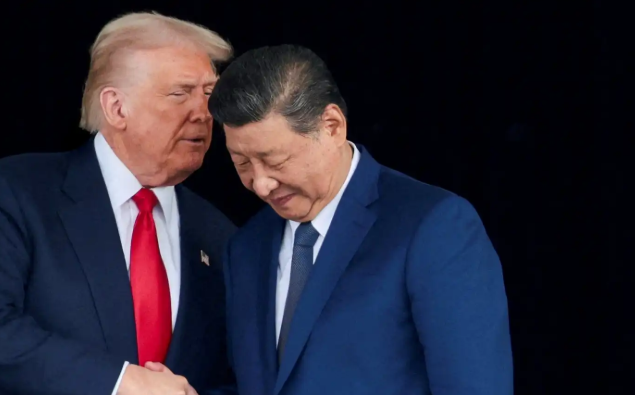
Beijing has pressed Washington to halt the arms sales, most prominently during a May summit in China between Trump and Xi Jinping. The US has since paused the USD 14 billion arms deal.
“As for arms sales, we are in continuous discussions with the Americans on this,” Koo told reporters in front of the Legislative Yuan in Taipei. “We haven’t received any notice of any changes to sales or our cooperation.” he said, adding he received assurances from the US side that its policy towards the island remained unchanged.
Koo also said that 66 advanced F16-V fighter jets have reached a production stage where they’re ready to be delivered. The jets for Taiwan were supposed to be delivered in 2024, according to local media, but the project has been delayed by the COVID-19 pandemic and production line issues.
China’s claims
The US arms sales to Taiwan are a major source of tension between Beijing and Washington because China claims the island as its own territory. While the US does not formally recognise Taiwan as a country, it is the island’s largest informal ally and bound by law to ensure that Taiwan can defend itself.
Taiwan says it purchases arms so that it can defend itself in case of an invasion by China. China’s People’s Liberation Army sends fighter jets and ships toward the island almost daily.
Xi Jinping pressed Trump to outright “oppose” Taiwan independence, marking his first public call for the US President to change Washington’s decades-old stance on the self-ruled island.
During their inaugural White House summit on Thursday last week, Xi urged the US leader to “adhere to the correct position of opposing Taiwan independence,” according to the official Xinhua News Agency. That wording is stronger than the Biden administration’s previous statement that US officials “do not support” the island seeking formal independence.
Since coming to power in 2012, Xi has made bringing Taiwan under China’s control a key goal and vowed to achieve it someday, by force if necessary. As he heads toward an expected fourth term in office, he’s ramping up diplomatic pressure to isolate the democratic chip hub of Taiwan and block future weapons sales from Washington.
Trump has already delayed a planned USD 14 billion arms package for Taiwan for months. After his last meeting with Xi in Beijing, Trump described that deal as “a very good negotiating chip” for the US — remarks that rattled Taipei. Any change in wording would fan concerns that Washington’s position on the democracy of 23 million people is becoming a bargaining chip in US-China ties.
Taiwan
Xi has rarely made such an explicit call to an American leader. The last time came in November 2024, when he told outgoing President Joe Biden if the US wanted peace it should “oppose Taiwan independence,” during their final face-to-face.
Chinese state media released Xi’s remarks on Taiwan hours before its full readout on Thursday, throwing a spotlight on Beijing’s top red line issue. That followed a similar pattern to the last Trump-Xi summit in May, when China warned mishandling the Taiwan issue could lead to “clashes” between the superpowers in a statement issued while talks were ongoing.
Xi entered his first state visit to America in 11 years emboldened after last year exposing US reliance on China’s rare earths, a move that enabled Beijing to push back against Trump’s triple-digit tariffs. Those minerals are critical for making everything from missiles to mobile phones and have been key in keeping a lid on further US export controls.
Trump gave Xi an unprecedented welcome, becoming the first US president to greet a Chinese counterpart on the tarmac.
In a boon to Beijing, Trump’s comments on Taiwan marked a departure from Biden, who claimed he’d defend the island from any invasion by China. The Republican leader has urged officials in Taipei to step up their ability to defend themselves.
Handling the Taiwan question with prudence will “lay a solid foundation for strategic cooperation between China and the US,” Xi said on Thursday.