Roving Periscope: Targeting China, Trump ropes in SE Asia with trade, minerals deals
Virendra Pandit
New Delhi: Aiming at China, US President Donald Trump on Sunday signed a series of deals on trade and critical minerals with four members of the Association of South East Asian Nations (ASEAN), maintaining a tariff rate of 19 percent on goods exports from them to America, with the levy to be reduced to zero for some items, the media reported on Monday.
During his visit to the ongoing 47th ASEAN Summit in Kuala Lumpur, Malaysia, he signed a flurry of deals on trade and critical minerals with Southeast Asian partners on Sunday, looking to address trade imbalances and diversify supply chains amid tighter export curbs on rare earths by China.
He signed reciprocal trade deals with his Malaysian and Cambodian counterparts, as well as a framework trade pact with Thailand that will see the countries work to address tariff and non-tariff barriers.
The US would maintain a tariff rate of 19 percent on exports from all three countries under the deals, with the levy to be reduced to zero for some goods, according to joint statements released by the White House.
Washington also announced a similar framework deal with Vietnam, which has been levied with a tariff rate of 20 percent on its exports to the US, the reports said.
Vietnam, which recorded a trade surplus of USD 123 billion with the United States last year, has pledged to vastly boost its purchases of US products to reduce the trade gap between the two countries.
Trump on Sunday inked two separate US deals with Thailand and Malaysia seeking cooperation to diversify critical minerals supply chains, amid competing efforts from Beijing in the rapidly growing sector.
Beijing was already in talks with Kuala Lumpur on rare earths processing, with Malaysian sovereign wealth fund Khazanah Nasional expected to partner with a Chinese firm to build a refinery in Malaysia.
China, the world’s top miner and processor of rare earths, has imposed increasingly stringent export controls on its refining technology, sending global manufacturers scrambling to secure alternative supplies for critical minerals used widely in semiconductor chips, electric vehicles and military equipment.
Malaysia agreed on Sunday to refrain from banning or imposing quotas on exports to the US of critical minerals or rare earth elements, the countries said in a statement.
The statement, however, did not specify whether Malaysia’s pledge applied to raw or processed rare earths.
Malaysia, which has an estimated 16.1 million tonnes of rare earth deposits, has banned the export of raw rare earths to prevent the loss of resources as it looks to develop its downstream sector.
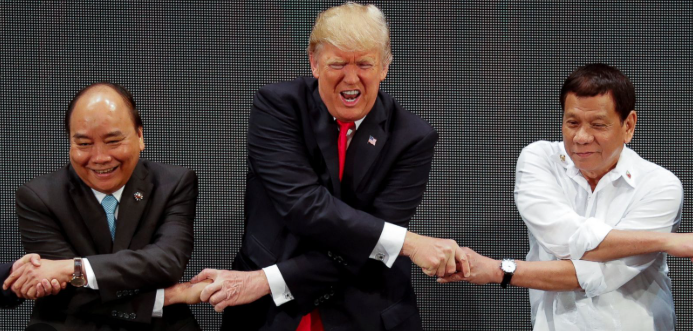
The agreements were inked after Trump oversaw the signing of an enhanced ceasefire agreement between Thailand and Cambodia, following deadly border clashes between the neighbours in recent weeks.
Under the deals, the four Southeast Asian countries pledged to remove trade barriers and provide preferential market access to various US goods.
The deals also include commitments in digital trade, services and investments as well as promises by the Southeast Asian countries to protect labour rights and strengthen environmental protections.
Thailand, Malaysia and Vietnam also agreed to accept vehicles built to US motor vehicle safety and emissions standards, according to the statements.
Malaysia, a majority Muslim country recognised as a global leader in halal certification, agreed to streamline requirements for US products including cosmetics and pharmaceuticals.
Malaysian Trade Minister Tengku Zafrul Aziz told reporters that his country had also secured tariff exemptions for aerospace equipment and pharmaceutical products as well as commodities such as palm oil, cacao and rubber.
Thailand said it would eliminate tariff barriers on approximately 99 percent of goods, and relax foreign ownership restrictions for US investment in its telecommunications sector, both countries said in a statement.
They also took note of several forthcoming commercial deals between Thai and US companies, including the purchases of agriculture products such as feed corn and soybean meal worth an estimated USD 2.6 billion annually.
Thailand has also committed to purchases of 80 US aircraft totalling USD 18.8 billion and energy goods including liquefied natural gas (LNG) and crude oil of around USD 5.4 billion annually, the statement said.