




Virendra Pandit
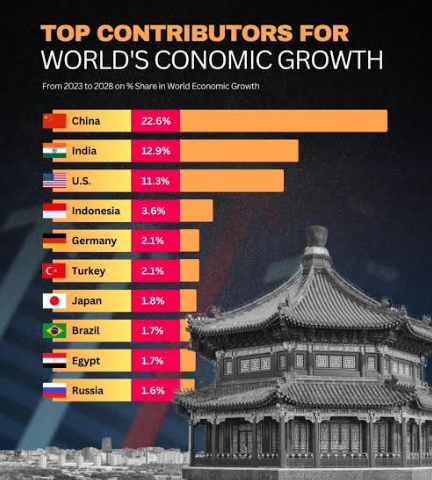
New Delhi: Asia is projected to contribute 59 per cent of global economic growth in 2026, while India’s GDP is expected to expand by 7.3 per cent, according to a report by the United Nations Conference on Trade and Development (UNCTAD).
In its “Trade and Development Report 2026: The Geoeconomics of Development,” released on October 9, the UN body projected global economic growth at 2.6 per cent in 2026, down from 2.9 per cent in 2025, as the global economy slows amid geopolitical tensions, energy shocks and widening development gaps.
Developing economies are expected to grow by 4 per cent, compared with 4.7 per cent last year, the media reported on Monday.
However, trade in goods and services is projected to expand by around 4 per cent at constant prices in 2026. Global trade reached a record USD 35 trillion in 2025, while higher trade values this year have been driven by price increases amid the energy shock, the report said.
Asia to lead
According to the report, India is among the region’s major growth drivers, as its economy is projected to expand by 7.3 per cent in 2026. China is expected to grow by 4.5 per cent and Indonesia by 5.2 per cent.
Other high-growth economies in the region include Kyrgyzstan, projected to expand by 8.8 per cent, Uzbekistan by 7.9 per cent, Vietnam by 7.8 per cent, Mongolia by 7 per cent and Tajikistan by 6.6 per cent.
However, the UNCTAD warned that the path to economic convergence with advanced economies is narrowing. While some developing Asian economies continue to close the income gap with advanced countries, convergence has stalled across much of the developing world since the mid-2010s.
The report also highlighted the growing importance of East Asia in semiconductor and advanced computing manufacturing. Artificial intelligence (AI)-related products have emerged as the main driver of merchandise trade, although the gains remain concentrated.
In a case study of an advanced AI server rack, UNCTAD found that post-tax profits accounted for 68 per cent of the value added traced through the supply chain, while workers received less than 15 per cent. The findings suggest that expanding AI-related trade does not automatically translate into broad-based development gains.
Geopolitical tensions
Trade patterns are shifting as governments increasingly use industrial, trade, financial and technology policies to pursue economic and national security objectives, the report highlighted.
Since 2024, trade between China and the United States has declined by more than 20 per cent, while East Asia has expanded trade with both China and North America. Export controls, investment screening and supply-chain conditions are also making it harder for new entrants to access strategic sectors, the report stated.
Developed economies continue to capture a larger share of investment in high-value sectors, including semiconductors, energy-transition technologies and AI infrastructure. They account for around 70 per cent of the value of announced greenfield projects in strategic sectors between 2020 and 2025.
These economies lead in attracting investment in critical minerals and strategic materials, accounting for 60 per cent of new foreign direct investment in this category.
Energy shocks
The global economic outlook is also being weighed down by higher energy costs and financial instability. The conflict in West Asia pushed Brent crude prices from around USD 70 per barrel to more than USD 110 in the weeks after its outbreak, putting additional pressure on energy import-dependent developing economies and poorer households, the report highlighted.
Higher energy costs have compounded rising borrowing costs and capital-flow volatility, which has doubled since the conflict began, the UNCTAD said, while also flagging financial stability risks from the AI boom, as markets become increasingly exposed to a small number of companies.
Official development assistance, a key source of financing for least developed countries and small island developing states, is projected to decline by almost 7 per cent in 2026, marking its third consecutive annual fall.