



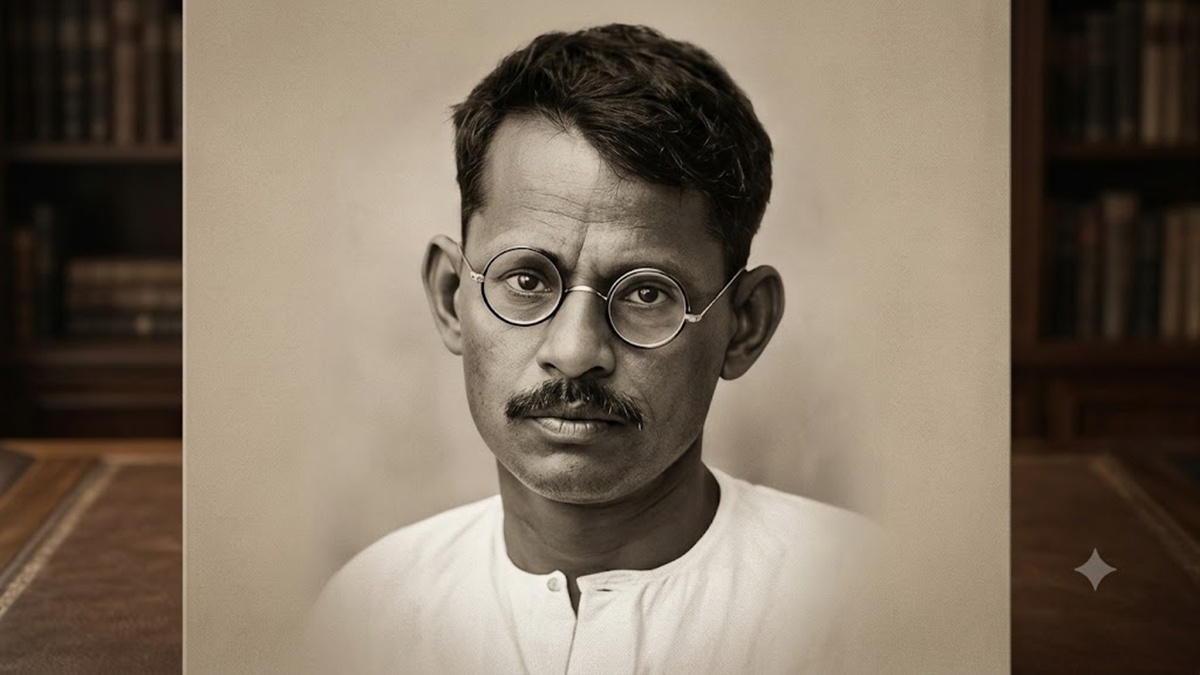

Kanpur, Uttar Pradesh [India]: The history of the Indian freedom struggle is not only the saga of the heroes who took up arms against the British rule, but also the story of those who used their pen as a medium of struggle against injustice. Ganesh Shankar Vidyarthi’s life is an inspiring example of fearless journalism, patriotism and humanity. He was a journalist, freedom fighter and philanthropist. He made his pen a powerful medium to awaken public interest and national consciousness. In his journalism, the problems of the poor, peasants, labourers and marginalized sections found prominent place. He wrote boldly against the policies of the British rule, social injustice and economic exploitation. For him, freedom meant not only freedom from foreign rule, but also a society where everyone enjoys dignity, justice and equal opportunities. There was a wonderful harmony of thought and action in his life. He spread the message of humanity and brotherhood through his writings and laid down his life protecting the people during the communal violence in Kanpur on March 25, 1931. Their sacrifice continues to inspire fearless journalism, social harmony and human compassion.
Birth, family and early life
Ganesh Shankar Vidyarthi was born on October 26, 1890 in the then Allahabad, present-day Prayagraj, Uttar Pradesh. His father Jainarayan was a teacher. Due to his job, the family also had a connection with the Gwalior area. Vidyarthi ji’s childhood was spent in ordinary economic circumstances, due to which he had to face many difficulties in education and life. After elementary education he tried to get higher education, but could not complete it due to economic and family circumstances. Despite this, his interest in reading and writing remained. He acquired knowledge of subjects related to literature, history, politics and society through self-study, which played an important role in his intellectual development. Early in life he worked as a teacher and clerk. These experiences gave him the opportunity to understand the problems and struggles of ordinary people closely. He was concerned about social inequality and the conditions of the country. His life suggests that talent does not depend solely on formal education or degrees; Continuous study, perseverance to learn, and social sensitivity also play an important role in the development of a person.
Entry into journalism and ideological development
Ganesh Shankar Vidyarthi’s interest gradually started moving towards journalism. At that time India was under the British rule and the freedom movement was gaining momentum. Newspapers were becoming a major medium for spreading political awareness and criticizing British policies. Vidyarthi ji had the opportunity to work with the famous Hindi litterateur and editor Acharya Mahavir Prasad Dwivedi. He worked in the literary magazine ‘Saraswati’ and later joined ‘Abhyudaya’. In these institutions, he gained experience in language, writing, editing, and effectively presenting ideas, which sharpened his writing abilities and developed a journalistic approach. He believed that journalism is not limited to detailing events but is also a medium to highlight the causes of social injustice and inequality. He considered a journalist to understand the problems of the people and to fulfill social responsibility fearlessly. It was this ideology that linked his writings to public interest and social responsibility.
Publication of ‘Pratap’: A New Chapter in Public Interest Journalism
The turning point in Ganesh Shankar Vidyarthi’s life came on November 9, 1913, when he started the publication of the Hindi weekly newspaper ‘Pratap’ from Kanpur. Lack of economic resources, pressure from British rule and fear of government action were major challenges for journalism at that time. Despite this, the students remained firm on their principles. The purpose of ‘Pratap’ was not only to give political news, but also to bring to the fore the problems of farmers, labourers, poor and exploited. The letter spoke out boldly against the injustice, economic exploitation and social evils of the British authorities. It gave a platform to those whose voices did not reach the power and influential classes to have their say. Vidyarthi’s editorial style was clear, fearless and focused on public interest. They did not ignore important issues for fear of government displeasure. He believed that the first obligation of a journalist is to protect the truth and the interests of the public. In the year 1920, ‘Pratap’ became a daily newspaper and its influence increased. It became an important platform for the freedom movement, social awareness and raising public problems. The history of ‘Pratap’ shows that independent journalism requires along with talent as well as the courage to stick to principles in the face of economic hardships, government pressure and risks.
Vidyarthi ji becomes the voice of farmers and laborers
An important aspect of Ganesh Shankar Vidyarthi’s journalism was his commitment to the rights of farmers and labourers. They knew that a large part of the country’s population was dependent on agriculture and hard work, yet these classes had to face many difficulties. At that time, the pressure of taxation, economic exploitation and rural problems on the peasants was severe, while the workers in the industrial areas worked in difficult conditions and their problems were ignored. Vidyarthi ji raised these issues through ‘Pratap’ and raised his voice against injustice. He believed that national independence and social justice complemented each other. If the common man is not free from exploitation and humiliation, then the purpose of freedom is unfulfilled. He had to face the wrath of the British rule because he wrote in favor of the peasants and laborers. In the year 1921, he was arrested in connection with the articles published in ‘Pratap’. Despite jail and government pressure, they stuck to their views. His life is an inspiration to journalism that raises the voice of the underprivileged.
Active participation in the freedom movement
Ganesh Shankar Vidyarthi was not only the editor of the newspaper, but also an active activist of the freedom movement and one of the prominent leaders of the Indian National Congress. He tried to connect people with the national struggle by participating in the freedom movements. The Non-Cooperation Movement led by Mahatma Gandhi had a profound impact on his political career. He believed in strengthening the freedom movement through public participation. He played a key role in strengthening the Congress organisation in Kanpur and surrounding areas and making people aware of national objectives. Along with freedom, social equality and civil rights were also important in his political thinking. He wanted a system in which the problems of ordinary citizens were heard and justice was given to the weaker sections. He had to go to jail several times due to his opposition to British rule, but he maintained activism in public life. In 1927, he became a member of the Legislative Council of the United Provinces and in 1930 was appointed President of the Uttar Pradesh Provincial Congress Committee. For him, both journalism and politics were aimed at public service, protecting the rights of the people and liberating the country.
Contributions to literature, writing and translation
Ganesh Shankar Vidyarthi’s personality was not limited to journalism and politics. He had a deep love for literature and considered writing as a medium of social awareness. His language was clear and connected with public concerns. His best-known works include ‘Glimpses of Jail Life’, which depicts prison experiences and contemporary conditions. He also translated French author Victor Hugo’s novel ‘Ninety-Three’ into Hindi, reflecting his interest in literary studies and diverse ideologies. Vidyarthi ji was in favor of such a language, which the common reader could easily understand and connect with his life. Along with national consciousness, human sensitivity was also prominent in his writings. His journalism office was the center of deliberations of young writers and freedom fighters. Revolutionary youth like Bhagat Singh also had a connection with ‘Pratap’ and its editorial environment. Vidyarthi ji made Hindi journalism an effective medium of public awareness by connecting it with public problems, national ideas and social change.
The supreme sacrifice for communal harmony
The inspiring episode of Ganesh Shankar Vidyarthi’s life came to light in March 1931, when communal violence erupted in Kanpur and the lives of many innocent people were in danger. Vidyarthi ji tried to stop the violence, evacuate the people and establish peace. They did not discriminate on the basis of religion or community. For them, saving the life of a person in distress was paramount. For this purpose, they reached the violence-affected areas and started protecting the people. He died on March 25, 1931, during the same attempt, in the midst of a violent mob. At that time, he was about 40 years old. His death was a great loss to Indian journalism and the freedom movement. Vidyarthi ji supported brotherhood and humanity throughout his life and sacrificed his life while protecting these values. Their sacrifice shows that the common people suffer the most from communal hatred, while dialogue, empathy and mutual respect make the society stronger. He proved that the true social worker does not retreat in a crisis, but strives to save and connect people.
The Touchstone of Journalistic Values
To understand Ganesh Shankar Vidyarthi’s journalism, it is necessary to know the circumstances of the time. It was risky to publish independent opinion during the British rule. Newspapers were under government pressure and journalists had to face lawsuits and imprisonment for critical writing. Despite this, Vidyarthi ji gave priority to public interest and raised the problems of the public by keeping journalism free from the influence of power. For him, newspapers were a medium of accountability in public life. Today, digital media and social media have accelerated information dissemination, but the challenges of misinformation, incomplete facts and sensationalism have also increased. In such a situation, Vidyarthi ji’s legacy underlines the importance of fact-checking, responsible language and public interest. His boldness teaches that in journalism, the truth should come out on the basis of evidence. Fairness and honesty are what sustain the trust of readers.
Message of Social Harmony and National Unity
The life of Ganesh Shankar Vidyarthi is a source of inspiration for journalists as well as the entire society. He proved through his actions that the basis of national unity is mutual respect and trust. Differences are natural in a religious, linguistic and cultural diversity society, but they should not be allowed to lead to hatred and violence. His life teaches that it is against humanity to ask for someone’s identity before helping them in distress. Their sacrifice also serves as a reminder of the responsibility of citizens in maintaining peace. It is our social responsibility to avoid rumours, not to spread hate, and help those in need. Embracing their ideas means respecting others despite disagreements and resolving disputes through dialogue, so that society becomes more just and sensitive.
Relevance of Ganesh Shankar Vidyarthi in today’s time
The importance of Ganesh Shankar Vidyarthi’s life and contribution remains even today. Their pro-people journalism raises the question of whose voice is heard in the news and whose problems go unnoticed. His ideology on issues such as farmers’ livelihood, labour rights, social inequality and protection of citizens is relevant even today. His legacy shows that the responsibility towards society is not only that of those in high positions, but also of teachers, journalists, writers, social workers and ordinary citizens. The true tribute on his birth anniversary would be to live up to his ideals by adopting honesty in our actions, clarity of thought and sensitivity in our actions.
The power of the pen and the triumph of humanity
Ganesh Shankar Vidyarthi was a personality of Indian journalism and freedom struggle, whose life is an inspiring example of courage, public service and humanity. Through ‘Pratap’, he raised the voice of farmers, labourers and weaker sections, opposed the injustice of the British rule and played an active role in the freedom movement. He also made significant contributions in the field of literature and translation. His greatest characteristic was that he did not limit his thoughts to writing only. He sacrificed his life while trying to save people during the communal violence of Kanpur in March 1931. His sacrifice is an immortal example of humanity and social harmony. Even today, his ideals inspire honest journalism, social unity and civic responsibility. The true tribute to him would be that journalism remains committed to public interest and truth, that the voice of the weaker sections is heard and that humanity is placed above religion, caste and other identities.
[DD News]