



Manas Dasgupta
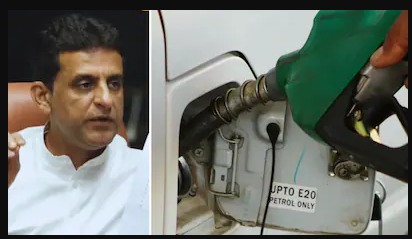
NEW DELHI, Nov 6: The Congress government in Karnataka has demanded the Centre to compensate the consumers in the state after finding that petrol sold by most of the major oil companies in Karnataka contained ethanol far above the prescribed limit of 20 per cent, in some cases as high as above 31 per cent.
Raising questions about the transparency in the controversial ethanol blend petrol being sold to the consumers across the country, which the Centre had earlier claimed in no case cross 20 per cent limit, the Karnataka Minister for Food, Civil Supplies and Consumer Affairs, Rizwan Arshad, said the BJP government at the Centre should penalise the oil companies for over-blending and compensate the consumers who claimed their vehicles had been damaged by the ethanol-mixed petrol.
Announcing the test results from accredited labs at a press conference in Bengaluru on Friday, Mr Arshad said his department had collected 63 petrol samples from across the state. The IOCL petrol recorded an ethanol blend of 31.2 per cent, while Hindustan Petroleum Corporation Limited (HPCL) recorded 30.5 per cent, he said. Samples from another government-owned firm, Bharat Petroleum Corporation Limited (BPCL), and private firms Nayara and Shell showed 26.5, 26.1, and 25.5 per cent, respectively. Bengaluru was among the districts where samples exceeded the 20 per cent limit.
Arshad said the samples were first sent to in-house labs of IOCL and BPCL, but the reports did not disclose ethanol content, even though it is one of the prescribed testing parameters. “This raises serious concerns about transparency,” he said. The department then had the same samples tested at laboratories recognised by the National Accreditation Board for Testing and Calibration Laboratories (NABL) and the International Organization for Standardization (ISO). “These reports have revealed higher ethanol blends,” Arshad said.
The samples in question were taken recently by the Department of Legal Metrology, under the Department of Food, Civil Supplies and Consumer Affairs, from Bengaluru Urban, Bengaluru Rural, Kolar, Chikkaballapura, Tumakuru, and Dakshina Kannada districts in Karnataka, Mr Arshad said.
Mr Arshad gave copies of six lab test reports from Shriram Research Institute, Bengaluru, a unit of Shriram Tilak Dhar Research Foundation. All six reports showed ethanol blend beyond the permissible 20%.
Mr Arshad questioned whether the vehicles on Indian roads could run on blends above E20. He said 99 per cent of India’s more than 35 crore vehicles were not built for blends above 20 per cent. “If we are only beginning to manufacture E20-compliant vehicles after 2023, what proportion of the total vehicle population does this represent? It is a very small fraction; only a tiny percentage of vehicles are E20-compliant. If the ethanol blend exceeds E20, even these E20-compliant vehicles will face problems,” he said.
Mr Arshad said 99% of India’s over 35 crore vehicles are not built for ethanol blend of more than 20%, and the risk was not just limited to old vehicles. “Vehicles sold after April 2023 have been certified only up to E20. With lower-ethanol blend petrol withdrawn from nearly one lakh fuel stations, the consumer has been left with no alternative,” he said.
Assuming a 10% mileage loss at ₹100/litre, he said the hidden loss to consumers would add up to around ₹62,000 crore, on the basis of India’s consumption of 6,200 crore litres of fuel every year. The Minister claimed that adding damage and repair costs due to higher blends, the loss would be around ₹1 lakh crore, but did not elaborate on how he arrived at this figure.
Mr Arshad demanded that the Union Government penalise OMCs for ‘over-blending’, even as the Karnataka government will continue to conduct these tests and release their findings. “Every fuel pump in the country should be mandated to display ethanol blend percentage, allowing consumers to choose between the range of blends available,” he said.
The Minister demanded that the Union Government establish an E20 spoilage fund and compensate every consumer whose vehicle has been damaged, through a time-bound claims process with damage certified by authorised service centres.
“Before all these steps are taken, the Union Government owes an explanation to the consumers who have suffered. The Union Government, OMCs, and vehicle manufacturers are making windfall profits at the cost of consumers,” he alleged.
“With lower-ethanol blend petrol withdrawn from nearly one lakh fuel stations, the consumer has been left with no alternative,” he added. Referring to the Automotive Research Association of India (ARAI), which certifies vehicles, engines and fuels, he said, “For the average vehicle, the fuel-system components such as rubber parts, hoses, gaskets, seals, and O-rings will all begin to deteriorate.”
The ethanol blending programme, led by the Centre, aims to reduce India’s dependence on imported crude oil, cut fuel import costs and promote domestically produced ethanol. The rollout of E20 petrol has raised concerns about vehicle compatibility, mileage and possible engine damage. Leader of the Opposition in the Lok Sabha, Rahul Gandhi has criticised the Union government over the issue.
The Centre has repeatedly rejected concerns over E20 petrol, and said ethanol produced from cane and maize boosts farmers’ incomes. Union Road Transport Minister Nitin Gadkari said last month too that the backlash was a “paid campaign.” Petroleum Minister Hardeep Singh Puri has called reports of vehicle problems a “misrepresentation.” The Prime Minister Narendra Modi has cited savings on crude imports as one of the success markers of the programme.