




Singapore: Asian stocks rebounded on Friday following heavy selling in the previous session when investors dumped tech shares as questions about cloud company CoreWeave’s debt pile fuelled worries about the financing driving the AI boom.
Bond markets stabilized after yields plunged on Thursday as traders bought up Treasuries and other safe-haven sovereign debt. The dollar limped towards its first weekly loss in five weeks as lower US yields eroded the currency’s appeal.
Gold eased back from Thursday’s high, while Brent crude drifted lower toward $105.
Japan’s tech-heavy Nikkei, opens new tab rose 1.8%, making back some of Thursday’s almost 5% tumble. South Korea’s KOSPI, opens new tab climbed 2.8%, following a nearly 8% plunge.
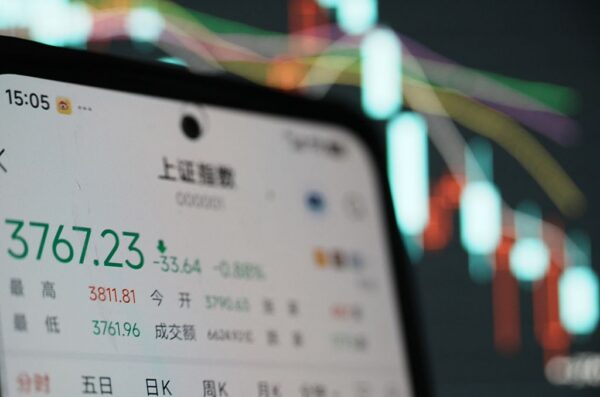
Taiwan’s stock benchmark, opens new tab rose 0.7% and Hong Kong’s Hang Seng, opens new tab added 1.1%. Mainland Chinese blue chips, opens new tab edged 0.3% higher.
Indonesia’s equity benchmark, opens new tab slumped 11% after MSCI said the country’s stock market is no longer worthy of “emerging market” status, and is preparing to cut it from a suite of products tracked by global investors, a major setback likely to send money fleeing. The rupiah weakened about 0.8% to 95.0550 per dollar . US stock futures were lower, with tech-focused Nasdaq futures off 0.3% and S&P 500 futures down 0.1%, after the respective cash indexes notched small gains on Thursday.
Shares of Nvidia-backed CoreWeave, opens new tab recovered some composure on Thursday after starting the session by extending Wednesday’s 15.5% slump amid reports that its bond yields had reached highs associated with distressed debt, triggering a broad, AI-centred equity selloff globally.
Analysts also pointed to the pressure on memory maker shares this week after China’s ChangXin Memory Technologies (CXMT) reported progress on a next-generation DRAM architecture that could intensify competition with established manufacturers.
“Global markets are getting very noisy once again after a period of low volatility: Wall Street is whipsawing, bond yields are swinging, currency markets are doing backflips, and commodity prices are running in multiple directions,” Kyle Rodda, a markets analyst at Capital.com, wrote in a client note.
“Global markets could potentially be in for a protracted period of this sort of volatility,” with tech company earnings announcements due in the coming weeks, and markets also attempting to discern the trajectory of US and other major economies’ interest rates, he said.
Federal Reserve Chair Kevin Warsh, along with a host of other global central bank officials, will speak at events at the IMF-World Bank Annual Meetings in Bangkok during the day.
However, “given his notorious reticence and outright disdain for anything that resembles ‘forward guidance’, market participants will be forced to work hard to infer any insight from Warsh,” Rodda said.
Most Japanese government bond yields rose, retracing about half of Thursday’s decline, as they took cues from a smaller bounce in Treasury yields on Thursday following the prior session’s plunge.
Lower US yields this week sapped demand for the dollar, with the dollar index languishing near 102 following a sharp pullback from Wednesday’s 1-1/2-year high near 103. The index is down 0.2% for the week.
That handed the euro some welcome respite, after it pulled itself up from as low as $1.1113 on Wednesday to sit at $1.1217 on Friday.
Sterling was steady at $1.3278 following a 0.6% jump on Thursday.
The dollar was little changed at around 158 yen .
Gold slipped 0.4% to $4,154.51, after climbing 1.6% on Thursday amid demand for safe havens.
Crude oil edged lower as investors weighed Middle East risks and possible US steps to ease restrictions on the world’s “shadow fleet” of tankers.
The Trump administration is considering lifting sanctions on some so-called shadow fleet vessels that have transported oil and petroleum products from countries including Russia, Iran and Venezuela, in an effort to reduce record-high global freight rates, a US official said on Wednesday.
Meanwhile, the escalating conflict between Saudi Arabia and Yemen’s Houthis and renewed attacks on ships in the region have supported prices.
Brent crude futures eased 0.4% to $105.51 a barrel, while US West Texas Intermediate crude futures were down 0.6% to $97.43.
[DD news]