




Virendra Pandit
New Delhi: Brent oil prices hovered above USD 100 per barrel on Friday while heading for their fourth week of gains, driven by concerns about disrupted energy flows in the Red Sea and fears of further escalation in the US-Israeli war on Iran to the Bab el-Mandeb, where Tehran-supported, Yemen-based Houthi militants targeted two Saudi commercial vessels this week.
The second phase of the US-Iran war is getting unglier by the day. On Friday, the media reported that France, Germany and other western allies of the US closed their embassies in Tehran, or are in the process of doing so, as the US prepared for a fierce assault on the Iranian capital. Other US allies in the Gulf region, which have been Iranian targets since February 28, when the US and Israel launched joint attacks on Iran, have been prodding Washington to ‘neutralize’ Tehran once and for all.
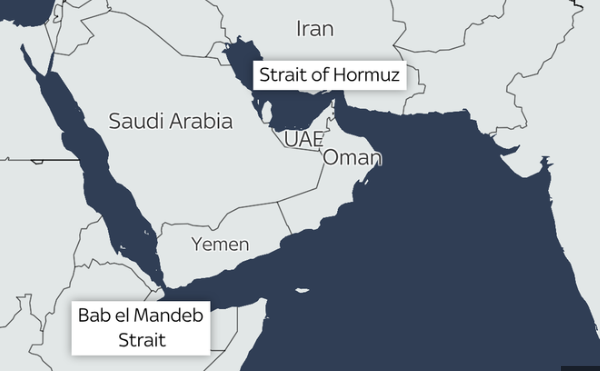
With the two key bottlenecks of oil trade–the Strait of Hormuz and the Bab el-Mandeb–becomig extremely vulnerable, the energy crisis is expected to deepen further globally.
Brent futures advanced 0.37 per cent to USD 101.06 a barrel, having settled up 7 per cent above USD 100 in the previous session for the first time since May 2026, after Iran-aligned Houthis said they struck two Saudi oil tankers in the Red Sea, the media reported on Friday.
The contract remained on course for a 14.6 per cent advance this week.
West Texas Intermediate (WTI) futures were little changed at USD 91.20 a barrel, their highest level since June 11 and on track for an 11.8 per cent weekly rise.
“The potential supply disruptions facing the market now are larger than at any time during the war,” ING analysts said in a note on Friday. “Not only have oil flows through the Strait of Hormuz essentially dried up, but there are clear risks to Saudi oil flows from the Red Sea.”
“Further escalation in the Gulf and fears of a widening conflict are putting a significant amount of oil supply at risk.”
The number of tankers crossing through the Strait of Hormuz fell to just one on Thursday, the lowest since May 7, according to ship-tracking data from Kpler, an analytics firm.
The Bab el-Mandeb shipping route controls access from the Red Sea to the Indian Ocean and is the second-most-important oil channel after the Strait of Hormuz.
US President Donald Trump vowed to “hold Iran responsible” for any further attacks.
The Houthis had declared on Monday that they were imposing a naval blockade on Saudi Arabia, which had been diverting its oil via pipeline to get around Iran’s closure of the key waterway it now “controls,” the Strait of Hormuz.
Iran had been pressing the Houthis to close the Bab el-Mandeb gateway to the Red Sea if the US continued to attack Iranian power infrastructure, after an interim truce between the two countries collapsed two weeks ago.
Also on Thursday, Kazakhstan’s energy ministry said oil companies temporarily cut back production after suspected Ukrainian drone attacks forced the country’s main Black Sea export terminal to close.
The Caspian Pipeline Consortium stopped receiving oil from Kazakhstan after suspending loadings because of attacks on tankers at the terminal. The route handles about 2 per cent of the world’s daily crude supply.
Kazakhstan’s energy ministry did not specify the scale of the production reductions, but reports said the country’s biggest field had cut output by more than half.