




Virendra Pandit
New Delhi: With no early end in sight for the raging war in West Asia, the oil-producing Gulf nations are looking for alternative routes to export their crude as the conventional waterway, the Strait of Hormuz, has turned hostage to the US blockade and the counter-blockade by Iran, the media reported on Thursday.
Some of these war-affected countries have also started rushing through new oil routes to divert their exports. As mounting tensions with and attacks from Iran expose the risks of the Strait of Hormuz, these Arab nations are investing in new pipelines and ports to secure oil exports and reduce dependence on the key waterway of Hormuz, from where the world’s 20 per cent of crude passed before the start of the ongoing conflict on February 28.
New oil pipelines are a significant part of Gulf countries’ fresh efforts to create alternative export routes and reduce dependence on the besieged Strait of Hormuz.
These countries are stepping up efforts by heavily investing in new pipelines and ports to transport oil through alternative routes after repeated Iranian attacks on commercial ships and disruptions highlighted the risks of relying on Hormuz, which has been among the world’s busiest energy chokepoints.
Amid the second phase of the ongoing war, which resumed last week,Iran also announced plans to impose tolls on commercial ships using the Strait of Hormuz and is reportedly demanding large ‘protection fees’ from some oil tankers for safe passage.
The Fujairah pipeline, port
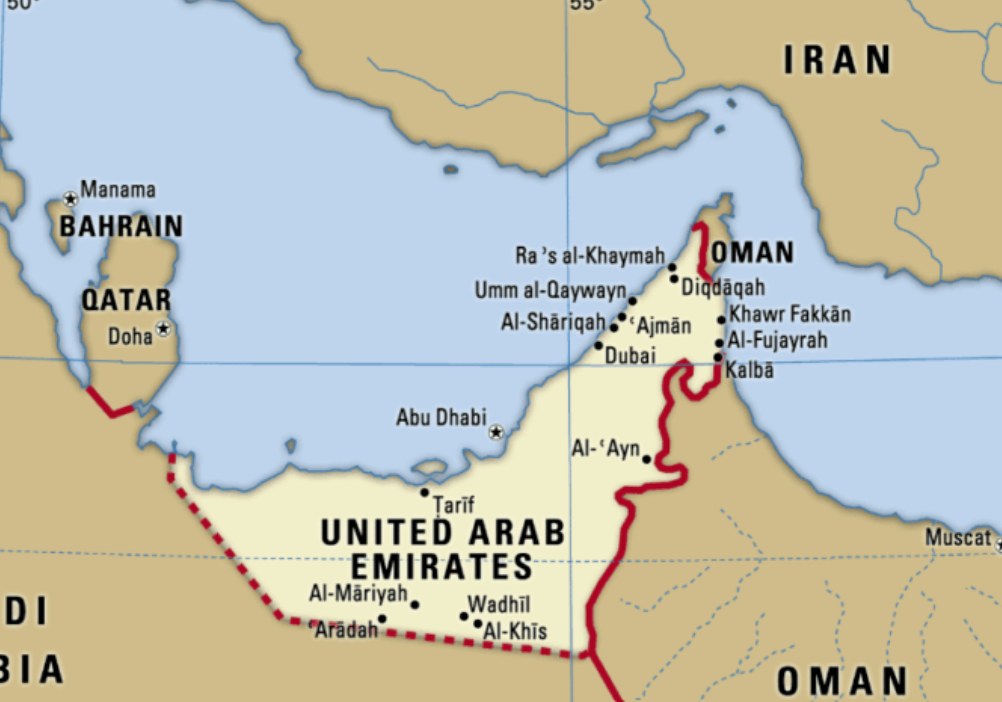
The Abu Dhabi National Oil Company (ADNOC) is set to completely bypass the Strait of Hormuz. With this objective, it is expanding its West-East pipeline, which carries crude oil to Fujairah on the Gulf of Oman, and then into the Arabian Sea. The ambitious project is expected to go operational by 2027. Then, it will double the UAE’s land-based export capacity to about 3.6 million barrels daily, allowing more oil tankers to sail directly into the Arabian Sea.
India has already identified Fujairah as one of the key routes that helped reduce the country’s dependence on Hormuz during recent disruptions. For India and other Asian buyers, it remains the shortest and most practical alternative because ships can enter the Indian Ocean bypassing the Hormuz waterway.
Apart from its pipeline, the UAE is also planning a new deepwater port and container terminal at Fujairah. Dubai-based DP World aims to build the facility on the country’s east coast, giving cargo ships another option bypassing the Strait of Hormuz. Expecting completion in 18 months, it is part of the company’s broader strategy to expand operations amid rising geopolitical risks. The new facility could also strengthen Fujairah’s position as an alternative to Dubai’s existing Jebel Ali port.
Saudi Arabia’s Petroline
Saudi Arabia already operates the 1,200-km East-West Pipeline, or Petroline, built in the 1980s specifically to avoid the Strait of Hormuz as its tensions with Iran escalated. The pipeline carries crude from the Abqaiq oil fields to the Red Sea port of Yanbu and is currently operating close to its capacity of about 7 million barrels a day.
During recent disruptions, the Saudi major, Aramco, increased crude flows through Petroline. Oil shipped from Yanbu travels through the Red Sea and the Bab el-Mandeb Strait, now threatened by Iran-supported Houthis based in Yemen, before reaching Asian markets, including India. Although the route is longer and more expensive than exports from the Gulf coast, it proved to be a reliable backup.
Riyadh is also likely to expand Petroline’s capacity to around 9 million barrels a day.
Iraq’s new corridors
Iraq is also building the 700-km Basra-Haditha pipeline, designed to transport up to 2.5 million barrels of crude a day. The pipeline will connect Iraqi oil fields with export routes through Turkey, Syria and Jordan while also supplying domestic refineries, the media reported.
Talks on a separate Iraq-Jordan Export Pipeline (IJEP), under discussion since 2013, are also gaining momentum. If completed, it would transport up to 2.25 million barrels a day from Basra directly to Jordan’s Red Sea port of Aqaba, allowing Iraqi oil to reach global markets without passing through the Persian Gulf. Jordan would also benefit by receiving discounted Iraqi crude and earning transit revenue.
Limits
While all these projects reduce the Gulf nations’ dependence on the Strait of Hormuz, they do not provide identical advantages. The Fujairah route offers the quickest access to the Indian Ocean for Asian buyers, while the Saudi and Iraqi exports through the Red Sea must pass the Bab el-Mandeb Strait, making voyages longer, more expensive and dependent on another strategic chokepoint, threatened by the Houthi militants. But India did get Saudi crude through this route in recent past.
Hormuz
Despite billions of dollars being invested in new infrastructure, the Strait of Hormuz is unlikely to lose its importance anytime soon. Nearly 7 to 9 million barrels of crude oil and refined products will still pass through this waterway daily even after the new projects go operational.
Besides, some producers have few alternatives. Qatar’s liquefied natural gas (LNG) exports have no practical replacement route, while Kuwait and Iraq will continue to depend heavily on Hormuz. Also, several of the new export corridors rely on stability in the Red Sea, where Iran-backed Houthi rebels have threatened shipping near the Bab el-Mandeb Strait.