




Manas Dasgupta
NEW DELHI, June 30: Even though the Faizabad Bar Association’s recent decision not to represent the accused in the Ram Temple donation fund embezzlement may not pass the Supreme Court’s test, unveiling of the fund theft case is likely to derail, at least for the time being, the Sangh Parivar’s efforts to free the Hindu temples from the governmental control.
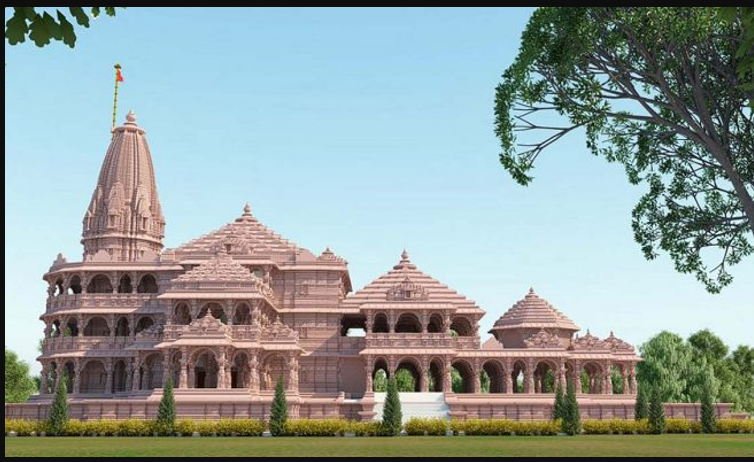
Besides losing the moral high ground the BJP and the Sangh Parivar had been occupying after the Ram Janmabhoomi Temple movement and particularly after the construction of the grand temple in Ayodhya, the theft case has triggered fresh concerns within the Sangh Parivar about the Vishwa Hindu Parishad’s (VHP) long-running campaign to remove the government’s control from the major Hindu temples and that the management of Hindu temples should be given over to private individuals or trusts..
While the VHP has officially maintained that the alleged theft will not derail its efforts, several voices within the broader Sangh ecosystem believe the campaign has suffered a significant setback, a senior VHP leader agreed that the movement is currently caught in a dilemma. , “Abhi to lagta hai, yah abhiyan khatai mein pad gaya hai (it seems like the campaign has derailed),” he remarked.
In fact, in one of his interviews in the wake of the allegations of embezzlement in Ayodhya, Nripendra Misra, chairperson of the Trust’s construction committee, suggested that the running of the Ram Temple be on the lines of the Tirumala Tirupati Devasthanams, a statutory body of the Andhra Pradesh government to manage the Sri Venkateshwara Swamy Temple and other religious shrines attached to the main temple. This, he said, would bring more transparency and professional oversight into the running of the Ram Temple in Ayodhya.
Hindu shrines, especially in south India, have significant government supervision through Devaswom boards.
The VHP has consistently highlighted the issue of government interference in temple affairs. In a resolution passed during its Board of Trustees meeting in Faridabad on July 17-18, 2021, the organisation urged the Centre “to enact a legislation handing over Hindu temples and religious institutions to Hindu society.”
The resolution emphasised that devotees offer donations according to their capacity to support religious, educational, health, and social activities run by temples, and stressed that “temples should not be treated as government property.”
The Ram Janmabhoomi movement catapulted the BJP to power, and the RSS and its frontal organisations closer to their ideological goal of cultural nationalism around the Hindu religion. The sordidness of the embezzlement issue has led to questions about the integrity of those who spearheaded the movement to build the Ram Temple in place of the Babri Masjid. This is despite the fact that the Shri Ram Janmabhoomi Teerth Kshetra Trust, and the president of the VHP, Alok Kumar, were among the first to demand the filing of a First Information Report in the matter.
Hindutva and its advocates will have to come up with answers to questions that are becoming inconvenient by the day — on who knew about the wrongdoing and to what extent — even if they were not involved in the actual embezzlement. With Assembly elections due from early next year, the BJP will have swiftly investigate, identify and prosecute the wrongdoers in order to go into the polls with something to say on the issue.
Within the Sangh Parivar, too, there appears to be a finessing of just who is to blame more. The Trust had a large presence of VHP personnel and those associated with the temple movement in the past. U.P. Chief Minister Yogi Adityanath, although active during the Ram Janmabhoomi movement, entered the fray not as part of the management but as someone asked to clear up the mess via governmental investigation. This may appear to be a small difference to many but the differentiation will matter within the Sangh Parivar, giving more of a moral high ground to the RSS’s political wing, the BJP, which is otherwise required to express filial devotion to its parent organisation.
The VHP has consistently highlighted the issue of government interference in temple affairs. In a resolution passed during its Board of Trustees meeting in Faridabad on July 17-18, 2021, the organisation urged the Centre “to enact a legislation handing over Hindu temples and religious institutions to Hindu society.”
The resolution emphasised that devotees offer donations according to their capacity to support religious, educational, health, and social activities run by temples, and stressed that “temples should not be treated as government property.”
VHP functionaries and religious leaders associated with it have often cited substantial financial figures to underscore their demand. At the Mahakumbh in Prayagraj on January 24, 2025, Avdheshanand Giri claimed that donations worth Rs 1.86 lakh crore from temples were flowing into government coffers. In July last year, the VHP’s Governing Council meeting in Jalgaon, Maharashtra, reiterated that temples must be managed by Hindus and their funds used exclusively for the benefit of Hindu society.
However, some senior RSS pracharaks closely involved in the Ram Temple movement expressed deeper worries. One key strategist from Uttar Pradesh noted, “The latest episode in Ayodhya has weakened the ‘free Hindu temples’ campaign. Our failure to properly manage offerings and donations at the Ram Temple has exposed shortcomings in selecting the right people for the job. We must restore people’s faith before pushing ahead.”
Another pracharak described the alleged theft as “a big setback,” adding, “Ram Janmabhoomi is not just any temple. If we have failed here, people will naturally question our ability to manage other temples. But please don’t forget that government-managed temples also have such allegations. The fact is that those temples, from time to time, have suffered more mismanagement of funds and other related allegations.”
The VHP, however, is pinning its hopes on the revival of the movement for freeing Hindu temples from governmental control on the “short public memory.” A VHP leader commented, “It is a setback, but people’s memory is short. Even after these allegations, offerings, donations, and devotee footfall in Ayodhya have not declined. In a few months, this will be forgotten.”
The country is estimated to have around 10 lakh temples, though no official comprehensive count exists. While most are small and community-managed, the administration of major temples has long been contentious, with many governed by state-specific legislation that places them under government control.
A few years ago, a committee headed by Swami Parmatmananda, General Secretary of the All India Acharya Sabha, was formed with representation from various organisations, including the VHP, to address these issues. The Ayodhya controversy has now brought renewed focus on whether the VHP can overcome this challenge and sustain momentum for its flagship temple liberation campaign.
Meanwhile, the legal experts point out that the Faizabad Bar Association’s resolution debarring its advocate members from taking up the cases of the fund embezzlement accused, transgress a Supreme Court judgement that even a “wicked” person has a fundamental right to a competent advocate.
The Supreme Court judgment that clearly enunciates this highest of the traditions of the Bar is based on a case originating in Tamil Nadu regarding a confrontation between a lawyer and local police personnel in Coimbatore. The local Bar Association had passed a resolution that no lawyer would represent the accused policemen.
A Division Bench of Justices Markandey Katju and Gyan Sudha Misra (both retired now), in a 2010 judgment in A.S. Mohammed Rafi versus State of Tamil Nadu, declared that such resolutions by Bar bodies were “wholly illegal, against all traditions and professional ethics.”
“Every person, however wicked, depraved, vile, degenerate, perverted, loathsome, execrable, vicious or repulsive he may be regarded by society has a right to be defended in a court of law, and correspondingly, it is the duty of the lawyer to defend him,” Justice Katju famously observed in a short judgment. The judgment referred to Article 22(1) of the Constitution, which mandates that an arrested person should not be “denied the right to consult, and to be defended by, a legal practitioner of his choice.”
Again, the ‘Standards of Professional Conduct and Etiquette’ chapter of the Bar Council of India Rules require that an advocate is bound to accept any brief unless special circumstances justify refusal. “Professional ethics requires that a lawyer cannot refuse a brief, provided a client is willing to pay his fee, and the lawyer is not otherwise engaged,” the court said. A boycott of an accused, whether a suspected terrorist, rapist, mass murderer, etc., was against all norms of the Constitution.
The judgment is remembered for giving historical examples of lawyers, real and fictional, standing up for professional values.