




Manas Dasgupta
NEW DELHI, July 25: The allegations of a paper leak in the Odisha board examinations standard 12th conducted by the Council for Higher Secondary Education (CHSE) way back in 1997 had prompted widespread student anger. More than 1,500 students and activists of the Akhil Bharatiya Vidyarthi Parishad (ABVP) had gathered outside the state Secretariat at Unit-5, Bhubaneswar, led by a 28 year old man seeking accountability from both the then chief minister Janaki Ballabh Patnaik and the then education minister Bhagabat Prasad Mohanty.
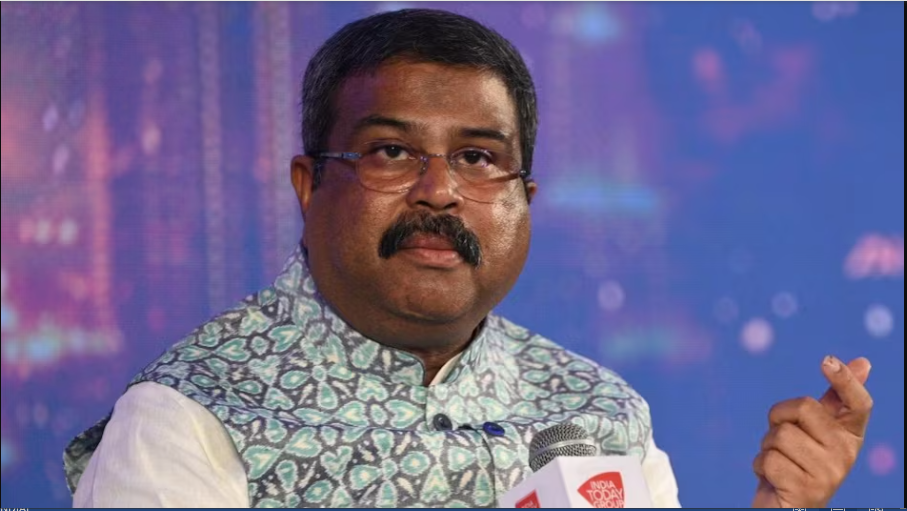
The young man leading the agitation against the paper leak and demanding the education minister’s resignation was Dharmendra Pradhan. And by queer of fate, he was at the receiving end on Saturday in a similar circumstances where the newly-floated Cockroach Janta Party (CJP) compelled him to resign as the union education minister on the same charges of paper leak in the NEET-UG, 20206, examinations.
Mr Mohanty then was a towering political leader in Patnaik’s Congress government in Odisha. Mohanty had joined the Congress from Praja Socialist Party and was elected to the Odisha Assembly twice in the 1980s and the 1990s. It is his second stint as an MLA that he became the education minister in the Patnaik-led government and having some resonance with what happened some 30 years later.
Prashant Rout, Principal of RMD Degree College and Pradhan’s junior at Utkal University, recounted the event of 1997. Nearly 1,500 students, mobilised by the ABVP gathered for a protest outside the Secretariat. “Dharmendra Pradhan was at the forefront of the movement. We staged a peaceful protest against the Odisha government outside the Secretariat. Around 1,500 students had joined us,” Rout said.
Pradhan, then serving as National Secretary of the ABVP and emerging as a prominent figure in student politics, led the demonstration and was on the verge of formally joining the BJP.
The Union Parliamentary Affairs Minister Kiren Rijiju on Saturday lauded Dharmendra Pradhan and said his journey is a testament to lifelong engagement with public life and student welfare. In a post on micro-blogging site X, Rijiju thanked Pradhan for his relentless service, commitment to reforms and his contribution to building a stronger India. He also wished his bright future and hoped that he would continue serving the country with the “same conviction and sincerity.”
“Having worked alongside him in the Union Cabinet, I have seen his sincere dedication to strengthening India’s education ecosystem and keeping our millions of young students at the centre of every decision. Leading such a critical sector demands immense perseverance and he embraced it with courage and clear vision,” Rijiju said.
Pradhan was under constant fire over NEET paper leak with the CJP demanding his resignation and calling for accountability from the government over the incident. The CJP also planned the ‘Chalo Sansad’ march on July 20, but violence erupted in the national capital, intensifying calls for Pradhan’s resignation.
Multiple reports on Friday had suggested that Pradhan was unlikely to resign. However, with the situation in Delhi continuing to escalate, he stepped down on Saturday saying he was pained by what had transpired over the past 10 days.
Following his resignation, celebrations broke out at the Jantar Mantar, with CJP supporters hugging each other, waving the national flag, singing the national anthem, and raising slogans like ‘Vande Mataram.’ CJP founder Abhijeet Dipke welcomed Pradhan’s resignation and said it has demonstrated the strength of a democratic protest in the country.
“If you had not called us ‘cockroaches’, I would not have returned to India. If you had not called us ‘cockroaches’, the youth of the country would not have come out on the streets. If you had not called us ‘cockroaches’, Dharmendra Pradhan’s resignation would not have happened,” he said, addressing the CJP supporters.