



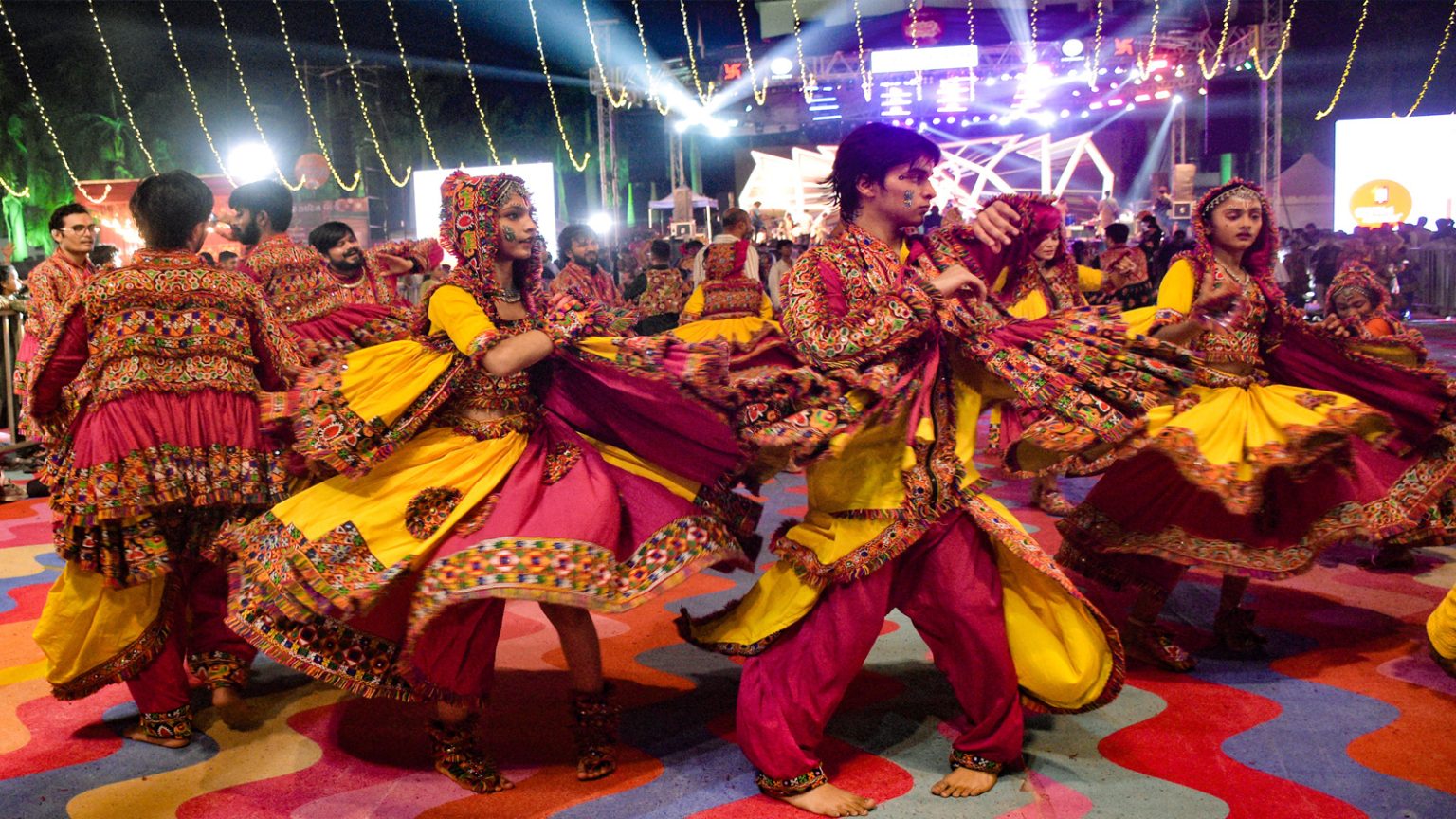

Gandhinagar [Gujarat]: Temple prayers, Garba gatherings, dramatic retellings of the Ramayana and family reunions give Navratri and Dussehra a global presence, carrying religious traditions across borders while creating spaces for cultural exchange.
Celebrations take different forms across countries. Navratri centres on devotion to the Goddess, while Dussehra, or Vijayadashami, celebrates the victory of good over evil, associated with Lord Rama’s victory over Ravana and Goddess Durga’s triumph over Mahishasura.
In the United Kingdom, community organisations and temples sustain the festival through worship, music and dance. Leicester’s Hindu Festival Council identifies Navratri and Dussehra among the celebrations supported through local community and council cooperation. Such gatherings place Indian traditions within the city’s wider multicultural life.
Garba is among the festival’s most recognisable cultural expressions overseas. The circular devotional dance, rooted in Gujarat, brings together dancers, musicians, craftspeople and religious practitioners. UNESCO inscribed “Garba of Gujarat” on its Representative List of the Intangible Cultural Heritage of Humanity in 2023, recognising its inclusive character and role in strengthening social bonds.
In the United States, temples combine religious observances with community dance programmes. Virginia’s Shantiniketan Temple in Roanoke advertised four Garba evenings over two weekends for its 2026 celebrations, with free entry and professional singers and musicians from India. The Radha Krishna Temple in the Dallas area also lists Garba programmes for families and young adults.
Canadian community celebrations similarly bring together music, dance, food and worship. In Ontario, programmes announced in Greater Sudbury and Barrie included Garba and Dandiya, with organisers emphasising participation across generations and welcoming newcomers to the traditions.
In Nepal, the season is observed as Dashain, the country’s longest Hindu festival. Devotion to Goddess Durga accompanies family reunions, gifts, blessings and elaborate prayers. Its significance extends beyond public celebrations to the renewal of family relationships and shared cultural practices.
Singapore’s heritage records show the longstanding place of Navratri in its Hindu community. The National Heritage Board’s collection includes a souvenir programme commemorating celebrations at Sri Vadapathira Kaliamman Temple in 1969. The board has also documented the social and religious role of Durga Puja within Singapore’s Bengali community.
In Trinidad and Tobago, Ramleela gives the festival a distinctive Caribbean expression. The Ramayana is enacted over several nights in open-air community settings, continuing a tradition brought by Indian ancestors. The country’s cultural authorities recognise it as an integral part of the national cultural landscape. The tradition’s wider recognition was illustrated in October 2025, when a Ramleela performance was hosted at the President’s House as part of efforts to promote cultural, educational and artistic expression, particularly among young people.
Across these settings, the festivals retain their devotional foundations while acquiring local forms. A Garba circle, a temple ceremony, a family blessing or a Ramleela performance becomes a way to preserve inherited traditions and share them with another generation – and with neighbours beyond the community.