




Manas Dasgupta
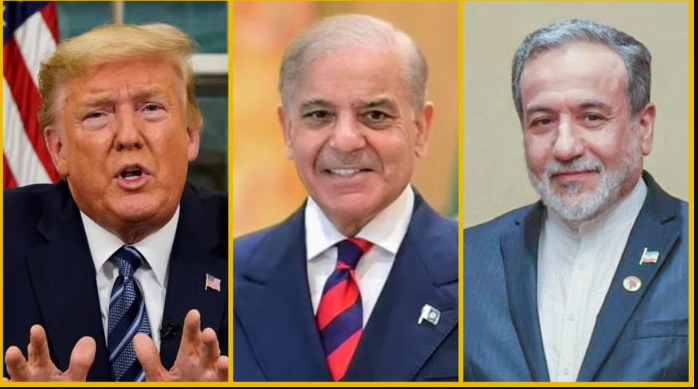
NEW DELHI, Apr 26: Iran’s Foreign Minister Abbas Araghchi returned to Islamabad on Sunday for more consultations as international mediators tried to keep peace talks on track despite U.S. President Donald Trump calling off his envoys’ planned trip.
U.S. President Donald Trump said he told his top envoys, Steve Witkoff and Jared Kushner, not to travel to Pakistan to negotiate with Iran on Saturday. “If they want to talk, all they have to do is call!!!” Mr Trump said on social media.
Attempts at ceasefire talks between the United States and Iran fell flat after Tehran’s top diplomat left Pakistan and President Donald Trump’s envoys stayed away after he told them not to travel to Islamabad. Mr Trump said there was no point “sitting around talking about nothing” but adding the war would not immediately resume.
According to the Iranian media reports, Araghchi was to sit down with Pakistani officials to convey “Iran’s positions and views on the framework of any understanding to completely end the war” in West Asia. The minister had already been in Islamabad only the day before, after which he travelled to Oman, while other Iranian envoys went to Tehran “to consult and obtain the necessary instructions on issues related to ending the war,” the media report said.
Mr Araghchi held talks in Oman on Sunday and discussed security in the Strait of Hormuz and broader Gulf waters and diplomatic efforts to end the Iran-U.S. conflict, according to an Iranian Foreign Ministry statement. In talks in Muscat with Oman’s Sultan Haitham bin Tariq al-Said, Mr Araghchi said the U.S. military presence in West Asia was fuelling insecurity and division and called for a regional security framework free of outside interference.
Pakistan Prime Minister Shehbaz Sharif, meanwhile, spoke with the Iranian President Masoud Pezeshkian and discussed the evolving regional situation. “During their warm and cordial conversation that lasted fifty minutes, the two leaders had a detailed exchange of views on the current regional situation and ongoing efforts to promote peace and stability in the region,” the Prime Minister’s office said.
Mr Pezeshkian said his country won’t negotiate while the United States imposes a blockade on its ports. Mr Pezeshkian told Mr Sharif during the phone call that the U.S. “should first remove operational obstacles, including the blockade,” to allow a new round of negotiations, the Iranian media reported. Pakistan’s top political and military leadership is continuing to mediate between the U.S. and Iran, with indirect ceasefire talks still alive despite mounting tensions between the sides, two Pakistani officials said Sunday.
Pakistan on Sunday eased some restrictions, allowing selective movement of heavy traffic in the twin cities of Islamabad and Rawalpindi, as there was no immediate possibility of another round of U.S.-Iran talks.
Pakistan had implemented strict security measures in anticipation of the second round of talks between the U.S. and Iran. More than 10,000 security personnel were deployed, and both Islamabad and Rawalpindi were shut down to manage heavy traffic since last Sunday.
The easing of restrictions came after Iranian Foreign Minister Abbas Araghchi left Islamabad on Saturday night without waiting for the arrival of the U.S. negotiators. As he flew out, President Donald Trump cancelled his plans to send U.S. negotiators to Pakistan.
Meanwhile, the US naval forces interrupted an Iran-linked vessel in the Arabian Sea on Saturday, said the U.S. Central Command. Taking to X. It said the U.S. Department of Treasury has sanctioned M/V Sevan and 18 other “shadow fleet” vessels “for activities related to transporting billions of dollars worth of Iranian energy, oil and gas products, including propane and butane, to foreign markets.”
Meanwhile, sharp differences among the BRICS member states over the U.S.-Israel war on Iran stalled India’s efforts to build a consensus position on the conflict during a meeting of the grouping in New Delhi last week, official sources said on Sunday. There was no change in the Indian position on the Palestine issue, they said days after the meeting of BRICS Deputy Foreign Ministers and special envoys.
As consensus on the West Asia conflict eluded, a “chair’s statement” was released at the end of the deliberations. India is the current chair of the BRICS. The BRICS meeting of officials on West Asia could not produce a consensus document because there was a “sharp difference of positions among members who are party to the conflict”, the sources said.
The British Prime Minister Keir Starmer and U.S. President Donald Trump discussed the urgent need to get shipping moving again in the Strait of Hormuz during a call on Sunday, a Downing Street spokesperson said. “The leaders discussed the urgent need to get shipping moving again in the Strait of Hormuz, given the severe consequences for the global economy and cost of living for people in the U.K. and globally,” the spokesperson for Starmer’s office said in a statement.
“The Prime Minister shared the latest progress on his joint initiative with President (Emmanuel) Macron to restore freedom of navigation,” the spokesperson added.