




Manas Dasgupta
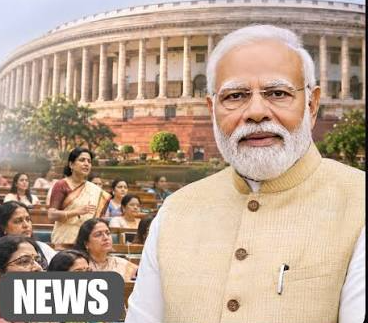
NEW DELHI, Nov 27: The Union Cabinet on Friday approved a fresh delimitation-linked women’s reservation bill providing proportionate increase of 50 per cent seats across all States and freeze its continuation for 25 years till it changes according to the population in the Census after 2051.
The bill is likely to be brought before the special sitting of parliament next week. The Women’s Reservation Bill providing the fairer sex 33 per cent of the total seats will come into effect along with the increase in seats. A similar attempt by the government to adopt the Constitution Amendment Bill was rejected in the Lok Sabha during the Monsoon session in April for want of two-thirds majority in the House.
The BJP-led NDA government headed by Mr Narendra Modi brought in two key amendments to the bill: a uniform 50% increase in the share of Lok Sabha seats, a move that aligns with a key demand from the southern states; extending the freeze for 25 years on using the 1971 Census as the basis to determine the proportional strength of each State in the Lok Sabha.
The delimitation issue has remained a major concern for southern states, including Andhra Pradesh, Telangana, Tamil Nadu, Kerala and Karnataka. These states have expressed apprehension that a population-based redistribution of parliamentary seats could reduce their relative share of representation compared with states that have recorded higher population growth. The debate has consequently centred on balancing population-based representation with concerns of states that have pursued population stabilisation.
The government has called for a special sitting of Parliament beginning Monday. The two Houses will meet on separate dates, Union Parliamentary Affairs Minister Kiren Rijiju announced on Thursday, the 104th day since the Monsoon Session was adjourned indefinitely on August 13.
Delimitation is the exercise of revising the boundaries of parliamentary and Assembly constituencies and determining how seats are distributed in accordance with the applicable population framework. The process is undertaken by an independent Delimitation Commission under constitutional provisions, including Articles 81, 82, and 170. The exercise is intended to ensure a broadly balanced population representation across constituencies while also revising the allocation of seats reserved for Scheduled Castes and Scheduled Tribes.
The proposed Constitution (131st Amendment) Bill seeks to modify provisions concerning the strength of the Lok Sabha and the distribution of seats among states and Union Territories. One of its major proposals is to expand the maximum strength of the Lower House.
Under the existing constitutional framework, the Lok Sabha can have a maximum of 550 members, comprising up to 530 representatives from states and 20 from Union Territories. The proposed amendment seeks to raise the ceiling to 850 members, with a maximum of 815 seats for states and 35 for Union Territories.
The Cabinet meeting was chaired by Prime Minister Narendra Modi and was convened at 1 pm at Sewa Teerth. A two-thirds majority in both houses of Parliament is a must for a Constitutional amendment bill to get cleared. To get the measure passed, the support of the 22 members of the Dravida Munnetra Kazhagam (DMK) will be crucial to achieve the required two-thirds majority, which it had failed to get in the Bill’s last outing in April.
The DMK president and former Tamil Nadu chief minister MK Stalin on Friday simultaneously asserted that there would be no “compromise” with Tamil Nadu’s interests. The DMK has set out two conditions for supporting the Delimitation Bill: Tamil Nadu’s existing share of seats in the Lok Sabha should be maintained, and the existing proportional strength of all States, as determined on the basis of the 1971 Census, must remain frozen for another 25 years, both of which have apparently been accepted by the government in the amended bill.
Mr Stalin’s comments reflect the dominant view in the party, which argues that a constitutional amendment now may be preferable to a future redistribution based on post-2026 population figures. A senior DMK leader said Tamil Nadu could lose as many as 12 Lok Sabha seats if representation is recalculated solely on the basis of population after the freeze ends.
The position is also consistent with resolutions previously adopted by the DMK government. In February 2024, the Tamil Nadu Assembly passed a resolution urging the Union government not to conduct delimitation on the basis of the 2026 Census. The resolution called for a legal amendment to ensure that the existing ratio of parliamentary and Assembly constituencies among States, based on the 1971 Census, continues unchanged.
In the present 540-member Lok Sabha, the two-thirds majority mark is 360, and if 22 Lok Sabha members of the DMK vote for the Bill, the government’s strength would go up to 346. While the government would still be short of 14 MPs, the threshold changes if there are abstentions during the proceedings. If the government brings the Bill to the Rajya Sabha, it will find it easier to reach the two-thirds majority mark. In the Rajya Sabha, if all 244 members are present during voting, the government needs 164 votes. The BJP-led National Democratic Alliance currently has 158 MPs.
Since April, the government has secured the support of 20 rebel Trinamool Congress MPs, who are now part of the Nationalist Citizens Party of India (NCPI) and six Shiv Sena MPs who had switched sides from the Uddhav Thackeray faction to the Eknath Shinde-led faction.
The bill, which aims to increase the strength of the Lok Sabha to 850 seats, failed in April as the Centre could not muster the two-thirds majority. The Congress chief Mallikarjun Kharge, who is also the Leader of Opposition in the Rajya Sabha, has invited all opposition floor leaders to attend a meeting at his residence on Saturday to devise a joint strategy in view of the government’s likely move to reintroduce the bill, sources said.
Samajwadi Party chief Akhilesh Yadav has termed the delimitation move “BJP’s biggest mistake,” adding that it is being introduced to win the Uttar Pradesh election where the BJP is looking to score a hat-trick of wins. UP goes to polls early next year.
Rajya Sabha MP and senior lawyer Kapil Sibal raised serious concerns over the proposed 131st Constitutional Amendment Bill, alleging that the BJP was seeking to consolidate political power through delimitation, defections and changes to the country’s parliamentary structure.
“Whatever is left of democracy in 2026 on November 30, if the 131st Constitutional Amendment Bill is passed, it will be the end of whatever was left in democracy in India,” Sibal said. The Rajya Sabha MP alleged that the BJP was attempting to secure the necessary numbers for the proposed constitutional amendment through defections from Opposition parties. He claimed that 20 Trinamool Congress MPs and six Shiv Sena MPs, whose disqualification proceedings are pending, could participate in the crucial vote despite questions over their membership.
The government managers are gunning for the magic number of 360 to see the Delimitation Bill through and they appear within striking distance if all the permutations and combinations fall in place. The Centre’s push hinges on former opponents of the bill – DMK and NCP (SP) – coming around this time. Their turnaround is contingent on the 50% across the states increase in the seats, which the government seems inclined to concede and put in the text of the bill.
Both the parties have indicated that the 50% clause could seal the deal. The Sharad Pawar NCP has already issued a whip to its eight MPs to be present in the House for the special sitting. The DMK with 22 MPs, after its exit from the INDIA bloc post its divorce from the Congress in Tamil Nadu, has also softened on its blanket opposition to the bill.
On April 17, the constitutional amendment was put to a test and got 298 votes in favour and 230 against. With 528 members present and voting, the government needed 352 and fell 54 short. The government’s floor managers put the two-thirds mark at around 360 in the Lok Sabha, depending on full attendance of 540. The mark will come down if some MPs skip the House.
The NDA is counting 319 members for sure, 241 of them from the BJP. That includes 20 of the Trinamool Congress’s 28 MPs, who have since joined a separate party, the NCPI, that is backing the NDA. One more has come from Punjab’s Shiromani Akali Dal that re-entered the NDA this week.
The eight MPs of the NCP (Sharadchandra Pawar) could take the total to 328. Party’s working president Supriya Sule has clearly indicated that her party will come around after the 50% assurance. With DMK’s 22 the number jumps to 350. Still 10 short of the special 2/3rd majority needed for a Constitutional amendment.
Last time around, Jagan Reddy’s YSRCP with four MPs was in the government’s camp, but amid the buzz around the special Parliament sitting, party sources have indicated that the party may review its stance depending on the text of the bill. YSRCP’s four could take the Centre’s count to 355, just five short of the mark. UPPL with one MP, can also support the bill. The party was formerly an ally of the BJP in Assam. The bill was also supported by one Independent MP last time.
There is a question mark on the presence of at least three MPs. TMC’s Kalyan Banerjee was suspended for the rest of the Monsoon Session in July. Since this special sitting next week will be a continuation of the monsoon session, it’s unclear if he will be allowed to vote.
Then there are two MPs who remain in jail – Independent Sheikh Rashid from Kashmir and Amritpal Singh of Waris Punjab De from Punjab. National Conference’s Aga Ruhullah has resigned recently, leaving National Conference, which is part of the Opposition bloc, with just one member.
Then there are a few smaller groups and independents who remain non-aligned to either the NDA or INDIA. These include AAP (3), Independents (3), ZPM, ASP and AIMIM with 1 each.
A few more MPs skipping the House or abstaining from vote may just turn the things government’s way as the majority will be decided depending on the members present on the day.