




Manas Dasgupta
NEW DELHI, Nov 24: Thousands of protesters have taken to the streets across Pakistan’s Sindh province to oppose a proposal of the Army chief Field Marshal Asim Munir to redraw the boundary of the country’s existing provinces, accusing the military-backed establishment of attempting to weaken Sindh and gain control over its resources.
The demonstrations have brought the province’s nationalist groups together, with some activists reviving their demand for an independent Sindhudesh and threatening an economic blockade of Punjab.
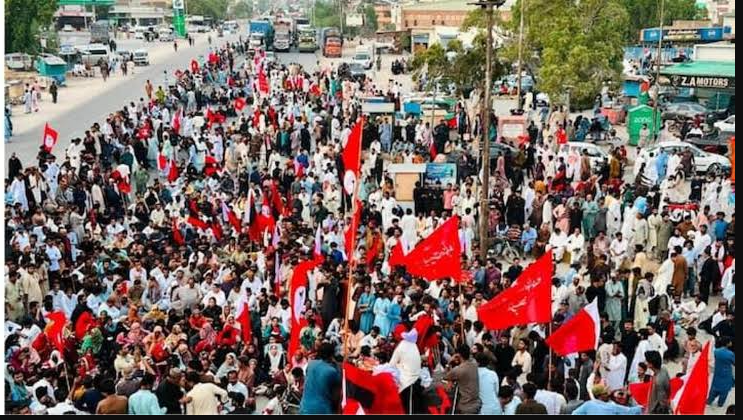
Political heat has been generated over Pakistan’s powerful military chief drawing plans to redraw the maps of four primary administrative provinces — Punjab, Sindh, Khyber Pakhtunkhwa, and Balochistan. This week, thousands of people in Sindhi dressed in their traditional ajrak scarves and caps, took to the streets in Karachi protesting against the proposed move to divide Sindh or create new administrative units.
The rally was organised by the Jeay Sindh Rahbar Committee (JSRC), a coalition comprising four Sindhi nationalist parties, in Karachi and witnessed the participation of nationalist leaders, political activists, lawyers and members of civil society, ‘Pakistan Today’ reported.
During the protest, the speakers reiterated their opposition to making any changes to Sindh’s existing boundaries. They reportedly contended that the territorial integrity of Sindh was non-negotiable, and any decision related to the province’s geographical or administrative units must be taken according to the wishes of the people.
The agitation has intensified criticism of Asim Munir and the establishment with nationalist leaders alleging that the proposed administrative restructuring was part of a broader attempt to undermine Sindh’s political and territorial identity. The controversy has also put the federal government in a difficult position, as the proposal has drawn opposition from the Pakistan Peoples Party (PPP), a key ally of Prime Minister Shehbaz Sharif’s government.
Thousands of demonstrators carrying red flags assembled in Karachi. The demonstration was led by Jeay Sindh Mahaz chairman Riaz Ali Chandio, Niaz Kalani and other nationalist leaders. Lawyers and members of civil society also joined the march, which disrupted traffic and led to the temporary closure of several roads in the city.
The protesters rejected the idea of holding a referendum on the creation of smaller provinces, arguing that such an exercise could be used to give public legitimacy to a decision that may already have been made by the authorities. Organisers also stressed that their agitation was against the proposed division of Sindh and not directed at Urdu-speaking residents or any other ethnic community.
The Karachi rally was preceded by demonstrations in Hyderabad, Nawabshah, Larkana and several other towns. Residents of Mehar, located in Dadu district, also took to the streets on November 21 to oppose the proposal.
The demonstrations have also evolved into a broader political confrontation, with Sindhi nationalist leaders accusing Pakistan’s military establishment of exploiting the province’s land, natural resources and political influence. Punjab, the country’s largest province, has emerged as a central target of their criticism.
The nationalist groups alleged that Asim Munir and the Punjab-dominated establishment were attempting to weaken Sindh’s territorial integrity through the proposed restructuring. They further accused the establishment of taking control of vast stretches of agricultural land, coastal islands and resources, including oil, gas and coal.
The Jeay Sindh Muttahida Mahaz (JSMM), whose activists also participated in the Karachi demonstration despite the organisation not being part of the JSRC, has announced plans for an economic blockade of Punjab. The outfit said its campaign against the division of Sindh would also be expanded into a movement seeking complete independence for Sindhudesh.
The protests have brought the separatist demand for Sindhudesh back into the spotlight. Shafi Muhammad Burfat, the Germany-based chairman of JSMM, has publicly called for international support for the independence of Sindh, rejecting Pakistan’s political and territorial framework.
“Sindh is not Pakistan,” said Shafi Muhammad Burfat. “The Sindhi nation rejects Pakistan as an unnatural state, a Punjabi colonial occupation, and every conspiracy by the deceptive Punjabi military to divide Sindh. It appeals to the world, the United Nations, and the international community to support the independence of Sindhudesh, its homeland. Sindh is not Pakistan; the national restoration of Sindhudesh is the fundamental objective of the Sindhi nation’s struggle,” Burfat said on X.
The leaders said Sindh’s identity was based in its history, culture and civilisation and could not be treated only as a matter of administrative convenience. They expressed opposition to the idea of holding a referendum on the creation of new provinces or administrative units.
The speakers also called on the Shehbaz Sharif-led federal government and relevant institutions to not take decisions that could increase political tensions or create divisions within the province. They warned that any attempt to impose administrative changes without taking the consent of the people would be challenged through constitutional, legal and democratic means, including protests across the province.
The plan aims to break up the country’s four provinces into a dozen or more. The proposal has been linked to the Pakistani military chief who wields real power despite a nominally superior president and prime minister, although no formal blueprint bearing his endorsement has so far been published.
The plan has been presented as an attempt to improve governance, decentralise administration and bring the state closer to its citizens. However, if implemented, experts have warned that the idea could fundamentally alter Pakistan’s federal structure. The experts believe that the plan was an attempt to fragment the political opposition and consolidate the military chief’s authority.
On November 17, PPP Chairman Bilawal Bhutto-Zardari warned that people would take up arms if Sindh province was divided by force. In an event at the Karachi Press Club, he said, “If the province is divided by force, society will be divided; it will lead to enmity, ordinary people will take up arms, and the bloodshed will not be limited to a single death.”
He stated that the PPP backs the creation of new provinces as per the wishes of the people, the constitution and the law. “Where we are opposing, it is over force and coercion. We do not want division through force,” Zardari said.
He said that the constitution already includes a procedure for it, and suggesting holding a referendum means looking for an unconstitutional method. He mentioned that referendums in Pakistan have been held earlier for undemocratic purposes.