



Manas Dasgupta
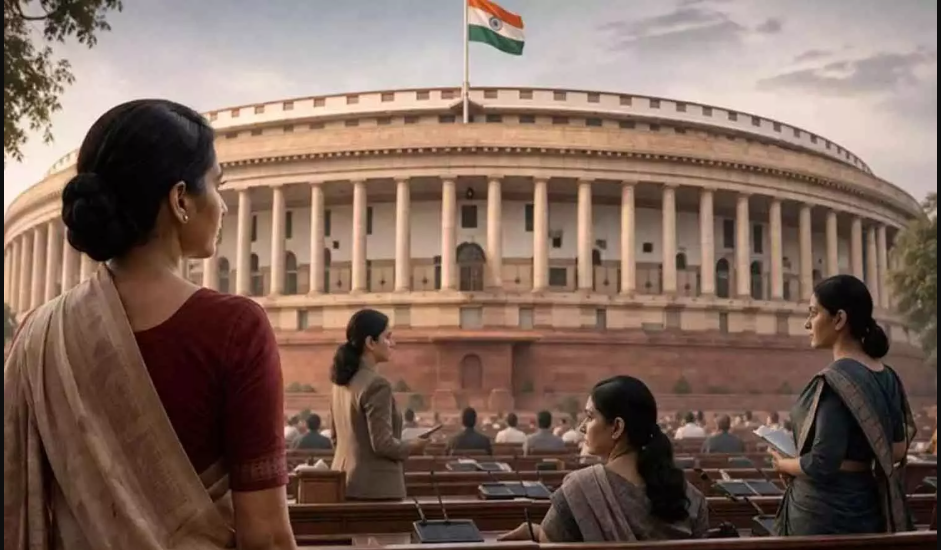
NEW DELHI, Nov 26: After months of backroom efforts by the BJP-led NDA to gather numbers to avenge the defeat it suffered earlier this year, the Lok Sabha is set to reconvene on November 30 and the Rajya Sabha on December 2 apparently to discuss the women’s reservation bill linked with the delimitation of the Parliamentary constituencies.
The Parliamentary Affairs Minister Kiren Rijiju said on Thursday that the government has asked the respective chairpersons to “reconvene” both Houses “to transact essential Government Business.” The sittings may conclude on December 3, though essentially there is just one day earmarked for each House. This is an extension of the Monsoon Session, which has been in abeyance for a record period since August.
Rijiju did not specify what that business would be, though a cabinet meeting is scheduled for Friday, with the delimitation bill on the agenda, sources said. The defeat the government wants to avenge is its unsuccessful attempt to push through the delimitation bill and related legislation in April, as it did not have the required two-thirds majority for a constitutional amendment. The Narendra Modi government’s plan has been to increase and redraw electoral constituencies, a prerequisite to implementing the 33 per cent quota for women that was granted by a law of 2023.
The development comes amid speculation that the government may introduce legislation related to delimitation and women’s reservation. However, Rijiju did not specify which bills or proposals would be taken up during the sittings. The Monsoon Session has remained technically open for more than 100 days since both Houses were adjourned sine die on August 13 but neither of the Houses prorogued since then.
The proposed Delimitation Bill seeks to increase the strength of the Lok Sabha to 850 seats to pave the way for bringing 33 per cent reservation to women. The NDA government has maintained that delimitation is necessary to reflect updated census data and facilitate the women’s quota bill in the lower house.
The Opposition’s INDIA bloc, however, has opposed linking women’s reservation with delimitation, demanding that the quota be implemented in the existing 543-member Lok Sabha. The Constitution (131st Amendment) Bill, 2026, introduced in the Lok Sabha on April 16, sought to fast-track one-third reservation for women in legislatures and expand the strength of the Lower House. However, the bill was defeated on April 17 after failing to secure the required two-thirds majority.
The Union Home Minister Amit Shah said in his Constitution Day speech earlier on Thursday, “I want to tell [Leader of Opposition] Rahul Gandhi: it is the resolve of the BJP and our leader Narendra Modi that the women of this country will definitely get 33 per cent reservation; you cannot stop us.” PM Modi also spoke along the same lines.
The Opposition, led by the Congress, has said the women’s quota is already law since 2023 and only needs to be delinked from delimitation and be granted within the current setup, rather than the government “recasting the map” allegedly to its benefit. The government then verbally promised that the increase across states would be a flat 50 per cent, to retain the current balance of proportion. But that bit was not in the text.
The government is learnt to have used the intervening since the two Houses were adjourned to work towards the two-thirds majority. The delimitation bill, as per its text, would raise the strength of the Lok Sabha from 543 to 850 seats, with a third (about 283) reserved for women on rotation. It would also redraw the share of seats among states on the basis of the 2011 census, or any census the government chooses, rather than waiting for Census 2027 to finish, though the government has said it’ll be a flat 50 per cent increase so as to keep the balance among states. Last time, the “flat 50 per cent” bit was only a verbal promise, not in the bill’s text.
Because the bills amount to constitutional amendments, the government’s floor managers put the number needed in the Lok Sabha at around 360, depending on attendance on the day. The BJP-led NDA is learnt to have calculated that it has 319 members for sure, 241 of them from the BJP alone.
Fresh calculation includes a 20-member breakaway group of the Trinamool Congress that has joined the little-known NCPI. If the eight MPs of the Nationalist Congress Party (Sharadchandra Pawar) were added, the NDA total would reach 327. NCP(SP) leader Supriya Sule has said her party would have no difficulty backing the bill if each state’s seats rose by a flat 50 per cent, “with no regional bias possible thus.” Sule has ruled out a merger with the NCP faction that is already in the NDA.
Adding the DMK’s 22 MPs would take the total to 350, still about 10 short. The DMK left the INDIA bloc after the Congress allied with Vijay’s TVK, which won the Tamil Nadu elections in May. The party has not said where it stands on the “flat 50 per cent” offer Home Minister Amit Shah made verbally in the Lok Sabha in April. The remaining votes would have to come from the three dozen or so MPs outside both alliances.
The Congress-led INDIA bloc, the DMK and the Aam Aadmi Party had set four conditions for supporting the bills. The Lok Sabha would stay at 543 seats; each state would keep its current number of seats; the 2023 Nari Shakti Vandan Adhiniyam (that gave the women’s reservation) would be put into effect with 182 of the existing 543 seats reserved for women; and a constitutional amendment would freeze this arrangement for 25 years.
Sources said the Opposition would readily support the necessary bills if the government agreed to these demands. But, for the government, that would be a complete rollback of its intended plan to redraw the constituencies.
Congress leaders say delimitation may be necessary but has to be carried out “according to the Constitution.” The government has accused the Congress of blocking women’s empowerment, and the Opposition has accused the government of “hiding behind the women’s quota” to gerrymander constituencies. Congress president Mallikarjun Kharge has repeatedly written to the Prime Minister seeking an all-party meeting. If the bills do not pass in this sitting, there may not be enough time to hold the 2029 Lok Sabha elections on new boundaries.