




Manas Dasgupta
NEW DELHI, Nov 22: Interpretation of social greetings with religious flavour in Uttar Pradesh has become the centre of dispute between the ruling BJP and the opposition Samajwadi Party on the eve of the elections to the Assembly in the country’s largest state in the next few months.
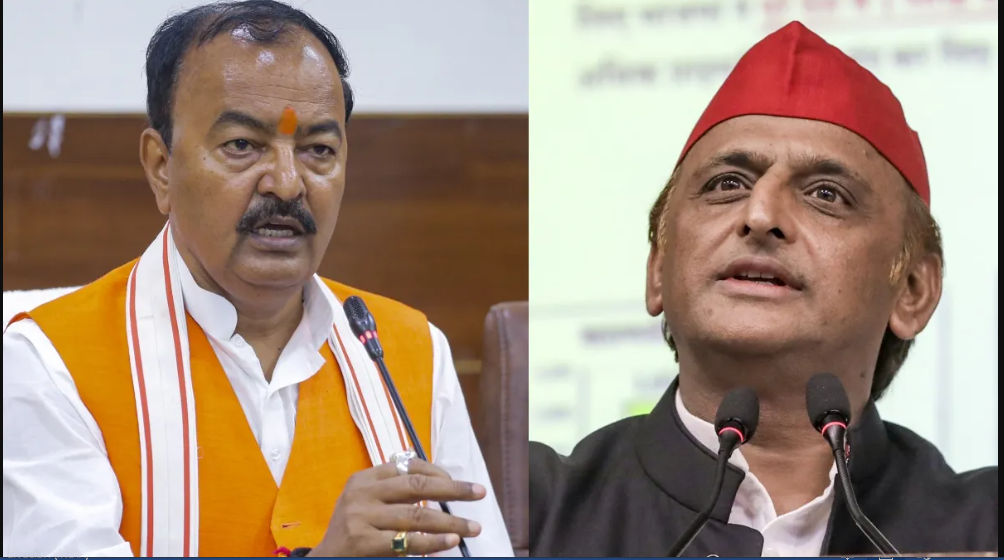
While the SP chief Akhilesh Yadav claimed that the people say “Radhe, Radhe” when they bid farewell to each other after a meet, the UP deputy chief minister Keshav Prasad Maurya maintained that “Radhe, Radhe” meant greetings in Brajbhumi in Central UP just as “Jai Shri Ram” in Ayodhya.
The interpretation of the social greetings started after the BJP at its Mathura conclave last week picked on the slogan, “Radhe, Radhe Kamal Khila De” to be used as an election plank to remind the voters about the ruling party’s election symbol while greeting each other. Mr Yadav joked on the slogan claiming that the BJP has already accepted defeat and has picked the slogan to bid farewell to the people of the state.
Hitting back on Sunday, Mr Maurya accused the SP leadership of being uncomfortable with religious chants. He said while SP leaders earlier objected to hearing ‘Jai Shri Ram’, they were now troubled by ‘Radhe Radhe’ as well.
Maurya’s remarks came a day after SP chief Akhilesh Yadav mocked the BJP’s slogan, suggesting that the party had turned to the devotional greeting because it feared losing power in Uttar Pradesh. The exchange has brought the two parties’ competing interpretations of religious slogans into focus ahead of the 2027 Assembly elections. ‘
In a post on X, Maurya said, “SP leaders earlier felt uneasy hearing ‘Jai Shri Ram’. Now they are troubled even by ‘Radhe Radhe’.”
He went on to draw a distinction between the religious greetings associated with different parts of the state, saying, “In Ayodhya, ‘Jai Shri Ram’ resonates, while in Braj people greet each other by saying ‘Radhe Radhe’.”
The deputy chief minister then challenged Yadav to explain his objection. “Does this mean people in Uttar Pradesh will now have to seek his permission before taking the name of their deity?” he asked.
Maurya accused the SP of pursuing appeasement politics and said both ‘Jai Shri Ram’ and ‘Radhe Radhe’ would continue to be heard across Uttar Pradesh. He also predicted that the SP would fail to return to power in the 2027 Assembly elections and that the BJP would form the government again.
The remarks followed Yadav’s criticism of the BJP’s ‘Radhe Radhe, Kamal Khila De’ slogan at a press conference held at the party headquarters in Lucknow on Saturday. Referring to the BJP’s two-day meeting in Mathura, Yadav suggested that the slogan reflected the party’s anxiety about its political future. He said the BJP knew that the lotus, its election symbol, was wilting and had therefore started chanting ‘Radhe Radhe’.
“‘Radhe Radhe’ is said at the time of farewell in our tradition. It means the BJP is going to be shown the door,” Yadav said. He claimed that voters in Uttar Pradesh would give the ruling party a “grand farewell” in the coming elections.
Meanwhile, the Congress leader and the Leader of the Opposition in the Lok Sabha Rahul Gandhi, launched a fresh attack on the BJP and the Rashtriya Swayamsevak Sangh (RSS), calling them “uncouth, greedy, casteist male chauvinists” and accusing them of having no understanding of India’s spiritual and religious traditions. Sharing a picture of a sculpture depicting Lord Shiva and Goddess Parvati as Ardhanareshwar, Gandhi made the remarks amid an ongoing political exchange between the Congress and the BJP.
The latest post came a day after the union minister Kiren Rijiju attacked the Congress over Gandhi’s “compromised PM” jibe at Prime Minister Narendra Modi. Rijiju posed four questions to the opposition party, asking whether it would apologise for the 1962 India-China war and questioning India’s economic record under Congress governments.
In his latest post, Gandhi referred to Indian spiritual and religious traditions while criticising the BJP and RSS. The picture he shared showed a sculpture from the Elephanta Caves depicting Ardhanareshwar, a composite form of Lord Shiva and Goddess Parvati represented as a single half-male, half-female figure.
The post follows an earlier social media message in which Gandhi had shared a photograph of a 12th-century temple sculpture depicting Goddess Parvati sitting on Lord Shiva’s lap. Last Tuesday, he said fear, anger and hatred had created a web in the hearts of BJP and RSS supporters, preventing them from expressing love. “As a true Hindu, it is my duty to free them from this web, so that they too can start to experience the breath-taking beauty and joy of love and belonging in their lives. Satyam Shivam Sundaram,” he had written.
The controversy began after Gandhi spoke about the relationship between his parents at the launch of Sonia Gandhi’s memoir, “Belonging: A Journey Of Love”, last Monday. Describing their closeness, he recalled that during meals, his father would be seated with his mother sitting on his lap. “At every meal, there would be Papa, and on Papa’s lap, there would be Mama,” Gandhi had said.
He added that he had initially thought this was normal. Recalling visits to his friends’ homes, he said he would wonder why their mothers were not sitting on their fathers’ laps. “Now, I thought this was a normal thing. So I would go to my friend’s house, but their parents wouldn’t be sitting on each other’s lap, and I’d ask my friends, ‘Guys, what is going on? Why is your mother not sitting on your father’s lap?'” he said.
Gandhi also spoke about the personal tragedies that affected his family, referring to the assassinations of his grandmother Indira Gandhi and father Rajiv Gandhi. “And then we saw it all get smashed. Not just over time, suddenly. We saw one of our anchors get shot, and then we saw our biggest anchor get blown to pieces,” he said.
The exchange has continued through social media posts, with Gandhi invoking spiritual traditions and the idea of love and equality, while BJP leaders, including Rijiju, have responded with criticism of the Congress.