



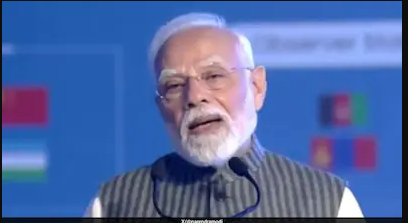

NEW DELHI, Nov 20: Prime Minister Narendra Modi on Friday said cultural and civilisational cooperation would strengthen relations among various countries and that 21st-century technology had created new possibilities for cultural connectivity.
Inaugurating the first SCO Civilisational Dialogue Forum, Mr Modi also said thousands of years of priceless heritage were preserved in India’s museums, libraries and archives, and that technology could help pass this heritage on to the next generation.
Speaking at a time when discussions across the world are dominated by war and unrest, Mr Modi said civilisational exchanges could strengthen ties between nations and help bring the world together. “In recent years, the SCO has significantly increased cooperation in security, economy and connectivity. In such a scenario, cultural and civilisational cooperation will further strengthen relations among various countries. I am confident that new ideas will emerge from this forum, new opportunities for cultural cooperation will be created and our shared civilisational experiences will play a crucial role in uniting the world,” he said.
Mr Modi said empires had certainly changed the maps of the world, but civilisational dialogues had changed the world’s ideas and enriched them. “Therefore, the SCO Civilisational Summit is not merely a ceremonial platform but it can become a platform to give direction to the world,” he said.
Mr Modi said 21st-century technology had created new possibilities for cultural connectivity across the world. “Across the very routes where our ancestors once had to travel for months, people from those same countries can now connect with one another in just a few seconds. Digital platforms have made knowledge sharing, cultural exchange and international collaboration easier than ever before. SCO countries should take full advantage of these new possibilities,” he said.
The three-day SCO Civilisational Dialogue Forum is being hosted by India at the historic Purana Qila, with delegates from various SCO member countries, including Pakistan Climate Minister Musadik Malik, attending the event. The three-day event is being hosted by the Ministry of Culture and the Ministry of External Affairs.
Mr Modi also proposed a series of initiatives to deepen cultural cooperation among SCO member countries, including using artificial intelligence (AI) to translate literary works, digitising ancient manuscripts, organising joint museum exhibitions and developing heritage circuits linked to the Silk Routes and shared Buddhist heritage. He said the forum could open up new opportunities for collaboration between universities, researchers, artists and cultural institutions.
“At a time when discussions across the world are dominated by war and unrest, we in India are engaging in a dialogue on civilizational connections. This is significant because cultural connection serves as the strongest guarantee for global peace,” he said.
Mr Modi expressed confidence that the forum would generate new ideas, create fresh opportunities for cultural collaboration and allow shared civilisational experiences to play a role in uniting the world.
He also suggested joint exhibitions by museums and cultural institutions, exchange programmes for scholars and researchers, and greater cooperation in cultural tourism. Universities and research institutions across member countries could facilitate exchanges to encourage collaboration and a deeper understanding of one another’s traditions. Mr Modi further proposed joint cultural festivals and artist exchange programmes to help the arts and cultural traditions of SCO nations reach new audiences.
Highlighting the importance of preserving and sharing historical resources, Mr Modi said museums, libraries and archives across SCO nations housed invaluable heritage spanning thousands of years. These included ancient manuscripts, rare texts, historical documents and artefacts that revealed the many connections between their civilisations.
(Manas Dasgupta)