



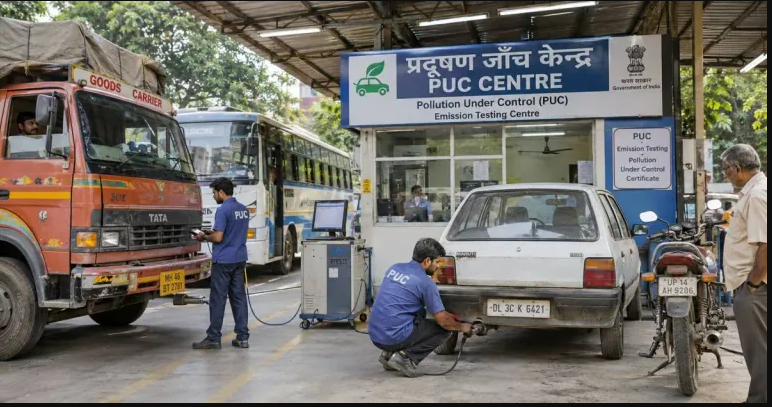

NEW DELHI, Nov 19: Owners of BS-VI private cars and bikes up to six years old can now get Pollution Under Control (PUC) certificates valid for three years. But the same benefit will not apply to an older car or a commercial vehicle. The Centre has revised the renewal schedule, giving newer, cleaner vehicles more time between emission tests while keeping tighter checks on older ones.
The Ministry of Road Transport and Highways has notified the Central Motor Vehicles (Sixteenth Amendment) Rules, 2026, replacing the earlier provisions under Rule 115. The rules follow a draft released for public feedback in July and came into force on publication in the Official Gazette.
The government has changed the renewal schedule for PUC certificates, giving owners of newer BS-VI vehicles more time before they need to get their vehicles tested again. Under the revised rules, private BS-VI vehicles up to six years old will need a fresh PUC certificate once every three years, while transport vehicles in the same age group will require renewal once every two years.
The frequency of renewal will depend on a vehicle’s emission standard, age and category. While older BS-VI vehicles will continue to need more frequent renewals, vehicles complying with BS-I, BS-II and BS-III norms will have to renew their certificates every three months. The Ministry of Road Transport and Highways notified the changes on November 13 through the Central Motor Vehicles (Sixteenth Amendment) Rules, 2026. The rules came into force upon publication in the Official Gazette on November 19.
The revised schedule sets different validity periods for private and transport vehicles that comply with BS-VI emission standards. The age of a vehicle is calculated from its date of first registration.
For private, or non-transport, BS-VI vehicles up to six years old, a PUC certificate will remain valid for three years. Those more than six years old but not exceeding 10 years will need annual renewal. Vehicles older than 10 years will have to renew their certificates every six months.
The schedule is slightly different for BS-VI transport vehicles. Those up to six years old will need a fresh certificate once every two years. Vehicles aged more than six years but up to 10 years will require annual renewal, while those older than 10 years will have to renew every six months.
The validity periods for vehicles complying with older emission standards remain shorter. BS-I, BS-II and BS-III vehicles will have certificates valid for three months, while BS-IV vehicles will need renewal every six months.
PUC certificate validity: Complete schedule
| Vehicle category | Certificate validity |
| BS-I, BS-II and BS-III vehicles | 3 months |
| BS-IV vehicles | 6 months |
| BS-VI private vehicles up to 6 years old | 3 years |
| BS-VI private vehicles over 6 years and up to 10 years old | 1 year |
| BS-VI private vehicles over 10 years old | 6 months |
| BS-VI transport vehicles up to 6 years old | 2 years |
| BS-VI transport vehicles over 6 years and up to 10 years old | 1 year |
| BS-VI transport vehicles over 10 years old | 6 months |
The amended rules also clarify when a renewed PUC certificate will take effect, depending on when the vehicle owner applies.
If the renewal is sought within the 10 days before the existing certificate expires, the new certificate will become effective from the expiry date of the previous one. However, if the application is made after the existing certificate has expired, the renewed certificate will take effect from the date of renewal. This distinction is important for vehicle owners who want to avoid a gap between the validity of their old and new certificates.
The revised validity schedule will not automatically change the expiry dates of certificates that were issued before the new rules came into force. Instead, the updated schedule will apply when such certificates are first renewed after the commencement of the Central Motor Vehicles (Sixteenth Amendment) Rules, 2026.
The amendment has been made under the Motor Vehicles Act, 1988, and changes Rule 115 of the Central Motor Vehicles Rules, 1989. It also reiterates that every vehicle must carry a valid PUC certificate issued or renewed by an agency authorised by the respective state government. The certificate must be produced when requested by the designated authorities.
The changes come as authorities continue to tighten checks on vehicular pollution. Delhi, for example, has introduced stricter vehicle-entry restrictions during the winter season, with valid PUC certificates required even for BS-VI vehicles entering the capital.
The ministry said the age-based system is intended to reduce repeated testing for newer and cleaner vehicles while continuing regular emission checks on older ones.
(Manas Dasgupta)