




Manas Dasgupta
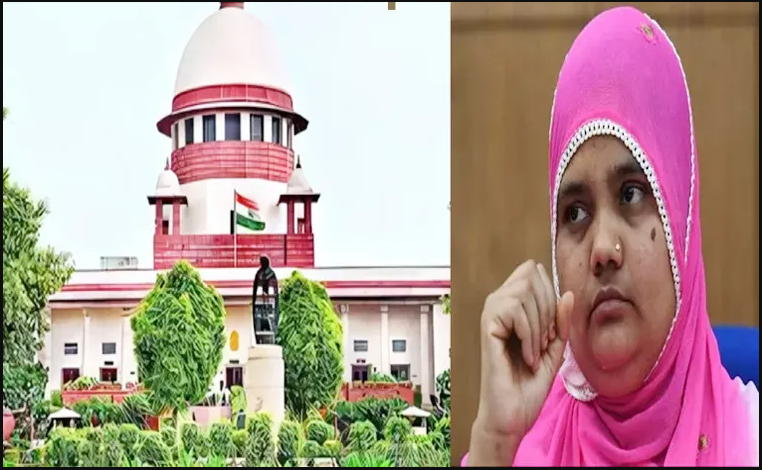
NEW DELHI, Nov 16: The Supreme Court has suspended the life sentences and granted bail to two men convicted in the infamous Bilkis Bano gangrape and murder of 7 of her family members case during the 2002 Gujarat riots, noting that they have already spent more than 17 years in jail and that their appeal involved issues of fact and law that require consideration.
In an order on October 28, which was uploaded on Monday, the Supreme Court granted relief to Bipinchand Joshi and Pradip Modhiya, who had challenged a judgment of the Bombay High Court in May 2017 that upheld their conviction and life imprisonment. While granting bail, the SC bench also took note of the fact that one of the appellants, Joshi, is severely handicapped.
A Bench of Justices MM Sundresh and P.B. Varale noted that Bipin Chandra Joshi and Pradeep Mordhiya had been incarcerated for more than 17 years. “Having heard the parties, it suffices to state that the appellants have been incarcerated for a period of more than 17 years, and also the fact remains that one of the appellants has a severe handicap. Certainly, there are issues to be decided in the appeal, both on fact and law,” the apex court said in its October 28 order.
“In view of the above and considering the issues involved in this appeal, we suspend the sentence and grant bail to the appellants on such terms and conditions as may be imposed by the concerned trial court,” the bench added. The concerned trial court will determine the conditions of their bail. The Supreme Court also said the appeals would be listed for hearing in due course.
Arguing that the two men have been incarcerated for more than 17 years, senior advocate Siddharth Luthra submitted that one of the convicts had not been named in the FIR and was implicated after nearly three years following the 2002 riots.
The government’s lawyer had opposed the bail petition during the hearing, citing the gravity of the offences and the concurrent findings of the trial court and the high court. Additional Solicitor General Raja Thakre vehemently opposed the plea and said the High Court and the trial court have taken into consideration the relevant material brought on record, especially as the offence committed was so serious.
The Supreme Court had issued notice on their petition in an order in March this year. During earlier hearings, the defence lawyer said the survivor had not named the two petitioners in her police statement on rape allegations and in her statement recorded before the doctor during her medical examination. The lawyer had also said no overt act had been attributed to the two men, and that the only evidence against them was that they may have been present in the mob at the time of the incident.
Bilkis Bano was 21 years old and five months pregnant when she was gang-raped while trying to escape the horror of the communal riots that broke out after the Godhra train burning incident in February 2002. Her three-year-old daughter was among the seven family members killed.
The two convicts, Mordhiya and Joshi, are among the 11 whose remission was quashed by the Supreme Court in 2024. The other convicts in the case are Govind Nai, Ramesh Chandana, Mitesh Bhatt, Bakabhai Vohania, Kesarbhai Vohania, Jaswant Nai, Radheshyam Shah, Rajubhai Soni and Shailesh Bhatt.
Joshi and Mordhiya were convicted by the trial court under Sections 143 (unlawful assembly), 147 (rioting), 302 (murder) read with Sections 376 (rape) of the Indian Penal Code and were sentenced to rigorous imprisonment for life with fine.
On January 8, 2024, the apex court annulled the remission the Gujarat government granted to the 11 convicts in the high-profile case while slamming the state for being “complicit” with an accused and abusing its discretion.
Slamming the Gujarat government for remitting their sentences, the apex court said it had “usurped” the powers of the Maharashtra government to grant remission. The Bilkis Bano case was transferred from a Gujarat court to a court in Mumbai, and the Supreme Court said the Maharashtra government was vested with the power to grant remission.
In August 2022, the Gujarat government had granted remission to all 11 convicts in the case which was annulled by the SC in January, 2024.
The latest order concerns two of those convicts, whose sentences have been suspended and who have been granted bail while their appeals against conviction remain pending. The order does not amount to an acquittal.