




Manas Dasgupta
NEW DELHI, Nov 8: “Notebandi” devastated the economy and “votebandi” is destroying the polity, the Congress slammed the Narendra Modi government at the Centre on Sunday which marked completion of a decade of demonetisation of the high value currency notes.
The Congress general secretary in-charge communications Jairam Ramesh reminded the people that both the disastrous measure were the “contributions” of the Prime Minister Narendra Modi. He also shared the screenshot of a media report which claimed that demonetisation was a disaster in 2016 and is a resounding failure 10 years on.
On this day in 2016, Prime Minister Modi addressed the nation and announced demonetisation of high-value currency notes of ₹500 and ₹1,000.
The Congress has consistently attacked the Modi government for the “reckless” decision that broke the back of the Indian economy and maintained the country would not forgive the prime minister for this “monumental disaster” that failed to achieve any of the “shifting goalposts” that the Modi government had proposed as objectives for the demonetisation move.
Experts quoting the Reserve Bank of India data claimed that it showed the excise had little impact on reducing cash in circulation and that detection of counterfeit notes, particularly ₹500 notes, has also increased, even though the value of transactions on the Unified Payments Interface (UPI) has grown steadily year after year, even when measured as a percentage of India’s Gross Domestic Product (GDP).
The core intent to render illicit cash worthless failed when 99.3% (approx. ₹15.3 lakh crore) of the banned ₹500 and ₹1,000 notes returned to the banking system. Hoarders largely laundered wealth through alternate assets like gold, real estate, and shell structures.
The RBI data revealed that the cash with the public had remained largely the same as before demonetisation even though one of the major objectives of the demonetisation measure was to reduce the cash flow, which Mr Modi while announcing his government’s decision to withdraw the high value currency notes from circulation had said, “The magnitude of cash in circulation is directly linked to the level of corruption. Inflation becomes worse through the deployment of cash earned in corrupt ways.”
Further, he said the “high circulation of cash also strengthens the hawala trade, which is directly connected to black money and illegal trade in weapons.” One of the stated aims of demonetisation, therefore, was to turn India into a less-cash society. The data show that this objective remained largely unfulfilled.
The RBI’s data on currency with the public show that this amount, as a percentage of GDP, has remained largely the same as it was before demonetisation. Currency with the public as a percentage of GDP stood at 11.9% in 2015-16, the financial year preceding demonetisation, and rose marginally to 12.1% by March 31, 2026. The value of UPI transactions as a percentage of GDP, however, has grown from zero in 2016-17 to nearly 91% in 2025-26.
Another aim of demonetisation was to curb counterfeiting of Indian currency. However, the performance on this too has been uneven. “Have you ever thought about how these terrorists get their money?” Mr Modi had further said in his speech in 2016. “Enemies from across the border run their operations using fake currency notes. This has been going on for years. Many times, those using fake five hundred and thousand rupee notes have been caught, and many such notes have been seized.”
The RBI has data on the number of counterfeit notes detected per one crore of notes in circulation. Across all denominations, the number of fake notes detected per crore of notes in circulation fell from 70.1 in 2015-16 to 13.4 in 2025-26. However, in the wake of demonetisation, the government introduced a new series of ₹500 and ₹2,000 notes, which were supposed to be more secure and difficult to counterfeit. But the RBI data show that the central bank’s detection of fake ₹500 notes has shot up since demonetisation.
While the RBI found 0.3 counterfeit ₹500 notes per 1 crore of notes in circulation in 2016-17 when they were introduced, this number stood at 20.1 as of 2025-26. A comparison for the ₹2,000 note is trickier because the RBI began withdrawing the note from circulation in 2023. However, the data show that once the withdrawal process started, the detection of fake ₹2,000 notes shot up. The RBI data, however, did not reveal whether the increase in the detection of counterfeit notes was due to rise in counterfeiting or improvements in detection.
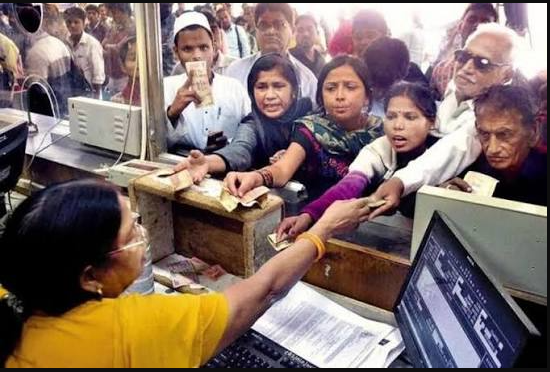
Many opposition leaders, independent economists, and public accountability groups view the exercise as a costly disruption that failed to structurally curb corruption or permanently dent the shadow economy. On the other side, the policy evoked more negative outcome as it triggered severe cash crunches, major disruptions in agriculture, job losses, and a contraction or setback in growth for India’s informal sector and small-to-medium enterprises.
In January 2023, a five-judge bench of the Supreme Court of India had upheld the validity of the 2016 government decision by a 4:1 majority, ruling that the decision-making process followed the proper legal procedures, though the court’s judgment addressed the legality of the process and did not reflect the economic consequences of the outcome.