



NEW DELHI, Nov 5: The Election Commission of India (ECI) on Thursday announced the annual special summary revision (SSR) of electoral rolls for six States/ Union Territories comprising Arunachal Pradesh, Chandigarh, Dadra and Nagar Haveli, and Daman and Diu, Mizoram, Odisha and Sikkim where the special intensive revision (SIR) has been completed and the final rolls published.
Earlier on October 15, the SSR was announced for 17 States and Union Territories, including poll-bound Uttarakhand, Uttar Pradesh, Punjab, Manipur and Goa. The SSR, an annual exercise, has not been carried out amid the launch of the now controversial SIR of electoral rolls last year. Election Commissioners S.S. Sandhu and Vivek Joshi are understood to have raised this as an anomaly as well among other issues.
The annual SSR seeks to enrol eligible voters, particularly young and first-time electors, and facilitate advance applications from those who will become eligible on April 1, July 1 and October 1, 2027. The draft electoral rolls will be published on November 30 and the final ones on January 21, 2027.
Furnishing Aadhaar details in Forms 6 and 8 will remain voluntary. No application for enrolment can be rejected, nor can an existing entry be deleted, for failure to provide Aadhaar, according to the SSR order issued by the ECI. Unlike the contentious SIR process, when enrolling through the SSR, voters do no need to give any documentation proving citizenship or be mapped with earlier electoral rolls.
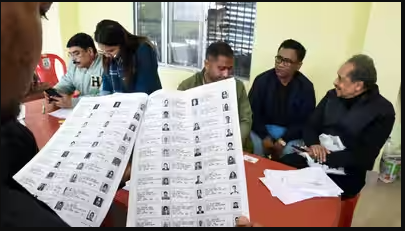
Among the firsts, in this year’s SSR, the ECI has directed that, at the time of polls, “readable PDF” of the alphabetically arranged electoral rolls in pen drive or any other electronic storage device can be provided to the contesting candidates.
This is crucial as Opposition parties have been demanding machine-readable electoral rolls rather than image-based PDFs, so that they are digitally searchable, indexable, and verifiable.
Political parties would also be provided with supplementary voter lists, which were earlier kept only for record and future use. The SSR process this time would also not include house-to-house visits by booth-level officers (BLOs). Instead, both draft as well as final lists would be put up at polling booths.
(Manas Dasgupta)