



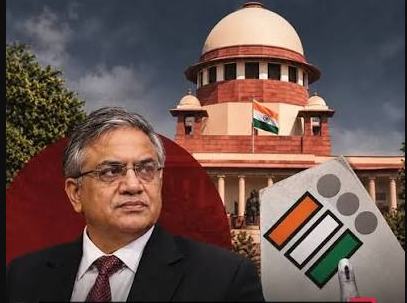

NEW DELHI, Nov 4: The Supreme Court on Wednesday issued notice to the Centre and the Election Commission of India (ECI) on a plea challenging the constitutional validity of Section 16 of the Chief Election Commissioner and Other Election Commissioners Act, 2023, which grants lifelong immunity to the Chief Election Commissioner (CEC) and Election Commissioners (ECs) from civil and criminal proceedings for acts performed in the discharge of their official duties.
The plea questions the legality of the provision, which provides protection against legal proceedings for actions undertaken in the exercise of official functions. The Supreme Court’s notice to the Centre and the ECI marks the initiation of judicial scrutiny into the constitutional validity of the provision and its implications for the accountability of the country’s top election officials.
A bench comprising Chief Justice Surya Kant and Justices Joymalya Bagchi and V Mohana sought responses from the Centre and the Election Commission of India on the plea challenging the constitutional validity of Section 16 of the Act. Parliament enacted the legislation last year, granting the CEC and the ECs immunity from legal action or proceedings for acts performed or decisions taken in their official capacity during their tenure.
The plea argues that the blanket immunity granted to the CEC and the ECs deprives citizens of the civil and criminal remedies available against them. It further contends that safeguarding the independence of the Election Commission cannot justify granting its members sweeping protection from legal accountability. The petitioner has sought a declaration that Section 16 of the 2023 Act is unconstitutional.
The Supreme Court issued the notice while hearing a separate set of petitions challenging the Election Commission’s Special Intensive Revision (SIR) of electoral rolls.
During the hearing, the bench raised concerns over the SIR exercise, questioning whether it was intended to harass or intimidate voters. It also sought to know why the revision was being conducted urgently in Delhi when no election was imminent.
The court said the Election Commission should avoid insisting on rigid deadlines and ensure that voters are allowed to submit enumeration forms even after the prescribed date. It also questioned why individuals already enrolled in the electoral rolls, but whose names were missing from the draft rolls, were being asked to submit Form 6 afresh.
The Election Commission informed the court that it would consider extending the deadlines in Delhi and permitting the late submission of enumeration forms. The next hearing in the SIR matter has been scheduled for November 19.
The bench further clarified that the deletion of a voter’s name during the SIR exercise or the expiry of a deadline does not permanently bar their inclusion in the electoral rolls. Citizens can seek corrections or inclusion of their names until the last date for filing nominations.
(Manas Dasgupta)