



Manas Dasgupta
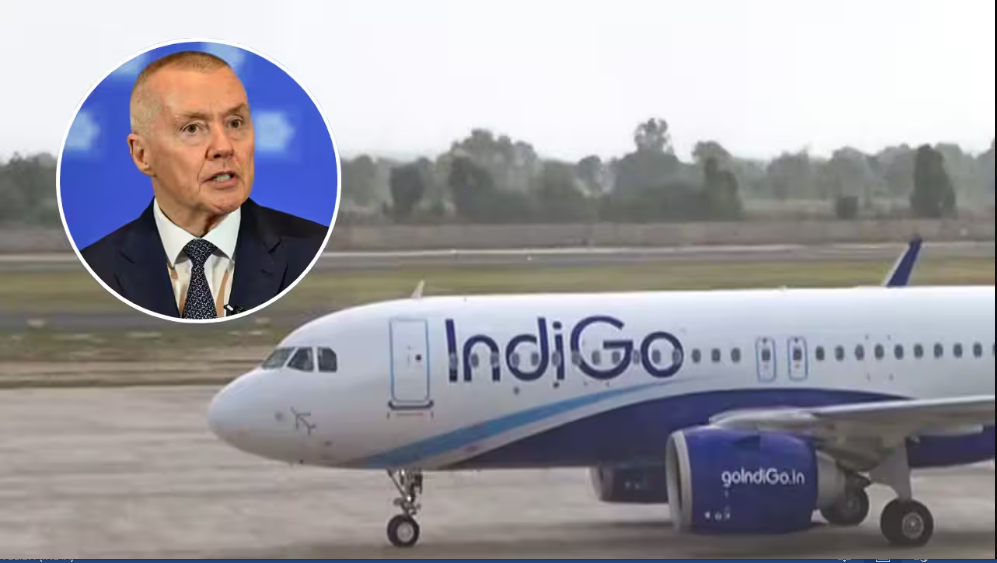
NEW DELHI, Nov 2: The Supreme Court on Monday refused to list for urgent hearing a plea over steep rise in airfares with a cryptic remark “Don’t travel by air,” even as the IndiGo Chief Executive officer (CEO) Willie Walsh cautioned that airfares could get higher due to record-high aviation turbine fuel (ATF) prices though the airline was trying to absorb as much of the cost increase as possible.
Pointing out that the aviation fare had increased by 700 per cent, an advocate had mentioned the matter for urgent listing before a Bench comprising Justices Vikram Nath, Sandeep Mehta and Aparesh Kumar Singh. “Don’t travel by air,” the Bench observed.
The advocate then said air travel was an essential service. “It’s a violation of Article 14” which deals with equality before law.
The Supreme Court is already hearing a separate petition filed by social activist S. Laxminarayanan, who has sought a robust and independent regulator that ensures transparency and passenger protection across the civil aviation sector and regulatory guidelines to control “unpredictable fluctuations” in airfare and ancillary charges imposed by private airlines in India.
During a hearing on that plea on October 16, the Centre had informed the Supreme Court that administrative approval has been granted to rules under a 2024 legislation aimed at regulating India’s aviation sector, and was likely to be published in two weeks. The Supreme Court had asked Solicitor General Tushar Mehta to place the published rules under the Bharatiya Vayuyan Adhiniyam, 2024, before the court on the next date of hearing — November 16.
On August 17, the Centre told the Supreme Court that it had fast-tracked the framing of rules under the Bharatiya Vayuyan Adhiniyam, aimed at modernising India’s aviation sector. In November last year, the Supreme Court sought responses from the Centre and others on Mr Laxminarayanan’s plea.
While hearing the matter in January, the Supreme Court had said it would interfere with the “unpredictable fluctuations” in airfares and flagged the exorbitant rise during festivals. It had termed the exorbitant hike of fares by airlines “exploitation” and asked the Centre and the Directorate General of Civil Aviation to file their replies on the plea.
Meanwhile, Mr Walsh in his first media interaction on Monday since he took reins of the airline earlier this year, warned that rising operating costs were putting pressure on the aviation industry’s financial sustainability and cautioned about possible rise in airfares.
He acknowledged that expensive flight tickets could weigh on passenger demand but added that the hike was necessary to ensure the airline’s financial stability. “We understand that people would prefer to have lower prices, but we have to have an eye on the financial stability of the company. We’re trying to absorb as much as we possibly can,” Walsh said.
Fuel cost accounts for nearly 32 per cent of an airline’s operating expenses, making the sharp increase in jet fuel prices a significant strain on profitability. Walsh emphasized that the hike has put unprecedented pressure on the airlines’ operations.
The IndiGo CEO attributed the surge in ATF prices largely to an unusually high crack spread, which refers to the price difference between crude oil and refined jet fuel. Between 2000 and 2025, the crack spread stood at an average of around 22 per cent, but it has now climbed up to approximately 65 per cent, Walsh said. The increase in crack spread is driven by disruptions in global refining capacity, particularly in Europe.
Walsh, however, expects the situation to ease as refining capacity and production gradually rebalance. He said elevated fuel prices were a short-term challenge for the industry rather than a long-term concern. Still, with soaring fuel prices, Walsh said IndiGo slid into a Rs 19-billion net loss and that the carriers are still navigating a brutal operating environment.
Adding to the financial burden on airlines is also the expensive airport infrastructure, Walsh said as he called for a more competitive cost structure in the Indian aviation sector and demanded lower airport charges and taxes. “Airport charges are too high. We would do much better if we had lower taxes. So lower taxes, lower airport charges. That’s the way forward,” he said.
He noted that airport charges had increased by around 4 per cent in the second quarter, while airlines were seeking better value from airport operators. Walsh also argued that airports, which effectively operate as monopolies, should adopt more competitive pricing. He said he had discussed the issue with Arun Bansal, CEO of Adani Airport Holdings, and hoped to maintain regular engagement with airport operators on the industry’s cost concerns.
The airline was also reviewing a proposed fuel price stabilisation scheme. However, Walsh said that IndiGo has not participated in the scheme so far, describing the decision as a cash-flow consideration. The airline would examine the proposal again if it made commercial sense.
He pointed out that geopolitical tensions and airspace restrictions continue to affect airline operations. Walsh said the closure of Pakistani airspace had forced Indian carriers to recalibrate their networks. IndiGo has reduced around 30 flights a day, primarily on services to and from Saudi Arabia amid the ongoing situation in West Asia. The airline was closely monitoring developments and will restore services only when it is safe to do so.
“Safety is our number one priority. We will not do anything that creates any risk for our passengers,” Walsh said.as He stressed that the aviation industry was facing an unprecedented level of geopolitical disruption but expressed confidence in its resilience and ability to adapt. IndiGo has managed to recover its network in other affected areas, although international capacity saw a marginal reduction during the second quarter.