



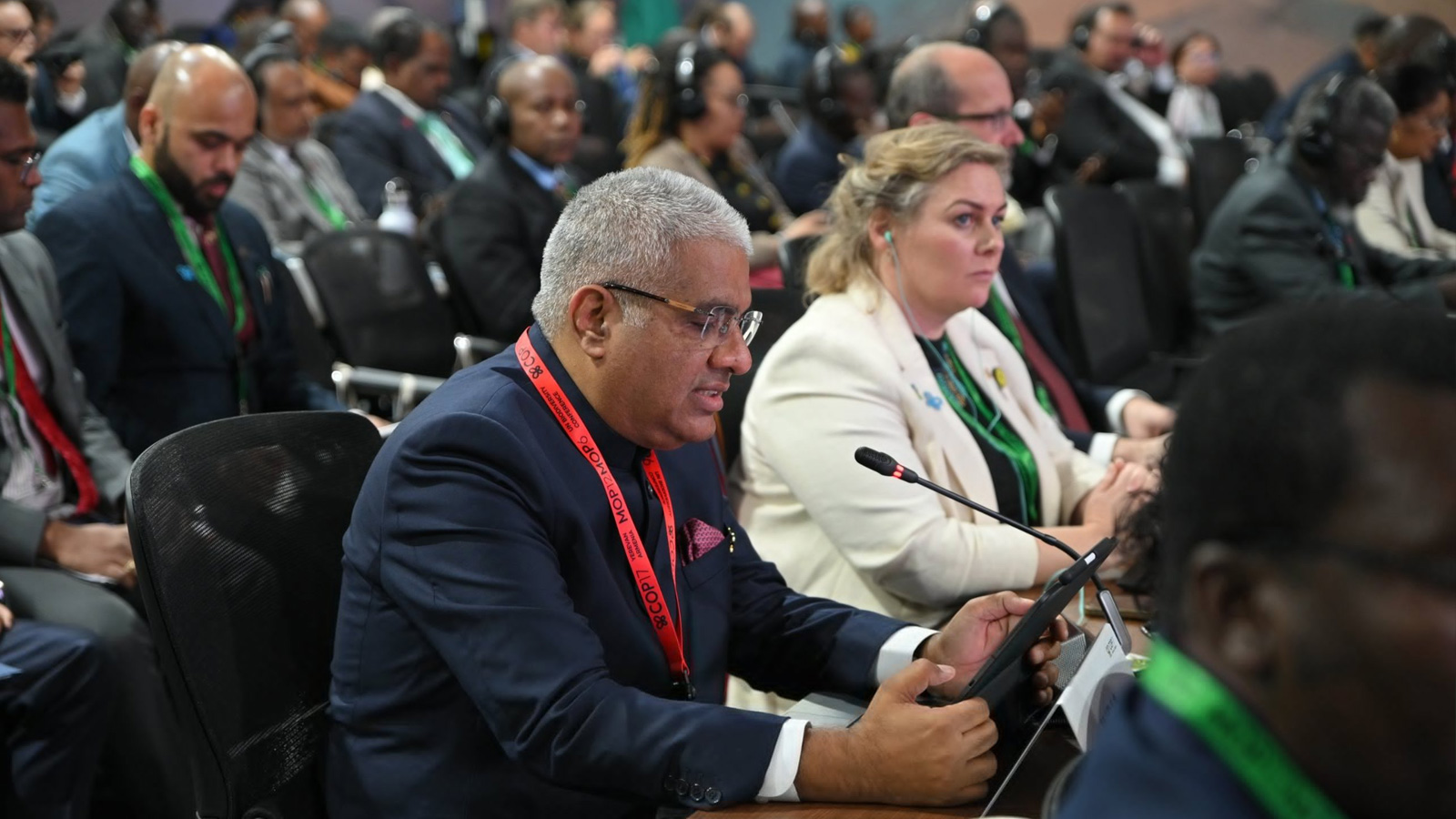

New Delhi: India on Tuesday called for adequate and predictable finance, capacity building and technology transfer from developed countries to support implementation of the Kunming–Montreal Global Biodiversity Framework.
Delivering India’s national statement at the high-level segment of the 17th Conference of the Parties to the Convention on Biological Diversity (CBD COP-17) in Yerevan, Armenia, Union Environment Minister Bhupender Yadav said implementation must reflect national priorities, circumstances and legislation.
Yadav reaffirmed India’s commitment to biodiversity conservation and collective efforts to live in harmony with nature. He also thanked Armenia for hosting the conference.
The minister said India supported benefit-sharing from digital sequence information on genetic resources through the multilateral mechanism, including the Cali Fund. He called for a science-based, risk-proportionate and precautionary approach to synthetic biology and biosafety.
India’s updated National Biodiversity Strategy and Action Plan translates the global framework into 23 national biodiversity targets supported by 142 indicators, he said.
Highlighting conservation efforts, Yadav said India had 1,134 protected areas, 103 Ramsar Sites, 57 Biodiversity Heritage Sites and 18 Biosphere Reserves. Of the biosphere reserves, 13 are part of UNESCO’s Man and the Biosphere Network.
He said the International Big Cat Alliance was advancing cooperation to conserve the world’s seven big-cat species and their habitats. Mission LiFE and the Ek Ped Maa Ke Naam campaign were also encouraging environmental stewardship and public participation in conservation.
The minister cited the Mangrove Initiative for Shoreline Habitats and Tangible Incomes (MISHTI), Amrit Dharohar and the Soil Health Card Scheme as initiatives supporting mangrove restoration, wetland conservation and sustainable soil management.
Yadav said India had aligned its legislation with the convention and established village-level committees for decentralised access and benefit-sharing, enabling local communities to participate in and benefit from the sustainable use of biological resources.
India would continue to work with all parties to advance the global biodiversity framework in the spirit of “One Earth, One Family, One Future”, he added.