




Manas Dasgupta
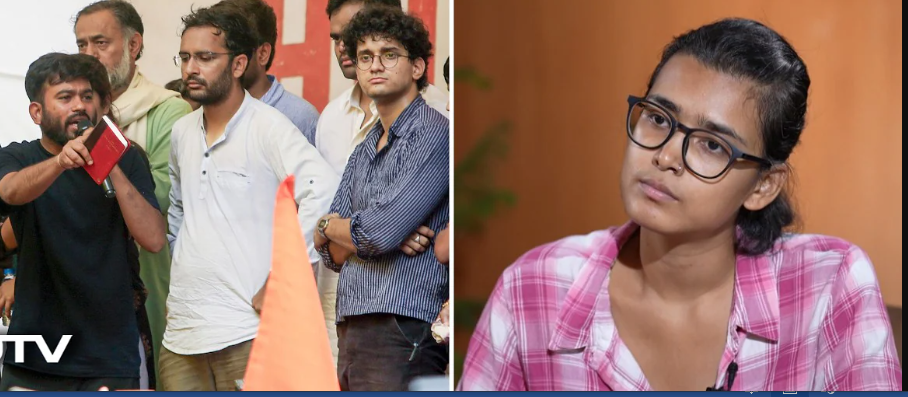
NEW DELHI, Oct 19: The All India Students Association (AISA) president Neha Bora has challenged in the Delhi High Court a notice by the Delhi police asking her to execute a peace bond while a special magisterial court on Monday reserved its order on the police demand seeking five more days in judicial custody of the Cockroach Janta Party (CJP) leaders Saurav Das and Ashutosh Ranka.
The AISA said on Monday that the lawyers of their president Bora would seek from the chief justice an urgent hearing on her petition challenging the notice for executing a peace bond. Ms Bora was taken into preventive detention on October 16 when she was on her way to participate in the ‘Lehra Do Tiranga’ march the call for which was given by the CJP as a mark of protest against the Chief Election Commissioner (CEC) Gyanesh Kumar and the “Special Intensive Revision” (SIR) of the electoral rolls.
She was released the next day morning after spending a night in the police custody while the CJP founder president Abhijeet Dipke, who was also arrested the same day was produced before a court on Saturday and was released on conditional bail after signing the peace bond restraining them from taking any step that could disturb the peace in the national capital.
The Delhi Police (New Delhi District) issued the notice on Sunday under Sections 126 and 130, read with Section 135(3), of the Bharatiya Nagarik Suraksha Sanhita (BNSS). Dated October 17, it directed her to appear before the Special Executive Magistrate (SEM), New Delhi District, on October 19 at 2 p.m. It asked her to furnish a personal bond of ₹10,000 with one surety “for keeping the peace for the period of inquiry.”
AISA said Ms Bora’s petition seeks an immediate stay and withdrawal of the notice. It argues that the notice is prima facie ambiguous and factually incorrect, and that it violates Articles 19 and 21 of the Constitution. Her legal team, led by Abhik Chimni, Pranjal Abrol and Moksha, will also appear before the SEM to reply to the notice and inform the court of the High Court challenge.
AISA called the notice a calculated attempt to curb the right to peaceful protest. It said the Delhi Police had repeatedly misused Section 163 of the BNSS (formerly Section 144) during protests demanding the resignation of the CEC, roll back of SIR and the repeal of the 2023 Election Commission appointment law. It alleged that the Government had deployed over 40,000 paramilitary personnel, shut metro stations and suspended internet connectivity to suppress the protests.
The CJP president Dipke was released by a Delhi court on Saturday after signing a peace bond, even as sporadic protests, led by women activists, continued. A Special Executive Magistrate had ordered Dipke’s release after he signed a ₹50,000 bond stating that he would not participate in any activity that would breach peace or create a law-and-order situation. He was detained on Friday evening minutes ahead of the ‘Lehra Do Tiranga’ march at Connaught Place.
A CJP counsel questioned why the police repeatedly took Mr Dipke before the Special Executive Magistrate instead of taking him to the magistrate with jurisdiction over the case. Police said they released Mr Dipke because his case involved a violation of prohibitory orders under Section 163 of the Bharatiya Nagarik Suraksha Sanhita, unlike that against other CJP members Saurav Das and Ashutosh Ranka, who face more serious charges, including trespass.
On Monday, the Delhi police sought a five-day extension of the judicial custody of Das and Ranka and the Special Executive Magistrate (SEM) court reserved its order on the police’s request to extend their custody. A petition seeking the release of the two leaders was also filed before the court on Monday, but the decision was reserved after the hearing.
Das and Ranka were initially sent to five days of judicial custody following their preventive arrest. The CJP has also accused authorities of deliberately prolonging the “illegal arrest” of Das and Ranka by “delaying court proceedings” and alleged that bail sureties had been rejected on “vague” grounds, even as police registered a non-cognisable report over “threats” received by the magistrate hearing the matter.
In a statement, the Delhi Police said on the morning of October 13, Saurav Das, Ashutosh Ranka, Ajinkya Shinde and 11 other CJP members reached Jantar Mantar through a private premises. The police said Jantar Mantar had been removed from the list of designated protest sites.
According to the police, security personnel deployed at the spot tried to stop the group, but the protesters allegedly obstructed them from performing their duties. The police said all 14 people were taken into custody. Das, Ranka and Shinde were preventively arrested over alleged attempts to disturb public peace and violate the law. However, Shinde was released on bail on the condition that he maintain peace and good behaviour.
Meanwhile, the Delhi Police registered a non-cognisable report (NCR) against unidentified persons on Sunday over an alleged threat to a magistrate during the bail hearing of Das and Ranka. The party has alleged that the release of its two leaders was being delayed and that the guarantees provided by four bail sureties were rejected for unclear reasons. According to Ratna Singh, head of the party’s legal cell, the Special Executive Magistrate informed her that the court had received a threatening message.