



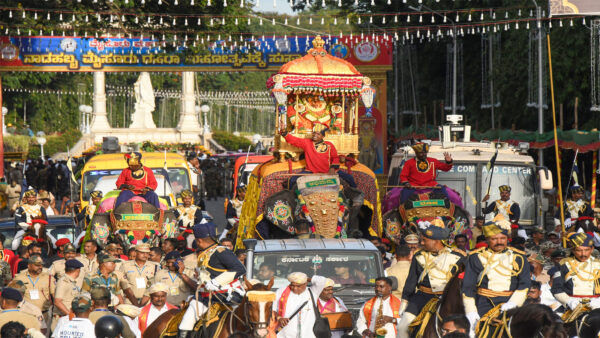

Mysuru: Illuminated palaces, carefully arranged dolls, floral gatherings and ceremonies introducing children to learning give Navratri and Dussehra distinct expressions across South India. Across the region, worship of the Goddess brings together devotion, artistic traditions and community participation.
While the celebrations share themes of divine strength and the victory of good over evil, local customs shape how families and communities observe the festival—from Karnataka’s grand Dasara processions to intimate Golu displays in Tamil Nadu.
In Karnataka, Mysuru Dasara is the state festival, or Nadahabba. Associated with Goddess Chamundeshwari’s victory over Mahishasura, it combines temple worship, palace traditions and public cultural celebrations. The Vijayadashami procession, popularly known as Jamboo Savari, is its best-known attraction, while music, performances and festive illumination contribute to the city’s distinctive atmosphere.
Tamil Nadu’s celebrations find a particularly colourful expression in Golu, also called Kolu. Dolls and figurines arranged on stepped displays bring religious narratives and artistic imagination into homes. The displays make Navratri an occasion for preserving craftsmanship and sharing stories across generations, blending worship with domestic creativity.
In Kerala, learning takes centre stage during the concluding days. Ashtami, Navami and Vijayadashami are closely associated with the worship of Saraswati, the Goddess of knowledge. Books and learning materials are placed for worship, while Vijayadashami is considered auspicious for Vidyarambham, the ceremony initiating children into letters.
Temples and homes become settings for these first steps in education. Kerala’s Navratri observances also include the traditional celebrations in Thiruvananthapuram, linking worship with the region’s musical and ceremonial heritage.
In Telangana, Bathukamma brings women together around tiered arrangements of seasonal flowers. Participants carry the floral offerings, sing folk songs and dance before the arrangements are immersed in water bodies. Celebrated during the Navratri period, the festival honours Goddess Gauri and expresses connections among womanhood, nature and community identity.
Andhra Pradesh’s celebrations include the prominent Dussehra observances at Vijayawada’s Kanaka Durga Temple on Indrakeeladri Hill. Worship of the Goddess forms the centre of the festival, drawing together devotion and the theme of good overcoming evil.
Elsewhere in the state, Proddatur’s festivities culminate in the Thotti Meravani procession, in which the Goddess is taken through the town alongside deities from more than 20 other temples. The gathering demonstrates how neighbourhood and temple traditions contribute to the wider celebration.
Together, these observances reveal the range of South India’s festive heritage. Public processions and household displays, floral offerings and first lessons give communities different ways to celebrate faith while sustaining local arts, knowledge and shared traditions.
[DD news]