



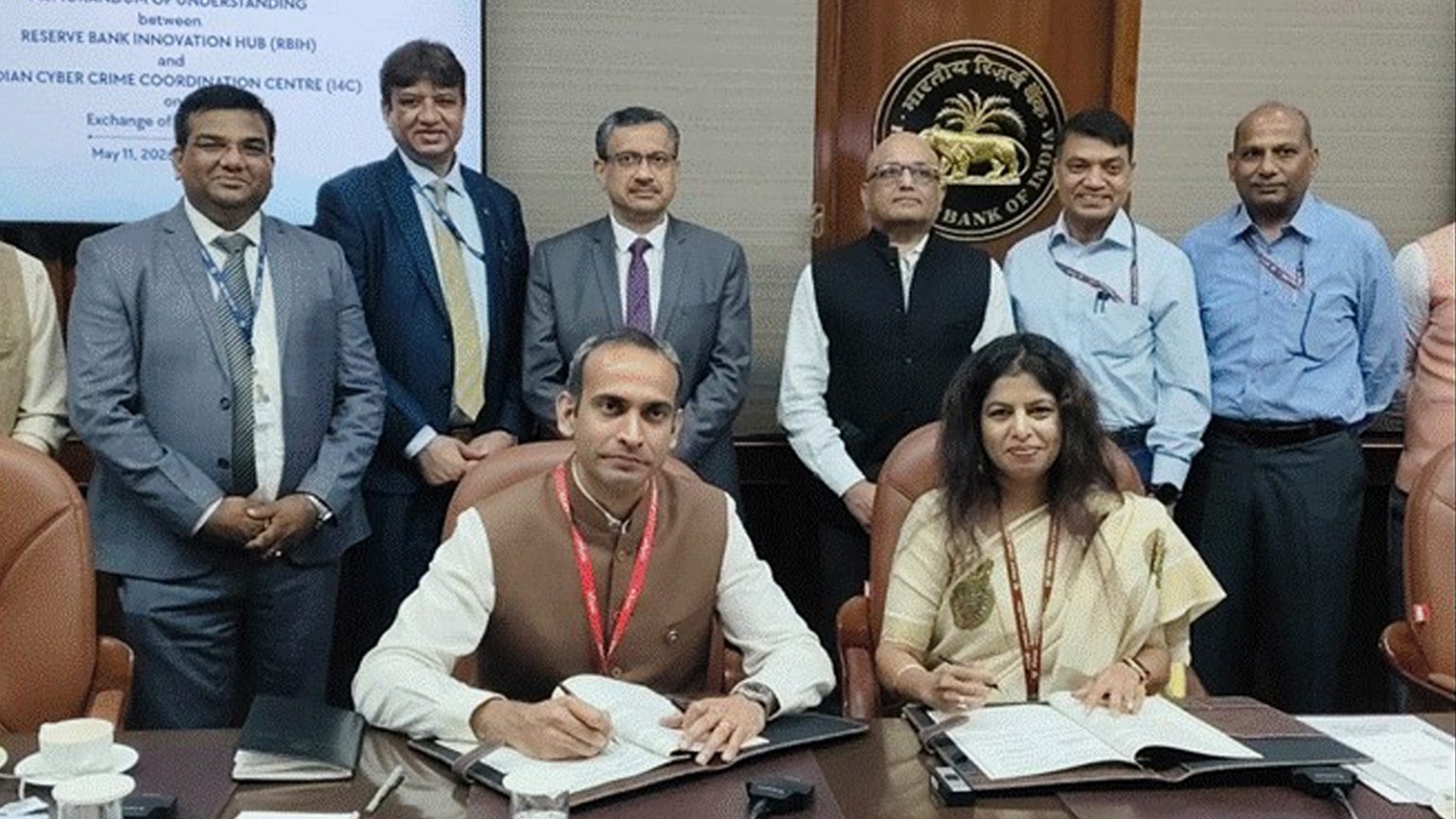

New Delhi: The Indian Cyber Crime Coordination Centre (I4C) under the Ministry of Home Affairs (MHA) and the Reserve Bank Innovation Hub (RBIH) have signed a Memorandum of Understanding (MoU) to strengthen collaboration in combating cyber-enabled financial frauds and curbing mule accounts across India’s banking and digital payments ecosystem.
The agreement aims to enhance fraud-risk intelligence sharing, analytical support, and operational coordination to improve proactive fraud detection and prevention mechanisms.
In a post on X, Union Home Minister Amit Shah said “Modi govt is tirelessly working for cyber secure Bharat. Mule accounts are big hurdles in curbing cyber crimes. Today, the I4C under MHA signed an MoU with Reserve Bank Innovation Hub (RBIH) unleashing the power of Artificial Intelligence to combat cyber fraud.”
“The move will swiftly detect and cull hidden mule accounts by feeding the data from the I4C’s Suspect Registry to the AI-driven fraud detection system and serve the citizens as their next gen shield against cyber crime,” he added.
According to the MHA, the collaboration will strengthen AI-based fraud detection tools such as MuleHunter.ai, which has been deployed across banks to identify suspicious financial activity.
Under the MoU, I4C will share intelligence related to mule accounts and suspect identifiers from its Suspect Registry, while RBIH will utilise the data to train and enhance AI-powered fraud-risk assessment models.
The MoU was signed by Roopa M, Inspector General (Admin), I4C, and Sahil Kinni, CEO of RBIH, in the presence of RBI Deputy Governor Rohit Jain, Special Secretary (Internal Security) Anand Swaroop, Joint Secretary (Cyber and Information Security) Rakesh Rathi, I4C CEO Rajesh Kumar, and senior officials from the RBI, RBIH, and I4C.
The MHA said the initiative is expected to strengthen India’s cybercrime response ecosystem and improve trust in digital banking and payment systems.
The I4C has been actively working to bolster cybercrime monitoring and intelligence-sharing through platforms such as the National Cybercrime Reporting Portal (NCRP) and the Suspect Registry. Meanwhile, RBIH, a wholly owned subsidiary of the Reserve Bank of India, has been promoting innovation in the financial sector through technology-driven initiatives and AI-enabled fraud detection frameworks aimed at making digital transactions safer and more resilient.
(DD News)