




Virendra Pandit
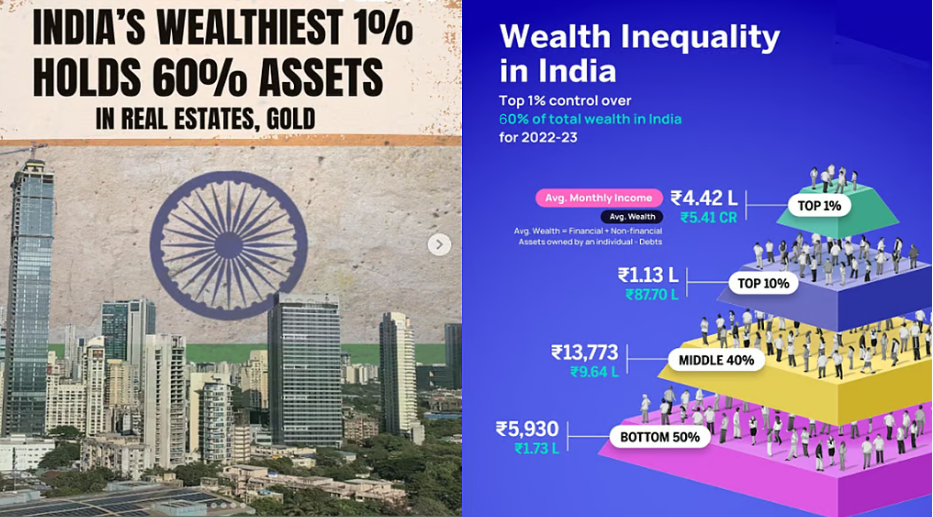
New Delhi: After India rolled out economic liberalization, privatization, and globalization in 1991, the richest 1 percent saw their wealth grow by 62 percent between 2000 and 2023, the media reported on Tuesday.
According to a study commissioned by the South African Presidency of the Group of 20, the richest 1 percent captured 41 percent of all new wealth created between 2000 and 2023, while the bottom half of the global population received only 1 percent.
The study, led by Nobel Prize-winning economist Joseph Stiglitz, warned that global inequality has reached “emergency levels”, putting democracy, economic stability, and climate progress at risk.
The report, prepared by the G-20 Extraordinary Committee of Independent Experts on Global Inequality, included leading economists Jayati Ghosh, Imraan Valodia, and Winnie Byanyima.
In most countries, however, inequality has increased sharply. Between 2000 and 2023, the richest 1 percent of Indians expanded their share of total wealth in more than half of all nations, covering 74 percent of the global population.
It said inequality in some countries narrowed marginally because incomes have risen in large countries like China and India, reducing the overall share of high-income nations in global GDP.
“In India, the top 1 percent increased their share of wealth by 62 percent during this period, compared with 54 percent in China. In the United States, a sharp rise occurred after 1980, with the top 1 percent expanding their share of wealth by a total of 5 percent since then.”
“Extreme inequality is a choice, not a necessity,” it said, adding it can be reduced through political action and global cooperation.
The G-20, it said, has a vital role to play in leading this effort.
To address the issue, the study proposed creating a new body, such as an International Panel on Inequality (IPI), on lines with the Intergovernmental Panel on Climate Change (IPCC), to track inequality trends worldwide and give governments clear, reliable data to guide policies.
The proposed panel, to be launched under South Africa’s G-20 Presidency (December 1, 2024 to November 30, 2025), would offer “authoritative and accessible” information on the causes and impact of inequality.
Countries with high inequality, the report warned, are seven times more likely to face democratic decline than those with fairer wealth distribution.
Since 2020, progress in reducing global poverty has stalled and even reversed in some areas. Around 2.3 billion people now face food insecurity, up by 335 million since 2019, and half the world’s population still lacks access to basic health services, with 1.3 billion people pushed into poverty by medical expenses.