



Virendra Pandit
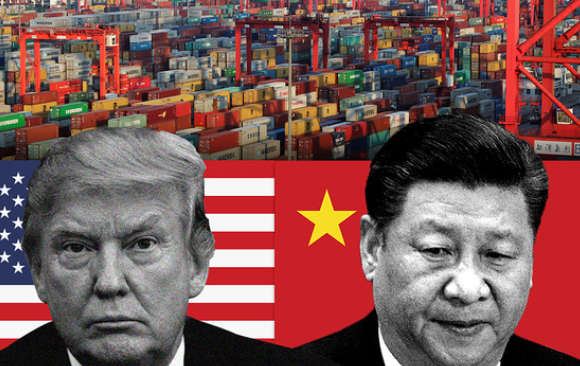
New Delhi: While hotspots like Gaza and Ukraine are smouldering, and Afghanistan and Pakistan are turning into new battlefields, US President Donald Trump has warned to cut China trade over the ongoing dispute over soybeans.
China, on its part, has moved the World Trade Organization (WTO) against India’s subsidies to electric vehicles.
President Trump, who returned from the Middle East to Washington, said on Tuesday he was considering terminating some trade ties with China, including those about cooking oil.
“I believe that China not purposefully buying our Soybeans, and causing difficulty for our Soybean Farmers, is an Economically Hostile Act. We are considering terminating business with China, having to do with Cooking Oil, and other elements of Trade, as retribution,” he wrote on social media.
“As an example, we can easily produce Cooking Oil ourselves; we don’t need to purchase it from China.”
His reaction came after China sharply reduced US soybean purchases, which Trump called a negotiation tactic. He may discuss this matter with his Chinese counterpart, Xi Jinping, later this month, as he warned the US may halt a large share of imports from Beijing, the media reported on Wednesday.
The Dragon, world’s largest buyer of soybeans, is now sourcing this oilseed more from Brazil and Argentina amid ongoing tariff and trade disputes.
Meanwhile, President Trump has dubbed the BRICS bloc’s activities as an “attack on the dollar.” Countries that want to deal in US dollars have an “advantage” over those that do not, he said, and asserted that the US will impose tariffs on nations joining the 10-member group.
His fresh remarks came during his lunch with Argentine President Javier Milei at the White House.
“I’m very strong on the dollar, and anybody that wants to deal in dollars, they have an advantage over people that aren’t.”
“I told anybody that wants to be in BRICS, that’s fine, but we’re going to put tariffs on your nation… Everybody dropped out. They’re all dropping out of BRICS,” he claimed.
“The BRICS bloc is an attack on the dollar and I said, you want to play that game, I’m going to put tariffs on all of your products coming into the US. They said, like I said, we’re dropping out of BRICS…They don’t even talk about it anymore,” he added.
The bloc now has 10 full members: Brazil, Russia, India, China, South Africa, Egypt, Ethiopia, Iran, the UAE, and Indonesia.
Earlier, he had labelled it as a coalition of countries working against US interests. “BRICS, which is basically a group of countries that are anti-United States, and India is a member of that, if you can believe it. It’s an attack on the dollar, and we’re not going to let anybody attack the dollar,” he had said.
External Affairs Minister S. Jaishankar had clarified that India has no intention of challenging the US dollar’s global role.
“Regarding the role of the dollar, we are realistic. We have no issue with the dollar, and our relations with the US are at their best. We have no interest in undermining the dollar,” he said.
Meanwhile, China on Wednesday filed a complaint with the WTO over India’s electric vehicle (EV) and battery subsidies, claiming they give an “unfair competitive advantage” to the domestic manufacturers and undermine Beijing’s interests.
In a statement, China’s Ministry of Commerce said it will take “firm measures” to effectively safeguard the legitimate rights and interests of its domestic industries.
The world’s second largest energy importer, India, as part of its energy transition policy, offers the highest subsidies on electric cars. For instance, it offers nearly 46 percent of the total price as subsidy, directly or indirectly, for the electric version of the Tata Nexon, India’s best-selling EV.
These benefits include reduced Goods and Services Tax (GST) and road tax compared to petrol and diesel models, along with indirect support received by the manufacturer through the production-linked incentive (PLI) scheme. In contrast, top-selling EV models get a subsidy of 10 percent in China, 16 percent in South Korea, 20 percent in Germany, and 26 percent both in the US and Japan.
India, where, despite subsidies, the EV’s adoption and penetration rate is only two percent, is trying to encourage this transition. Under the Rs. 2,000-crore PM Electric Drive Revolution in Innovative Vehicle Enhancement (PM eDRIVE) scheme, introduced as a successor to the FAME programme, the government will cover at least 80 percent of the cost of building upstream infrastructure for public fast-charging stations nationwide. In special cases, the subsidy may go up to 100 percent, according to the revised policy framework.
Under the scheme, the Ministry of Heavy Industries (MHI) was expected to release 30 percent of the subsidy once the tender is awarded, and 40 percent after the installation of the electric fast-charging station, and the balance after successful commercial operation of the station.
In August, the Union Ministry of Heavy Industries extended the PM E-DRIVE subsidy scheme for two years, for certain segments including e-trucks, e-ambulances, e-buses, and charging infrastructure, which will now get subsidies until March 31, 2028. The subsidies for electric two-wheelers, e-rickshaws, electric three-wheelers, and electric carts will be discontinued after March 2026.