Yemen: Iran-supported Shia Houthis split two Sunni nations—Saudi Arabia and the UAE!










Virendra Pandit
New Delhi: Until last week, global Islamists wouldn’t have imagined what’s happening in their Middle East.
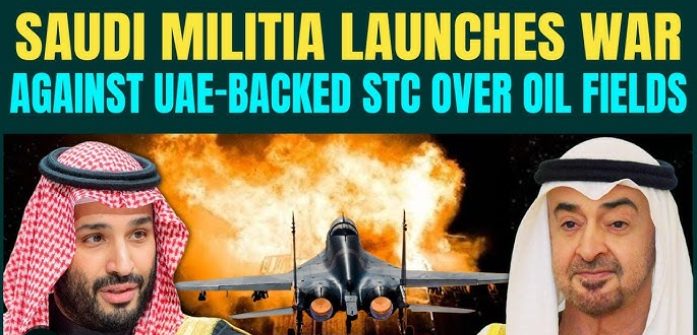
Seeking to control Yemen, Saudi Arabia and the UAE, once the closest Arab allies in the Gulf region, have suddenly turned enemies.
They entered Sunni-majority Yemen in 2015 with a shared objective and jointly led a military intervention to curb Shia Iran’s influence by fighting the Houthi terrorists, who had seized the capital, Sana’a, but their objectives changed since. While the Saudis backed a unified Yemeni state along its southern border, the. UAE, in contrast, supported southern separatists, a stance that clashes directly with Saudi interests.
A decade after fighting side by side in Yemen, Saudi Arabia and the United Arab Emirates are now locked in an unusually public confrontation, backing rival groups in Yemen, the media reported on Saturday.
The Sunni Muslims viewed the two ‘brotherly’ Arab nations as indispensable for Islam. Saudi Arabia and the UAE aligned, both politically and militarily, for decades. As Saudi Crown Prince Mohammed bin Salman rose to prominence a decade ago, he was compared to the UAE’s de facto ruler, Sheikh Mohammed bin Zayed.
Now, their comfortable relationship has frayed. They are competing for influence across the Middle East, Africa and beyond, with Yemen emerging as the most volatile flashpoint in their neighbourhood.
Tensions erupted this week when Saudi Arabia struck a UAE shipment carrying combat vehicles bound for Yemen and accused Abu Dhabi of “highly dangerous” actions that threatened Saudi national security.
The Houthis
Ironically, the Houthis in Yemen have indirectly split Saudi Arabia from the UAE.
The Houthis (Ansar Allah) are a Shia Muslim terror group, specifically from the Zaydi sect, Yemen’s largest Shia branch, who advocate for Zaydi rights, oppose foreign influence, and are backed by Iran, leading them to fight against the Sunni Yemeni government and align with Iran’s “axis of resistance” against the US and Israel.
Their movement is rooted in Zaydi history in Northern Yemen and has become a significant force in the ongoing Yemeni Civil War, known for attacks on shipping in the Red Sea. The Houthis gave unique Zaydi roots, fighting for political power in Yemen and projecting influence regionally, especially in the Red Sea.
Since the Iran-supported Shia terrorist group Houthis captured Yemen’s capital, Sana’a, in 2014, the country has splintered into rival zones of control, allowing regional powers to step in. The Houthis, formally known as Ansar Allah, are a Shiite Islamist group based in north-western Yemen.
After taking the capital with some public support, they became the country’s strongest military and political force, backed by sustained Iranian arms supplies. They now control much of Yemen’s north-western border with Saudi Arabia and a key stretch of Red Sea coastline, giving them access to vital shipping routes.
Facing the Houthis is Yemen’s internationally recognised government, operating under the Saudi-backed Presidential Leadership Council formed in 2022. Its forces, made up of army remnants, tribal militias and Sunni Islamist groups, hold scattered areas in Marib, Taiz and the southern city of Aden, with support from Saudi air, naval and limited ground operations.
Adding to the complexity is the Southern Transitional Council (STC), a UAE-backed separatist group formed in 2017. The STC seeks to revive an independent southern Yemen that ceased to exist in 1990.
After years of stalled peace efforts, tensions rose in December 2025 when UAE-backed forces launched an offensive to seize oil-rich provinces, at times fighting Saudi-backed units. The situation escalated further when Saudi-led airstrikes hit a UAE shipment at Mukalla port, prompting Abu Dhabi to announce a withdrawal from Yemen.
Despite this, the standoff deepened. On January 2, Saudi Arabia deployed naval forces off Yemen’s coast after Riyadh-backed troops began what they called a “peaceful” ground offensive against UAE-backed separatists.
The STC rejected that claim, accused Saudi Arabia of misleading the international community, and said its positions were hit by Saudi airstrikes.
Years of war have shattered Yemen’s economy and pushed its people into deep hardship. In 2021, the United Nations estimated that about 3.77 lakh people had died from the conflict and its effects on hunger and healthcare.
Yemen watchers say the escalation was inevitable. They point to the STC’s long-standing ambitions, which have grown as it tightened control over much of southern Yemen.