West Asia: Nirmala, Jaishankar explain impact of war crisis on India



Virendra Pandit
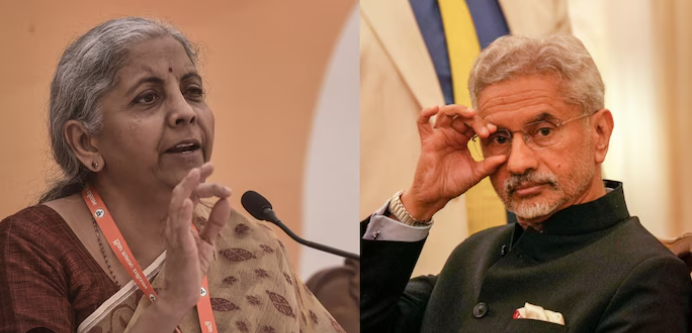
New Delhi: External Affairs Minister S. Jaishankar said on Monday that India advocates de-escalation and return to dialogue and diplomacy in the war-torn West Asia (Middle East), as Finance Minister Nirmal Sitharaman told Parliament that the impact of global crude price rise on inflation is not estimated to be substantial at this point as India’s inflation is near the lower bound, the media reported.
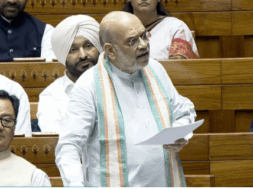
Making a suo moto statement on the widening conflict, Dr. Jaishankar stressed on respect for sovereignty and territorial integrity of all states in the region.
“India is in favour of peace and urges a return to dialogue and diplomacy. We advocate de-escalation, restraint, and ensuring the safety of civilians,” he said.
“The wellbeing and security of the Indian community in the region is our priority. And our national interests, including energy security and trade, will always remain paramount.”
Amid opposition MPs staging a walkout of the House after they vociferously put across their demand for a discussion on the issue, he said the government is closely monitoring the escalating conflict and has taken multiple steps to ensure the safety of Indian nationals in the region and safeguard the country’s strategic interests.
The latest round of hostilities that began on February 28 has seen fighting between Israel and the United States on one side and Iran on the other, along with Iranian attacks on several Gulf countries causing significant casualties, including among Iran’s leadership.
Dr. Jaishankar said the Cabinet Committee on Security (CCS) met on March 1 under the chairmanship of Prime Minister Narendra Modi and reviewed the evolving situation, including implications for regional security, economic activity and the safety of the large Indian community in the Gulf.
He noted that nearly one crore Indians live and work in Gulf countries, while a few thousand are in Iran for study or employment, making regional stability critical for India. The Gulf is also central to India’s energy security and trade, accounting for nearly USD 200 billion in commerce, he said.
He said attacks on merchant shipping have affected Indian seafarers, with casualties reported and one Indian mariner still missing.
Dr. Jaishankar said the government had issued a series of travel advisories since January, urging Indian nationals to avoid non-essential travel to Iran and advising those already there to remain in contact with the Indian Embassy and follow safety precautions.
He said Indian diplomatic missions have assisted citizens with relocation and evacuation efforts, including helping some Indian nationals travel to neighbouring countries such as Armenia for onward return to India.
According to him, nearly 67,000 Indian nationals have returned from the region so far as the government facilitated additional commercial flights and other travel arrangements amid partial airspace openings.
The Ministry of External Affairs has also set up a dedicated control room to monitor the situation and respond to requests from Indian nationals, while the Directorate-General of Shipping has created a quick response team to assist Indian seafarers, he said.
Dr. Jaishankar said India has remained in close contact with regional leaders, with PM Modi speaking to the leaders of the UAE, Qatar, Saudi Arabia, Kuwait, Bahrain, Oman, Jordan, and Israel, all of whom assured the safety of the Indian community.
India has also maintained diplomatic contact with the US and Iran, and he himself spoke with Iranian Foreign Minister Abbas Araghchi on February 28 and March 5.
“While attempts have been made, contacts with Iran at the leadership level are obviously difficult at this time. I have, however, spoken to (Iranian) Foreign Minister Abbas Araghchi on 28th February and 5 March 2026. We will continue these high-level conversations in the coming days,” he said.
He also informed the House that an Iranian vessel, IRIS Lavan, was docked at Kochi, Kerala, on March 4 after India granted permission for humanitarian reasons.
Dr. Jaishankar said the government remains committed to protecting India’s energy security and economic interests amid the volatile situation.
Sitharaman
Finance Minister Nirmala Sitharaman said the impact of global crude price rise on inflation is not estimated to be substantial at this point as India’s inflation is near the lower bound.
In reply to a written question in the Lok Sabha, on whether the government has reviewed the impact of rising global crude oil prices on inflation in the country, she said the price of both global crude oil and the Indian basket has been on a declining trajectory for the past one year, until the geo-political clashes commenced in West Asia on February 28, 2026.
“Between the end of February and until March 2, 2026, the crude oil FOB price (Indian Basket) rose from USD 69.01/ per barrel to USD 80.16/barrel. Given that India’s inflation is near the lower bound, the impact on inflation is not estimated to be substantial at this point,” Sitharaman said.
Global crude prices have been rising since February 28 when the US and Israel launched military airstrikes on Iran which retaliated with attacks on US positions in the region, as well as Israel.
Sitharaman said the RBI’s Monetary Policy Report (MPC) in October 2025, had estimated that if crude oil prices are higher by 10 percent than the baseline assumptions, and assuming full pass-through to domestic prices, inflation could turn out to be higher by 30 basis points.
However, the medium-term impact of the global crude oil price rise on inflation depends on several factors, including exchange rate movements, global demand and supply situation, monetary policy transmission, the state of general inflation, and the extent of the indirect pass-through.
The average retail inflation measured by the Consumer Price Index (CPI) declined from 5.4 percent in 2023-24 to 4.6 percent in 2024-25 and further to 1.8 percent in 2025-26 (April-January).
The headline inflation for January 2026 stood at 2.75 percent and is near the lower bound of the RBI’s inflation tolerance band of 4 percent-2 percent.
As part of inflation management, the MPC has reduced the policy rate by 125 basis points cumulatively since February 2025, Sitharaman said.
Also, the government has undertaken a series of administrative measures, including fiscal and trade policy, to control inflation and mitigate its impact on the common citizen.
These include, inter alia, augmentation of buffer stocks for essential food items, strategic sales of procured grains in the open market, facilitation of imports and export curbs during periods of short supply, implementation of stock limits to push more supplies of select commodities into the market, retail sales of select food items under the Bharat brand at subsidised rates, market intervention for perishable horticultural and agricultural commodities, reduction in fuel taxes, creation of scientific storage capacity.
Besides, the government has increased the disposable income of individuals by exempting annual incomes up to Rs 12 lakh (and Rs 12.75 lakh for salaried individuals with standard deduction) from income tax and the recent rationalisation of Good and Services Tax (GST) rates.