
West Asia: Iran war could erode 1% of India’s real GDP in FY27








Virendra Pandit
New Delhi: If the ongoing US-Israel war against Iran persists through the next fiscal, beginning Wednesday (April 1), India’s real GDP growth for FY27 could erode by around 1 percentage point, while retail inflation could rise by about 1.5 percentage points from their baseline estimates, an EY Economy Watch report said on Tuesday.
In its February report, EY had projected India’s GDP could to be between 6.8 and 7.2 percent in the 2026-27 fiscal.
The economy watch reports of EY (formerly Ernst & Young), a global professional services firm, analyse macroeconomic trends, policy changes, and sectoral impacts, often using EY’s own economic modelling to analyse GDP, inflation, and fiscal trends.
The latest report said that several sectors, including employment-intensive sectors like textiles, paints, chemicals, fertilizers, cement and tires, could be directly impacted by the conflict. Any reduction in employment or incomes in these sectors may further dampen aggregate demand. As a result, both supply and demand conditions may be adversely affected by global oil market disturbances.
The Indian economy, which imports nearly 90 percent of its crude oil requirements, is also highly dependent on imports of natural gas and fertilisers. It is particularly vulnerable to such external shocks, with the adverse effects likely to cascade across multiple sectors through strong forward and backward linkages with crude oil and energy, the media reported.
The conflict has significantly disrupted global crude oil and energy markets by affecting supply, storage, transportation and prices. Even if the conflict is resolved in the near term, some of these disruptions may take considerable time to normalise, it said.
“If the impact persists throughout FY27, we estimate that India’s real GDP growth could erode by around 1 percentage points, while CPI inflation could rise by approximately 1.5 percentage points from their baseline estimates of 7 percent and 4 percent respectively,” it said.
In response, the Government of India may need to deploy a substantive countercyclical policy. It may also be prudent for the government to co-opt larger and more industrialised states into this countercyclical effort. Additional provisions may be made to augment the Economic Stabilization Fund (ESF) introduced in FY26.
The government has already set up a Rs. 1 trillion ESF to act as a financial buffer against global headwinds.
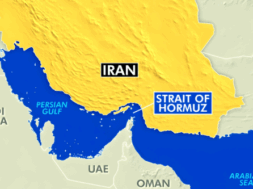
Global crude prices have risen by almost 50 percent since the United States and Israel launched military strikes against Iran on February 28, triggering sweeping retaliation from Tehran across a dozen countries in West Asia.
The Organisation for Economic Cooperation and Development (OECD) had last week projected India’s GDP growth to moderate to 6.1 percent in the next fiscal (FY27), from 7.6 percent in the current financial year.