The oil deal: Sharif thanks, Balochs warn on America’s ‘oil discovery’ in Pakistan!





Virendra Pandit
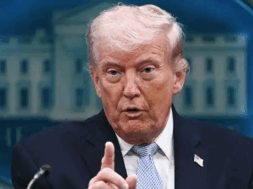
New Delhi: Although Pakistan’s Prime Minister Shehbaz Sharif has thanked Donald Trump for a “landmark deal,” many are scratching their head in disbelief on the US President’s claims of “massive oil reserves” in the South Asian country, which America plans to help it tap.
Ironically, it is only an oil deal, not a comprehensive bilateral trade agreement (BTA) as some Pakistani reports claimed. Trump also made no mention of trade or tariffs in his announcement, as reported by the media on Thursday.
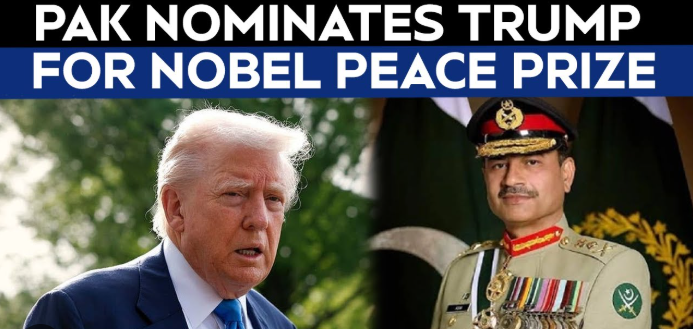
Recently, Pakistan became the first country to nominate Trump for a Nobel Peace Prize!
It is not, however, immediately clear what “massive oil reserves” in Pakistan Trump was referring to. “We are in the process of choosing the oil company that will lead this partnership. Who knows, maybe they’ll be selling oil to India someday!” Trump said.
The ground reality, despite Trump’s claims, is that Pakistan has very limited proven oil and gas reserves and meets 85 percent of its requirement through imports from the Middle East.
According to Worldometer data, Pakistan had 353.5 million barrels of proven oil reserves as of 2016, placing it 52nd globally and accounting for just 0.021 per cent of the world’s total reserves.
At current consumption levels of about 556,000 barrels per day, these reserves would cover less than two years of domestic demand if the country does not import oil. Pakistan’s oil production is around 70,000-80,000 barrels per day, which covers only about 15-20 percent of its own consumption.
The current price of petrol in Pakistan is PKR 272.15 per litre, and for high-speed diesel it’s PKR 284.35 per litre which are more than twice the prices of these fuels in India. These are among the highest prices in the world and reflects the high degree of dependence on imports.
India’s oil reserves are far greater – around 4.8 billion barrels per day, proven as of 2016 – and it has the capacity to extract and refine crude from deep sea reserves, something Pakistan lacks.
India produces, on its own, more crude per day than Pakistan. In February 2025, for example, India produced over 600,000 barrels per day (BPD) and Pak produced only 68,000 BPD.
But both rely heavily on imports, India more so because it is a far larger and thirstier market.
In FY25, India imported nearly five million BPD, while Pakistan imported only 140,000, lower than its average of 163,000 BPD.
The International Energy Agency predicts India importing an additional 330,000 BPD this year, against Pakistan’s 300,000 BPD.
The exploration success rate in Pakistan is low, and political, financial, and security concerns are a major concern for investors. The refining capacity in Pakistan is also limited and aging.
There’s some offshore and shale oil exploration potential (especially in Baluchistan and near Karachi), but results have so far been inconclusive or commercially non-viable.
Pakistan has long claimed to have large oil deposits along its coast, but no progress has been made to tap those deposits. It has been trying to lure in investments to tap into these reserves
The US-Pakistan deal was reached during a meeting on Wednesday between Pakistan’s Finance Minister Muhammad Aurangzeb, US Secretary of Commerce Howard Lutnick, and US Trade Representative Ambassador Jamieson Greer in Washington, DC, according to Radio Pakistan.
“The agreement will result in a reduction of reciprocal tariffs especially on Pakistani exports to the United States. This deal marks the beginning of a new era of economic collaboration especially in energy, mines and minerals, IT, cryptocurrency and other sectors,” it added.
The US announcement is being seen as a pressure tactic to get New Delhi to agree to demands made by the US, which has, in recent days, got favourable trade deals with major partners like Japan, the UK and the European Union.
But Trump’s claim on oil has triggered opposition in Baluchistan, which is trying to secede from Pakistan.
A leading Baloch human rights defender, Mir Yar Baloch, has warned Trump that Pakistan’s military leadership has gravely misled the US administration about the “true geography and ownership” of claimed oil reserves. He asserted that these reserves lie within Baluchistan, not Punjab.
He stressed that the untapped reserves of oil, natural gas, copper, lithium, uranium and rare earth minerals are “not located within the territories of Punjab, which is the actual Pakistan,” but instead belong to the “Republic of Baluchistan, a historically sovereign nation currently under illegal occupation by Pakistan.”
Pakistan’s claim over these resources is not only “false” but a “deliberate attempt to misappropriate Baluchistan’s wealth for political and financial gain,” he said.
Mir Yar Baloch warned that giving Pakistan’s “radicalised military and rogue ISI — known for sponsoring Al-Qaeda and various proxy groups responsible for the deaths of thousands of US soldiers in Afghanistan — access to Baluchistan’s trillion-dollar reserves of rare earth minerals would be a grave strategic mistake.”
He said such access would significantly boost the ISI’s operational and financial capabilities, helping expand global terror networks, recruit more militants, and “potentially facilitate large-scale attacks reminiscent of 9/11.”
Any profits from “Baluchistan’s stolen resources” would not benefit its people but instead strengthen “anti-India and anti-Israel jihadist proxies,” worsening instability across South Asia and the wider international community. Stopping Pakistan’s “exploitation” of Baluchistan is not just about justice for the Baloch people, but a matter of global security.
“There is no doubt: Baluchistan is not for sale. We will not permit Pakistan, China or any other foreign power to exploit our land or its resources without the explicit consent of the Baloch people. Our sovereignty is non-negotiable, and our struggle for rightful ownership and independence continues with dignity and resilience,” he said.