



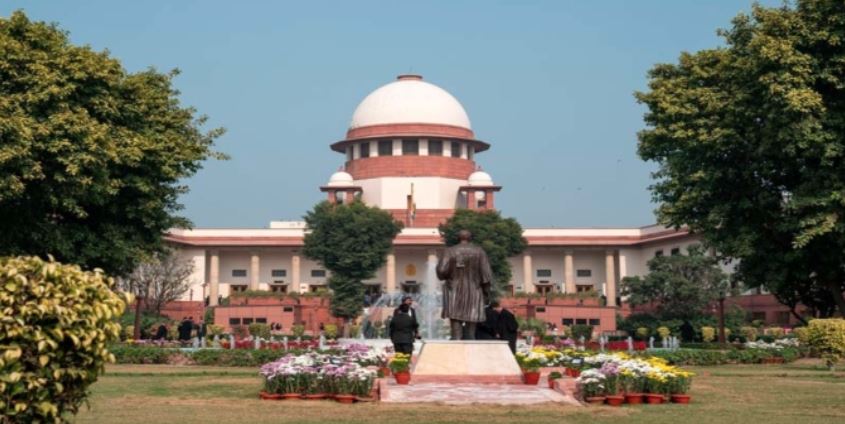

New Delhi, April 2026: In submissions before the nine-judge Constitution Bench of the Supreme Court, the Jain community has asserted a clear constitutional principle: that temples and religious institutions cannot be owned, controlled, or managed by a secular State. Senior Advocate Mr. Krishnan Venugopal, appearing on behalf of Gitarth Ganga, presented these arguments before the Court.
The submissions, made under the guidance of His Holiness Jainacharya Yugbhushansuriji, the 79th successor in the lineage of Tirthankar Shri Mahavir Swami, argue that religious institutions are integral to religion itself and form part of its internal and autonomous domain.
Sacred Places: Natural and Man-Made
The intervenors emphasised that places of worship fall broadly into two categories—natural sacred sites and man-made religious institutions.
Natural sacred sites include mountains, rivers, forests, and hills that are revered as intrinsically holy, independent of any human construction. Man-made institutions include temples, derasars, mathas, and other structures created to house and facilitate religious practice.
Despite this distinction, both categories derive their sanctity from the religion itself and are governed by its doctrines and traditions. Their character remains inherently religious, not secular.
Religious Institutions Are Not Secular Entities
Temples are not merely physical structures or public utilities, but living institutions of faith—governed by doctrine, tradition, and religious authority. Their management, rituals, and administration are inseparable from the religious philosophy they embody. To treat such institutions as secular assets subject to State control is to disregard their essential nature.
State Control Violates Religious Autonomy
The submissions argue that when a secular State assumes ownership or management of temples, it displaces the religious authority that traditionally governs them. Control shifts from those bound by the tenets of the religion to an external authority lacking doctrinal legitimacy. Such intervention undermines the autonomy of religion and disrupts its internal systems of governance.
Constitutional Limits on State Power
While the Constitution permits limited regulation on specific grounds, it does not authorise the State to take over the core management and administration of religious institutions. The role of the State is protective, not supervisory—it may ensure order and legality, but it cannot assume the role of a religious authority.
The Jain community’s submissions call for reaffirming a fundamental constitutional boundary: that sacred places—whether natural or man-made—belong to the religion and its adherents, not to the State.
The Court is now called upon to determine whether a secular State can claim ownership or management over sacred institutions, or whether such authority lies exclusively within the religious domain.