Roving Periscope: Trump hurries up on Venezuela; America may repent at leisure!




Virendra Pandit
New Delhi: Marry in haste, repent at leisure. Every American knows this timeless lesson by heart—in 2025, nearly 40 percent of Americans’ first marriages ended in divorce!
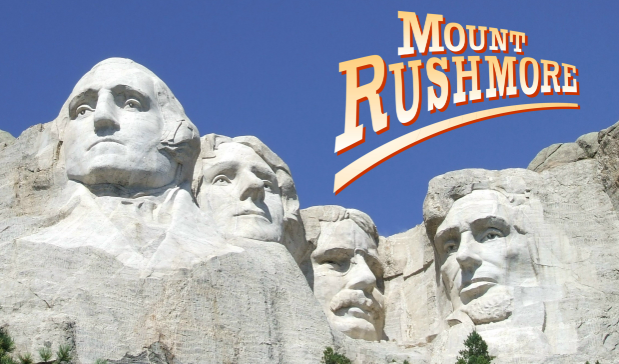
The sculpture of four former US Presidents at Mount Rushmore—George Washington, Thomas Jefferson, Theodore Roosevelt, and Abraham Lincoln—are helplessly looking at their successors’ escapades.
With President Donald Trump’s hasty invasion of Venezuela, America may well regret at leisure, as it has done so often ever since it became a “superpower” after the Second World War. America knows exactly how to extract a defeat from the jaws of victory!
Trump, businessman-first, has been threatening and preparing for the Venezuelan adventure for months, even while he was claiming to own eight ‘ceasefires’, no less, and campaigning to secure a Nobel Peace Prize in 2025.
Then, in what The New York Times recently called the “Donroe Doctrine”, he decided to secure the Western Hemisphere for the USA from ‘foreign (Russian-Chinese) influence. Venezuela is his first victim; he has also threatened Panama, Columbia, Mexico, et al. Wait for more adventures.
So, we can see more of this Trumpism in 2026.
But will he succeed in Making America Great Again (MAGA)?
In a dramatic escalation of US military adventure, American forces started a planned invasion of Venezuela in the early hours of January 3, capturing President Nicolas Maduro and his wife Cilia Flores in their capital, Caracas, and producing them in New York. We may soon count their ‘crimes against humanity.’
The Trump mission, ‘Operation Absolute Resolve’, saw elite US military units, including Army Delta Force commandos supported by extensive air and cyber operations, storm Maduro’s hideout at the Fuerte Tiuna military base in Caracas. He was transported first to the USS Iwo Jima and then to New York, where he is to face federal charges related to alleged narcoterrorism etc.
The US described the mission as targeting “drug trafficking networks” allegedly tied to the Venezuelan leadership.
The military adventure has been widely condemned in Latin America and beyond as a breach of sovereignty and a return to US interventionist practices that shaped much of 20th-century Cold War-era politics.
This is not the first time America has invaded a country on the pretext of securing its national security or counter-terrorism objectives. Since the 1950s, it repeatedly launched overseas military operations involving direct ground entry aimed at regime-change, occupation, or territorial control. And mostly returned with blood on hands and its soldiers in body bags.
How America made itself Great?
Some of the Adventures of Uncle Sam are as under:
Iraq (2003): WMD
On March 20, 2003, the US-led West’s invasion of Iraq began with the objective of overthrowing a former ally, President Saddam Hussein. The George Bush administration framed the war as necessary to eliminate what it claimed was Iraq’s inventory of “Weapons of Mass Destruction” (WMD), and root out terrorism threats. Investigations, however, found no evidence of active WMD programmes, yet.
Afghanistan (2001): Operation Enduring Freedom
Following the September 11, 2001 terrorist attacks on its landmarks, the US launched military operations in Afghanistan to dismantle its former ally al-Qaeda and remove its own sponsored, alleged drug-peddling Taliban leadership that harboured the terror group. The US Congress passed the ‘Authorization for Use of Military Force’ shortly after the attacks, providing the legal basis for a campaign that ended inconclusively in 2021, with the Taliban’s return to power in Kabul.
Panama (1989): Operation Just Cause
In December 1989, the US deployed more than 27,000 soldiers to Panama to oust military ruler Manuel Noriega, who was under indictment in the US for alleged drug trafficking. The operation swiftly defeated Panamanian forces, and Noriega surrendered soon after. Washington justified the intervention as protecting US citizens and supporting democracy, although it drew sharp international criticism over civilian casualties and the scale of force used. Washington hardly cares about such washouts.
Grenada (1983): Operation Urgent Fury
In October 1983, nearly 7,600 US troops invaded Grenada following a coup that ousted the government. The administration said the operation aimed to protect American medical students and restore order, portraying it as a limited intervention to stabilise the island.
Dominican Republic (1965): Operation Power Pack
In April 1965, US Marines and Army personnel landed in the Dominican Republic amid a civil war, citing the need to protect American lives and prevent the spread of communism after the Cuban revolution.
The invasion proceeded without a formal declaration of war. US mediation later brokered the Act of Reconciliation in August 1965, installing Hector Garcia-Godoy as provisional president. American troops withdrew by September 1966 after elections brought Joaquin Balaguer, a US-backed conservative, to power.
Vietnam (1964-73): Operation Pierce Arrow
After the Gulf of Tonkin incident, the US Congress passed a sweeping resolution in 1964 authorising President Lyndon B Johnson to use military force in Vietnam. Under Operation Pierce Arrow, he ordered air strikes against north Vietnam, marking the first major US bombing raids and a sharp escalation of the war.
The US resolution was repealed in 1971 amid growing opposition and the release of the Pentagon Papers, which exposed official deception. These developments led to the 1973 War Powers Resolution, a framework now again in debate in the context of Venezuela.
Korean War (1950–1953)
The US committed massive forces to Korea in June 1950 after North Korea invaded the South. President Harry Truman framed the intervention as a “police action” under a United Nations mandate rather than a formal declaration of war by the Congress. US ground troops entered the conflict in July, with General Douglas MacArthur commanding UN forces, including more than 300,000 US personnel at their peak.
What now?
Under the US Constitution, only the Congress has the authority to declare war. The War Powers Resolution of 1973 requires the President to notify Congress within 48 hours of introducing armed forces into hostilities and to withdraw them within 60 days without Congressional authorization.
Trump ordered the Venezuela military operation without prior Congressional authorization or notification, raising questions about compliance with the Constitution and the War Powers Resolution. He did not inform lawmakers in advance, citing concerns over alleged leaks, with notification issued only after strikes began on January 3.
US Secretary of State Marco Rubio said Congress was alerted after the operation, arguing that prior notice “would have leaked.” No War Powers report was reportedly filed within the mandated 48-hour window, despite demands from Democratic lawmakers.