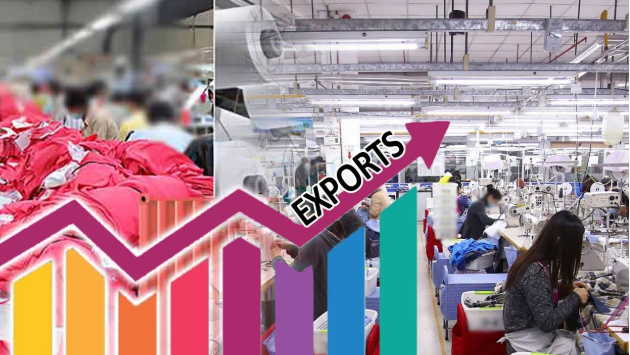
Roving Periscope: To absorb US tariffs, India to diversify textile exports to 40 countries






Virendra Pandit
New Delhi: As US President Donald Trump’s 50 percent tariff on Indian exports to America became effective on Wednesday, New Delhi has planned an outreach to 40 key countries to boost textile exports, the media reported.
The significant move is expected to position India as a reliable supplier of quality, sustainable, and innovative textiles in these high-potential markets, which collectively import textiles worth USD 590 billion.
The US import duty is likely to impact Indian exports worth more than USD 48 billion, with sectors like textiles, gems and jewellery, footwear, chemicals, and machinery being among the worst-hit.
The 40 countries India is targeting include the United Kingdom, South Korea, and Japan, where New Delhi will launch special programs to push textiles exports. Other significant markets include Germany, France, Italy, Spain, the Netherlands, Poland, Canada, Mexico, Russia, Belgium, Turkiye, the United Arab Emirates, and Australia.
“In all of these 40 markets, we will pursue a targeted approach, positioning India as a reliable supplier of quality, sustainable, and innovative textile products with the lead role of the Indian industry, including the Export Promotion Councils (EPCs) and Indian Missions in these countries.”
In all, India exports to more than 220 countries, but is currently targeting the 40 countries holding the real key to market diversification.
Together, these 40 countries represent more than USD 590 billion in textile and apparel imports, offering vast opportunities for India to enhance its market share, which currently stands at only around 5-6 percent, an official was quoted as saying.
“Recognising this, the government is planning dedicated outreach programmes in each of these 40 countries, with a focus on both traditional and emerging markets.”
The steep 50 percent tariff on Indian goods entering the United States would impact exports worth more than USD 48 billion.
India ranks sixth in global textile exports, with a 4.1 percent share
The sectors which would bear the brunt of the high US import duties include textiles/ clothing, gems and jewellery, shrimp, leather and footwear, animal products, chemicals, and electrical and mechanical machinery.
In 2024-25, the overall size of the textile and apparel sector was estimated at USD 179 billion, comprising a domestic market of USD 142 billion and exports worth USD 37 billion.
At the global level, the textiles and apparel import market was valued at USD 800.77 billion in 2024. India, with a 4.1 percent share in world trade, ranks as the sixth-largest exporter and has established its export footprint across 220 countries.
The EPCs will be the backbone of India’s diversification strategy by conducting market mapping, identifying high-demand products, and linking specialised production clusters like Surat, Panipat, Tirupur, and Bhadohi to opportunities in the top 40 countries.
They will lead India’s participation in international exhibitions, trade fairs, and buyer-seller meets, while also running sector-specific campaigns under a unified Brand India vision.
The councils will also guide exporters on using free trade agreements (FTAs), meeting sustainability standards, and securing necessary certifications.
“The FTAs and negotiations with several of these geographies will help make Indian exports competitive, and there is a huge potential for growth in these areas,” an official added.
Mithileshwar Thakur, Secretary-General, Apparel Export Promotion Council (AEPC), said the textiles sector, with exports of USD 10.3 billion, could be among the worst-impacted sectors next only to gems and jewellery with USD 12 billion and electrical and mechanical machinery with USD 9 billion exposure to the US market.
“The apparel industry was reconciled to the 25 percent reciprocal tariff announced by the USA in April, as it was prepared to absorb a part of the tariff hike. But, the burden of another 25 percent tariff has effectively driven the Indian apparel industry out of the US market with the gap of 30-31 percent tariff disadvantage vis-a-vis competitors like Bangladesh, Vietnam, Sri Lanka, Cambodia, and Indonesia,” Thakur said.
He said the industry expects some urgent relief in the form of fiscal support from the government to sustain and survive in the US market until favourable terms of trade are restored through a bilateral trade agreement with the US.
“This is extremely critical as, once buyers move away to other cost-competitive locations, it is not easy to recover the lost ground and regain market share, . In the meantime, we are also intensifying our efforts towards market diversification and looking at every possibility to take advantage of the trade deal with the UK and EFTA countries to control and contain the damage,” he added.