Roving Periscope: Pak’s ‘open war’ against Afghanistan claims dozens of lives




Virendra Pandit
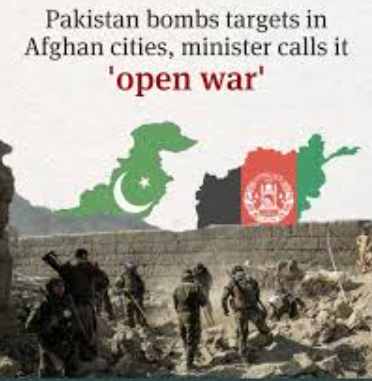
New Delhi: In renewed border clashes, Pakistan launched an ‘open war’ early on Friday after Afghanistan crossed the 2,600 km-long disputed Durand Line with multiple attacks, and claimed to have killed more than 130 Taliban fighters, the media reported on Friday.
As with previous rounds of hostilities between Pakistani and Afghan forces, each side has accused the other of attacking first – and both claim to have inflicted heavy losses on the other side.
Kabul firmly rejected the allegations of harbouring Pakistan’s terrorists and blamed the Pakistani army’s aggressive actions, including airstrikes on Kabul this week, for the escalation of the conflict.
Afghanistan’s Taliban government said it had launched an offensive on Pakistani military bases near the border on Thursday night.
According to a BBC report, the Afghan Taliban carried out air strikes on several targets within Pakistan on Friday morning.
The Taliban chief spokesman Zabihullah Mujahid said the offensive had killed “numerous” Pakistani soldiers and captured others – a claim denied by Pakistani authorities.
Pakistan Defence Minister Khawaja Asif said that the armed forces are currently delivering a strong response to ‘aggression’ from the Afghan Taliban who retaliated to Pakistan’s aerial attacks on Kabul and other cities earlier this week.
He claimed that “the Taliban made Afghanistan a colony of India. They gathered terrorists from all over the world in Afghanistan and started exporting terrorism.”
“The Taliban became a proxy for India,” he claimed, adding, “Our patience has run out. Now there is an open war.”
Islamabad’s Operation Ghazab lil Haq commenced late on Thursday night after the Afghan Taliban allegedly launched attacks on several border posts.
Worried over escalation, China, Britain, Russia and other countries urged the two neighbours for a ceasefire and end the war at the earliest.
Pakistan Information Minister Attaullah Tarar said that at least 133 Afghan Taliban operatives were killed and more than 200 were injured.
“Afghan Taliban defence targets in Kabul, Paktia, and Kandahar were targeted, with the possibility of further casualties,” he said, adding that at least 27 posts of the Afghan Taliban regime were destroyed, and nine others were captured.
State broadcaster PTV News reported that the Pakistan Air Force targeted the Afghan Taliban’s important military installations in Kabul, Kandahar and Paktia. The attacks destroyed two brigade headquarters in Kabul, along with one corps headquarters and one brigade headquarters in Kandahar.
Interior Minister Mohsin Naqvi condemned the “cowardly enemy struck in the darkness of night. The Afghan Taliban made a despicable attempt to target innocent civilians.”
President Asif Ali Zardari declared Pakistan would not compromise on peace and territorial integrity. “Our armed forces’ response is comprehensive and decisive. Those who mistake our peace for weakness will face a strong response – and no one will be beyond reach.”
Prime Minister Shehbaz Sharif stated the people and armed forces of Pakistan are always ready to secure the nation’s safety, sovereignty, and territorial integrity.
“The Pakistani armed forces are equipped with professional capabilities, high training and effective defence strategies and are fully capable of dealing with any internal or external challenge,” he added
China on Friday called on Pakistan and Afghanistan to work out a ceasefire. It is closely following the situation, Chinese Foreign Ministry spokesperson Mao Ning said.
China supports combating all forms of terrorism, she said, as she called on both sides to exercise calm and restraint, properly resolve their differences and disputes through dialogue and consultation, and realise a ceasefire as soon as possible to avoid more suffering. China has been mediating between the two countries through its own channels and will continue to play a constructive role in de-escalating the situation and improving relations between the two countries, she added.
Mao said Beijing is conducting periodic meetings to iron out differences over Islamabad’s repeated allegations against Kabul of hosting Pakistan’s militant groups, Tehreek-e-Taliban Pakistan and Baloch Liberation Army.
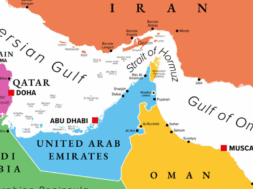
The UN officials also called for an immediate de-escalation of the fighting, while Iran, which shares borders with both nations, has offered to mediate.
Iranian Foreign Minister Abbas Araqchi noted it was currently Ramadan, “the month of self-restraint and strengthening of solidarity in the Islamic world.”
The foreign minister of Pakistan’s ally Saudi Arabia met his Pakistani counterpart to discuss ways to reduce tensions.
The Pakistani air strikes against Afghanistan followed months of hostilities between the two countries. The last serious flare-up was in October, after which a fragile ceasefire was brokered by Turkey and Qatar was reached.
Pakistan accuses Afghanistan’s Taliban government of supporting “anti-Pakistan terrorists” who it blames for carrying out suicide attacks in Pakistan, including a recent one at a Shia mosque in Islamabad.
Kabul disputed these claims, saying the territory of Afghanistan is not being used to threaten the security of other countries. Instead, it accused Pakistan of carrying out unprovoked attacks in which civilians have been killed. Pakistan said it only targets militants.
Earlier this week, Pakistan carried out multiple overnight air strikes on Afghanistan, which the Taliban said killed at least 18 people, including women and children.
Afghanistan wants to resolve its latest conflict with Pakistan through dialogue, Afghan Taliban spokesperson Zabihullah Mujahid told reporters on Friday, amid intense fighting between the neighbours this week.
Meanwhile, reports said Britain was also “deeply concerned by the significant escalation in tensions between Afghanistan and Pakistan.” Foreign Minister Yvette Cooper urged the two sides to take immediate steps toward de-escalation, avoid further harm to civilians, and re-engage in mediated dialogue.
The Russian Foreign Ministry expressed concern over the “sharp escalation” of armed clashes between Afghanistan and Pakistan, “involving regular army units, air force, and heavy weapons.”