Roving Periscope: Japan to invest $300 mn in Pakistan’s terror-threatened copper and gold mines








Virendra Pandit
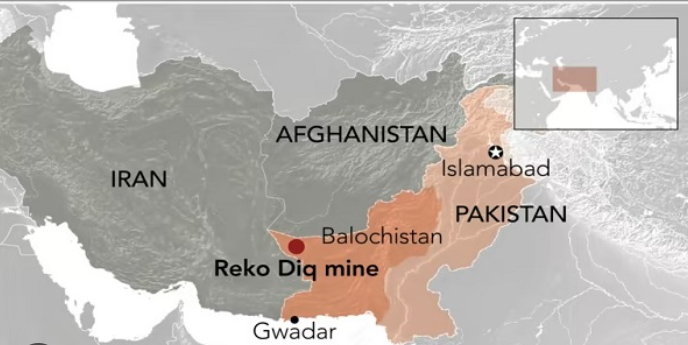
New Delhi: With America warming Pakistan up again—if only to keep China at bay—its Western allies are also boarding the bandwagon. Japan became the latest entrant in this pro-Pakistan club, announcing an investment of USD 300 million in the nearly bankrupt and failed state’s biggest copper and gold mines in Reko Diq, to ensure supplies for the future.
The Reko Diq mines are believed to have the world’s fifth-largest copper deposit, the media reported on Monday..
The rapidly changing geodynamics and fast-shifting international alliances have seen the West and its allies scrambling to take control of the mines of rare earths and critical minerals across the world in the face of China weaponizing these resources to expand its influence in recent months.
The only snag: these mines are located in Chagai district of Pakistan’s highly volatile Baluchistan Province, where Baluch militants are trying to break away their natural resources-rich region from Islamabad. Their terror attacks have already harmed Chinese interests in the China-Pakistan Economic Corridor (CPEC) and its terminal point, Gwadar Port, off the Arabian Sea. Beijing has also slowed down work and investment on its USD 60 billion CPEC projects.
Moreover, these mines are also closer to Pakistan’s volatile borders with Iran and Afghanistan, which have become Islamabad’s new hotspots in recent months.
The Reko Diq deposits are a massive copper-gold resource, with an estimated 5.9 billion tons of ore containing significant gold and copper reserves. After a long dispute, a new agreement was signed in 2023 between Pakistan and Barrick Gold to resolve past issues. Its financing has been secured, with investments from organizations like the Asian Development Bank. It is expected to start producing copper concentrate in late 2028.
According to reports, the total mineral resources in Reko Diq are 5.9 billion tons of ore, with copper estimated at 12.3 million tons and gold up to 22 million ounces. The initial mine life is at least 37 years, but may extend to 80 years with unaccounted-for minerals. The deposit at Reko Diq is a large low-grade copper porphyry.
It is estimated to create 7,500 jobs during the construction phase and around 4,000 jobs once fully operational.
The Japan Bank for International Cooperation (JBIC) and other Japanese entities are preparing to invest in this project, signalling Tokyo’s growing interest in securing supplies of critical minerals likely to face shortages in the years ahead, Nikkei Asia reported.
As part of this development, Pakistan’s Finance Minister Muhammad Aurangzeb met JBIC Governor Nobumitsu Hayashi in Washington in October and “welcomed JBIC’s formal commitment to join the Reko Diq lender group.”
He said the move would strengthen investor confidence and encourage Japanese businesses to expand their footprint in Pakistan. JBIC intends to commit around USD 300 million to the project, with the loan agreement expected to be finalised by early next year.
According to a report by consultancy firm Digby Wells, the project will be developed in two phases, each designed to process 45 million metric tonnes of ore annually and produce 800,000 tonnes of copper concentrate with a copper grade between 26 percent and 30 percent.
JBIC is not the only Japanese entity showing interest in Reko Diq. Komatsu, a leading mining equipment manufacturer, signed a USD 440 million agreement earlier this year to supply heavy machinery for the project. The company also plans to establish a unit in Karachi and deploy experts from Japan and other countries.
Japan’s involvement extends through the Asian Development Bank (ADB), where Japan and the US each hold a 15.5 percent stake, making them the largest shareholders. All ADB presidents to date have been Japanese nationals. In August, the ADB approved loans worth USD 300 million and extended a USD 110 million credit guarantee for the Reko Diq project.
Copper is critical to many global industries, powering renewable energy infrastructure, electric vehicles, batteries, smartphones and data centres. However, the International Energy Agency (IEA) warned in a recent report that copper and lithium face major shortfalls, with mined supply from announced projects expected to lag far behind projected demand by 2035.
With global copper shortages looming, Japan’s rising investment in Reko Diq underscores its strategy to secure long-term access to critical resources, while enhancing Pakistan’s potential as a key supplier to global export markets.