Roving Periscope: Iran bombs Mideast assets and Israel, as the US plans reopening Hormuz










Virendra Pandit
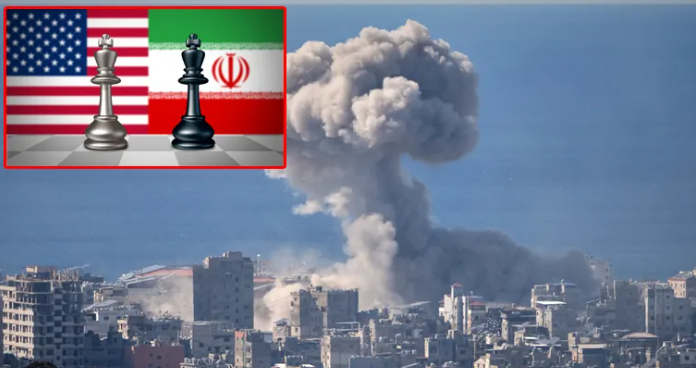
New Delhi: While the US-Israel war on Iran entered its 20th day on Friday. Israel said it would avoid future attacks on Tehran’s energy infrastructure as the USA, which has urged Congress to sanction USD 200 billion for the war, tried to reopen the Strait of Hormuz—but Iran continued to strike select targets across West Asia at will.
Israeli jets’ bombing of Iran’s key South Pars gas field and associated infrastructure on Wednesday prompted a fresh wave of Iranian strikes against oil and gas works across the region, including Saudi Arabia, Qatar, and the United Arab Emirates, pushing crude and gas prices higher, the media reported on Friday.
After Iranian strikes on key regional crude and gas operations sent energy prices soaring across the world, Prime Minister Benjamin Netanyahu on Thursday said Israel would avoid future attacks on Iran’s energy infrastructure. The bombing also forced an embarrassed President Donald Trump, who is under pressure to end the three-week-old war, to rebuke Netanyahu.
“Israel acted alone” in the strike, a chastened Netanyahu told reporters, adding that his country would refrain from further attacks on the site following Trump’s “requests.”
The Islamic Republic of Iran’s retaliatory strikes inflicted “extensive damage” at the world’s largest liquefied natural gas (LNG) export plant in Qatar — which QatarEnergy said would cost about USD 20 billion in annual revenue and take as long as five years to repair. Trump, in a social media post on late Wednesday, threatened that the US “will massively blow up the entirety of the South Pars Gas Field” if Iran continued attacking Qatar.
“I told him, ‘don’t do that.’ And he won’t do that,” Trump said on Thursday at the White House, referring to Netanyahu. “We get along great. It’s coordinated. But on occasion, he’ll do something, and if I don’t like it, then — so we’re not doing that.”
Israel is helping the US reopen the Strait of Hormuz, Netanyahu added without elaborating. He said the US understood its allies should build pipelines heading west to bypass the strategic “chokepoints” after the current war ends.
He also claimed that Iran was no longer able to enrich uranium or manufacture ballistic missiles. “We’re wiping out their industrial base in a way that we did not do before,” he said.
The Israeli PM declined to give a timeline on when the conflict would conclude but suggested its end may be nearing.
“I also see this war ending a lot faster than people think,” Netanyahu added.
The Strait of Hormuz
Meanwhile, the US is making efforts to reopen the Strait of Hormuz, despite huge risks of Iranian bombing.
According to media reports, the US and its allies have deployed A-10 jets and Apache helicopters to target Iranian boats, drones and missiles, but mines and hidden assets mean reopening Hormuz could still take weeks.
Traffic through the Strait, a narrow passage between Iran and Oman, has sharply declined after Iran’s repeated drone, missile, and small-boat attacks on vessels.
The US and its allies have now launched a coordinated military campaign to reopen the Strait after Iranian attacks brought commercial shipping to a near halt in early March, according to a report by the Wall Street Journal.
The disruption follows the February 28 US-Israel joint strikes on Iran, which triggered the Iranian retaliation targeting ships, ports and energy infrastructure across the Gulf region.
At least 20 percent of global oil and gas flow through the narrow waterway, whose disruption has shocked energy markets. Oil prices have already surged past USD 100 a barrel, reflecting fears of prolonged supply disruption.
The Pentagon’s approach is focused on reducing immediate threats before restoring shipping. The current phase relies heavily on airpower and precision strikes, the WSJ said.
A-10 “Warthog” aircraft are being used to target Iranian fast-attack boats, which are small, agile vessels that can lay mines or harass tankers. These aircraft are equipped with a 30mm cannon and bombs suited for low-altitude strikes.
Besides, AH-64 Apache helicopters are also being used to intercept Iranian drones and attacking boats. These Apache helicopters are effective for attacking moving maritime targets and low-flying objects.
The US has also carried out strikes on missile batteries, drone hubs and underground storage facilities linked to Iran’s naval operations. More than 120 vessels have been damaged or destroyed so far, officials said.
A marine rapid-response unit is also being moved to the region to secure key islands off Iran’s southern coast to stabilise the shipping lanes.
The Iranian challenge
Despite sustained strikes, Iran retains significant asymmetric capabilities, including mobile missile launchers, drones, and small boats that can be quickly deployed from hidden coastal bases.
Iran’s naval mines in the Strait of Hormuz are also a big concern. Although the US tried to play it down, the perceived threat has kept the vessels at bay.
The US officials indicated that restoring safe passage across the Strait of Hormuz will take time. The current objective is not to remove all threats but to reduce risk to a level where escorted shipping can resume.
Iran has also recently indicated its willingness to permit selective passage, perhaps through a toll system, which indicates a change from disrupting to leveraging control of global energy flows.