Roving Periscope: Defying the US, Australia also to recognize Palestine; NZ may follow




Virendra Pandit
New Delhi: Australia became the latest constituent of the US-led West and its allies to potentially recognize a separate state of Palestine, and New Zealand may also follow suit soon, the media reported on Monday.
In recent weeks, Canada, France, and the United Kingdom have announced to recognize Palestine as a separate nation-state, amid the ongoing Gaza War, which has claimed more than 60,000 lives in the disputed territory since October 7, 2023.
Once again, the Middle East will potentially become the hottest spot on Earth, outshining the ongoing Russia-Ukraine war.
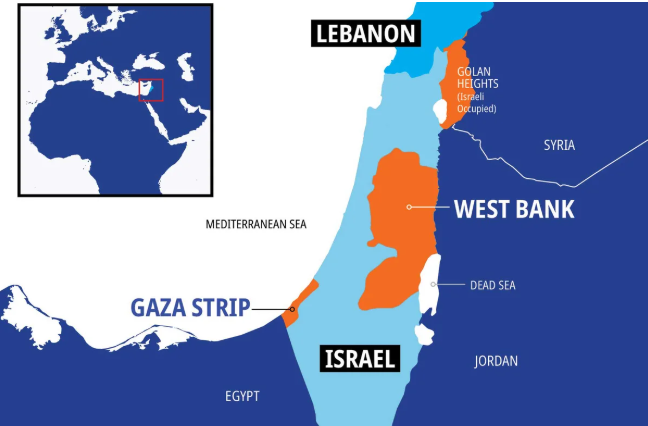
Watching America’s allies favouring a Palestinian state, Israel’s political-security cabinet approved a plan to take full control of Gaza City early on Friday last week, hours after Prime Minister Benjamin Netanyahu said Israel intended to take military control of the entire Gaza Strip despite intensifying criticism at home and abroad over the devastating almost two-year-old war.
“The Israeli Defence Forces (IDF) will prepare to take control of Gaza City while providing humanitarian aid to the civilian population outside the combat zones,” Netanyahu’s office said in a statement last weekend.
According to media reports on Monday, Australia will recognise a Palestinian state in September, its Prime Minister Anthony Albanese announced.
He said that his government would formally announce the move when the United Nations General Assembly (UNGA) meets in New York.
“A two-state is humanity’s best hope to break the cycle of violence in the Middle East and to bring an end to the conflict, suffering, and starvation in Gaza,” Albanese said at a news conference in Canberra.
His announcement came as Canada, France, and the UK are already defying the US diktats and preparing to formally recognise Palestine at the UNGA meeting next month, joining the vast majority of UN member-states. It also comes a week after hundreds of thousands of Australians marched across the Sydney Harbour Bridge to protest Israel’s war in the Gaza Strip.
Speaking a day after the protest, Australia’s Minister for Foreign Affairs Penny Wong told the Australian Broadcasting Corporation (ABC) that “there is a risk there will be no Palestine left to recognise.” She appeared hinting at Israel’s latest moves to take full control of Gaza Strip, and, maybe, the West Bank as well.
“In relation to recognition, I’ve said for over a year now, it’s a matter of when, not if,” Wong added.
The opposition Liberal Party criticised the move, saying it put Australia at odds with the United States, its closest ally, and reversed a bipartisan consensus that there should be no recognition while Hamas remains in control of Gaza.
“Despite his words today, the reality is Anthony Albanese has committed Australia to recognising Palestine while hostages remain in tunnels under Gaza and with Hamas still in control of the population of Gaza. Nothing he has said today changes that fact,” Liberal Party leader Sussan Ley said in a statement.
“Recognising a Palestinian state prior to a return of the hostages and defeat of Hamas, as the Government has today, risks delivering Hamas one of its strategic objectives of the horrific terrorism of October 7.”
The Australian Greens, the fourth-largest party in parliament, welcomed the move to recognise Palestine, but said the announcement did not meet the “overwhelming calls from the Australian public for the government to take material action”.
“Millions of Australians have taken to the streets, including 300,000 last weekend in Sydney alone, calling for sanctions and an end to the arms trade with Israel. The Albanese Government is still ignoring this call,” Senator David Shoebridge, the party’s spokesperson on foreign affairs, said in a statement.
The Australian Palestine Advocacy Network (APAN) also criticised the announcement, describing it as a “political fig leaf, letting Israel’s genocide and apartheid continue unchallenged, and distracting from Australia’s complicity in Israeli war crimes via ongoing weapons and components trade”.
“Palestinian rights are not a gift to be granted by Western states. They are not dependent on negotiation with, or the behaviour or approval of their colonial oppressors,” APAN said in a statement.
According to Albanese, Australia’s decision to recognise Palestinians’ right to their own state will be “predicated on the commitments Australia has received from the Palestinian Authority (PA).”
These “detailed and significant commitments” include the PA reaffirming it “recognises Israel’s right to exist in peace and security” and committing to “demilitarise and to hold general elections”, Albanese said while announcing the decision.
The PA is a governing body that has overseen parts of the Israeli-occupied West Bank since the mid-90s. It has not held parliamentary elections since 2006 and has been criticised by some Palestinians for helping Israel to keep tight control over residents in the West Bank.
Albanese said the commitments secured by Australia were “an opportunity to deliver self-determination for the people of Palestine in a way that isolates Hamas, disarms it, and drives it out of the region once and for all.”
Hamas has been in power in the Gaza Strip since 2007, when it fought a brief war against forces loyal to PA President Mahmoud Abbas.
Meanwhile, New Zealand’s Foreign Minister Winston Peters said on Monday that his country’s cabinet will also take a formal decision on Palestinian statehood in September.
“Some of New Zealand’s close partners have opted to recognise a Palestinian state, and some have not,” Peters said in a statement.
“Ultimately, New Zealand has an independent foreign policy, and on this issue, we intend to weigh up the issue carefully and then act according to New Zealand’s principles, values and national interest.”
Peters said that while New Zealand has for some time considered the recognition of a Palestinian state a “matter of when, not if”, the issue is not “straightforward” or “clear-cut.”
“There are a broad range of strongly held views within our Government, Parliament and indeed New Zealand society over the question of recognition of a Palestinian state,” he said.
“It is only right that this complicated issue be approached calmly, cautiously and judiciously. Over the next month, we look forward to canvassing this broad range of views before taking a proposal to Cabinet.”
Of the UN’s 193 member states, 147 already recognize Palestinian statehood, representing some three-quarters of the planet’s countries and the vast majority of its population.
Under its 1947 plan to partition Palestine, the UNGA said it would grant 45 percent of the land to an Arab state, though this never eventuated.
The announcements by Australia and New Zealand on Monday came hours after an Israeli attack killed five Al Jazeera staff members in Gaza City, and amid Israeli Prime Minister Benjamin Netanyahu’s threats of a full-scale invasion of the city in the north of the Gaza Strip.
Israel’s war on Gaza has killed at least 61,430 people, according to Gaza’s health authorities.
Close to 200 people, including 96 children, have died from starvation under Israel’s punishing siege, according to health authorities.