




Manas Dasgupta
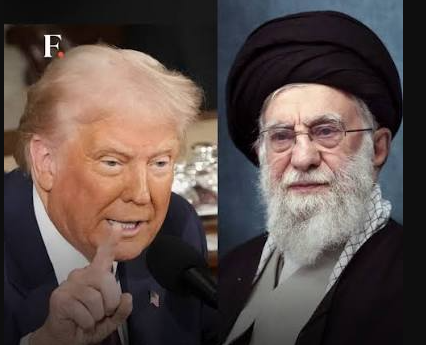
NEW DELHI, July 5: The United States President Donald Trump’s remark that the US could eliminate the entire Iranian leadership in “one shot” but would not do as there would be no one left to negotiate, has drawn sharp reaction from Iran which attacked Washington’s lack of understanding on “civilisation, history and honour.”
Issuing a fresh threat to Iran, Mr Trump had earlier said he could eliminate the remaining leadership of Iran in just “one shot” during the funeral ceremonies of the late Supreme Leader, Ali Khamenei. He, however, said he would not do so since there would be “no one left” to negotiate with.
“They are all there. One shot and we can take them all out, but we are not going to do that because then we would have nobody to negotiate with…They are begging to make a deal,” Trump said. His reference was to the on-going funeral ceremony of Iran’s former Supreme Leader Ali Khamenei which was being attended by all the top leaders of Iran, including the three sons of the deceased leader and joined by millions of mourners.
Mr Trump had also maintained that both sides have decided to take a week off from the talks until the events around Khamenei’s funeral end. In the meantime, Trump said, neither side would attack the other and that the US would adhere to the understanding.
Strongly reacting to the remarks, the Iranian Embassy in Armenia said in a post on X, “People can be killed, but ideals cannot.” “You killed Ayatollah Khamenei, but in reality, you broke a perfume bottle whose scent spread everyplace. You don’t understand these things because you have neither civilization, nor history, nor honour.”
Trump, however, had to admit that he had underestimated the slain Supreme leader’s popularity among the people in his country. He said he was shocked to see the massive crowd in the funeral ceremony stating that he thought the Iranians hated him.
Meanwhile, Ali Khamenei’s week-long funeral began on Saturday in Tehran, with thousands praying for him. Many in the crowd were seen chanting “Our word is one! Revenge! Revenge!” with banners and flags bearing the slain leader’s image. His body will also be taken to Qom, which is one of Iran’s foremost Shiite cities. On July 8, his mortal remains would be taken to Iraq’s Najaf and Karbala following a request from Baghdad’s authorities. On July 9, he would be laid to rest in the north-eastern Iranian city of Mashhad, which was also his birthplace.
Ali Khamenei, who ruled Iran for 36 years, was killed on February 28 – the day the US and Israel began striking Iran, triggering a war in the West Asia. Speculations regarding the timeline of the final ceremonies had been building since March. While the Islamic jurisprudence typically dictates that a dead person be buried as soon as possible, ideally within 24 hours, this was an exception due to a state of war. Iran chose July 4, the 250th anniversary of the creation of the US, to begin Khamenei’s funeral and ending on July 9.
Millions of Iranians have been gathering on the streets, making the funeral one of the closely tracked global events. On Saturday, Iranian Parliament Speaker Mohammad Bagher Ghalibaf and Iranian Foreign Minister Abbas Araghchi were seen crying during the farewell ceremony for the former Iranian Supreme Leader.
To this, Trump expressed surprise over Iranians crying at the funeral, saying he thought people “hated” Khamenei. “Maybe it’s fake tears,” he said. “We beat Venezuela in one day, and we knocked the hell out of Iran, they’re dying to settle. They want to settle so badly. We gave him a week off for a funeral because we’re nice,” he said.
Iran’s Supreme Leader, Mojtaba Khamenei, will not attend the funeral ceremonies of his father, Ali Khamenei, over security concerns, his representative in India has reportedly said. According to Ayatollah Hakim Elahi, the Israeli threats and surveillance risks would make Mojtaba’s public attendance “dangerous.”
Mojtaba also did not attend a memorial service held last week for his wife, Zahra Hadad-Adel, who was killed in the same attack that killed Ali Khamenei. Their teenage son and several other family members also died in the strikes. Mojtaba Khamenei is believed to have been injured when Israel and the United States bombed the Khamenei family compound on February 28.
People close to his inner circle said he suffered significant injuries, including damage to one or both legs, and facial disfigurement. There has been no public image or confirmed sighting of Mojtaba since the attack. According to two members of Iran’s Islamic Revolutionary Guards Corps familiar with the funeral planning, concerns about potential Israeli attempts to assassinate Mojtaba or track his location led his security team to advice against attending public ceremonies.
According to the two IRGC officials, the 56-year-old supreme leader had expressed a desire to attend at least some parts of the ceremonies. They said he hoped to be present at the burial in Mashhad and personally recite prayers for his father.
State television showed three of Ali Khamenei’s sons, Mostafa, Meysam and Masoud Khamenei, standing behind their father’s coffin during funeral prayers at Tehran’s Imam Khomeini Grand Mosalla, a vast religious complex in the Iranian capital. Video from the ceremony showed Masoud Khamenei visibly emotional, wiping away tears with a keffiyeh, the chequered scarf associated in Iran with revolutionary ideals and solidarity with Palestinians.
Iranian President Masoud Pezeshkian, Parliament Speaker Mohammad Bagher Ghalibaf, and Islamic Revolutionary Guard Corps (IRGC) Commander-in-Chief Ahmad Vahidi also joined the prayers.
Ali Khamenei’s coffin, draped in the Iranian flag and topped with a black turban, was placed alongside the coffins of four relatives who were also killed in the February strikes. Among them was an infant granddaughter. On Monday, the coffins are scheduled to be driven through the streets of Tehran before being transported to other cities. Streets have been closed, airspace restrictions imposed and public life disrupted as part of the mourning period.