



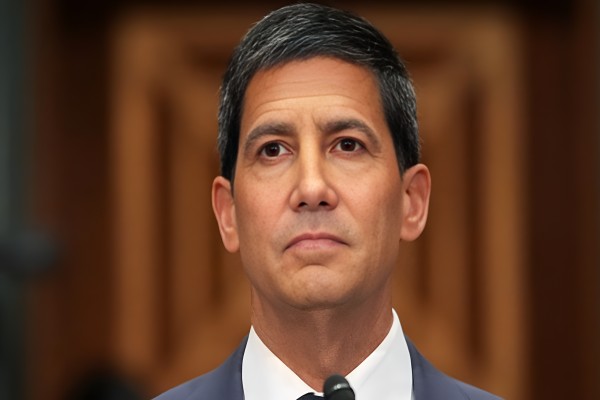

New Delhi: Federal Reserve chief nominee Kevin Warsh said on Tuesday that he has made no commitments to President Trump to lower interest rates, as he tried to assure U.S. senators mulling his confirmation to lead the U.S. central bank that he would act independently of the White House while pursuing broad reforms.
During his confirmation hearing that ranged from Warsh’s calls for “regime change” at the Fed to contentious exchanges over his personal finances, the 56-year-old lawyer and financier said that in his conversations with Trump about the job, “the president never asked me to commit to interest rate cuts … he did not demand it … the president never asked me to commit to any such thing nor would I do so.”
Trump has repeatedly expressed confidence that Warsh would favour lower rates and said he would be disappointed if that did not happen in a CNBC interview just prior to the hearing on Tuesday.
While Warsh is widely expected to be confirmed, the Senate approval timeline remains uncertain. Republican Senator Thom Tillis, who took an unusual turn, indicated he would delay the process until the Trump administration drops an ongoing criminal investigation into current Fed Chair Jerome Powell related to renovations at the central bank’s headquarters.
Such a delay could allow Powell to remain in the role beyond the end of his term on May 15.
No Comment on Powell, Cook Case, 2020 Election
Facing questions from Democratic senators, Warsh declined to comment on several politically sensitive issues, including the investigation into Powell, efforts to remove Fed Governor Lisa Cook, and the outcome of the 2020 presidential election.
He also avoided weighing in on Trump’s calls for interest rates as low as 1%, a level typically not seen outside of efforts to fight an economic downturn, made economic sense at a time when the economy is still growing and unemployment remains relatively low.
He also refused to say that Trump lost the 2020 election, or to comment on whether the Republican president’s call for interest rates to be cut as low as 1%, a level typically not seen outside of efforts to fight an economic downturn, made economic sense at a time when the economy is still growing and unemployment remains relatively low.
Warsh confirmed he would divest more than $100 million in assets in line with ethics requirements but did not disclose details about the holdings or their sale, stating the proceeds would go into “plain vanilla” assets.
But Warsh did give some rough details on what he means by his call for “robust reform” at the U.S. central bank.
He criticized the central bank’s handling of inflation following the COVID-19 pandemic, arguing that policy mistakes continue to affect American households.
He called for updates to how the Fed measures inflation, including the use of advanced data tools, and suggested scaling back public commentary from policymakers about future rate decisions.
“What the Fed needs are reforms to its frameworks and reforms to its communications,” the former Fed governor said, adding that he would rather have “messier” policy meetings with more disagreements to hash out around the table and less public commentary ahead of time.
“Too many Fed officials opine about where interest rates should be. … That is quite unhelpful,” he said, an issue that could put him at odds with the presidents of the Fed’s 12 regional banks who see public communications and frequent appearances now as an integral part of their job.
“The fatal policy errors going back four or five years” are a legacy that families are still working through, Warsh said, arguing that the Fed needed “a new and different inflation framework” that, for example, might exploit advances in large data collection to better gauge inflation trends.
Monetary Policy Independence is Essential
A significant portion of the hearing focused on Warsh’s relationship with Trump and concerns about political influence over monetary policy.
“Presidents tend to be for cutting rates. … President Trump expresses it quite publicly,” said Warsh, who served as a Fed governor from 2006 to 2011. But “I do not believe the operational independence of monetary policy is particularly threatened when elected officials – presidents, senators, or members of the House (of Representatives) – state their views.”
“Monetary policy independence is essential,” Warsh said in a public statement to the committee, which will decide whether to recommend he be confirmed for a seat on the Fed’s Board of Governors as well as a four-year term as head of the central bank.
“Congress tasked the Fed with the mission to ensure price stability, without excuse or equivocation, argument or anguish. Inflation is a choice, and the Fed must take responsibility for it. Low inflation is the Fed’s plot armor,” he added.
Warsh declined to say whether he would or would not support rate cuts in the current economic environment, arguing that such forward-looking statements could undermine effective policymaking.
Warsh has argued that, in principle, interest rates could be lower as advances in artificial intelligence boost productivity. However, many central bankers caution that while such gains may emerge over time, they do not necessarily justify rate cuts in the near term.
The Federal Reserve has failed to meet its 2% inflation target for more than five years—initially due to the economic shock of the pandemic, supply chain disruptions, and heavy fiscal spending, and more recently because of tariffs introduced under the Trump administration and elevated oil prices tied to conflict in the Middle East.
During the hearing, Warsh maintained that Trump-era tariffs were not a driver of inflation, a stance that runs counter to the view held by most Fed policymakers.
(DD News)