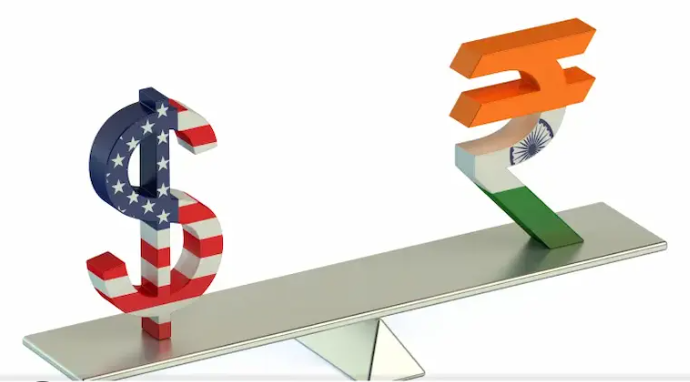
Depreciation: The Indian rupee plummets to 90.21/USD; CEA says ‘don’t worry’







Virendra Pandit
New Delhi: As the Indian rupee breached the 90/ US dollar mark on Wednesday to close at 90.21, India’s Chief Economic Advisor (CEA) V. Anantha Nageswaran said he will not ‘lose sleep’ over it.
Reacting to the rupee hitting a record low, he said he expects it to improve against the US dollar next year.
“It will come back next year. Right now, it’s not hurting our exports or inflation. I am not losing my sleep over it. If it has to depreciate, now probably is the right time,” Nageswaran said on the sidelines of a Confederation of Indian Industry (CII) event in New Delhi, the media reported on Wednesday.
Uncertainty over the India-US trade deal, along with the lack of Reserve Bank of India (RBI) effort to stop the slide in the local unit, put further pressure on the rupee, forex traders were quoted as saying.
It breached the 90-a-dollar level for the first time to settle at a fresh all-time low of 90.21 (provisional) on Wednesday, down 25 paise from its previous close, amid sustained foreign fund outflows and higher crude oil prices.
At the interbank foreign exchange, the rupee opened at 89.96/ US dollar and fell to a record intraday low of 90.30 during the session before closing at a new all-time low of 90.21 (provisional), down 25 paise from its previous close.
On Tuesday, the rupee settled 43 paise down at a lifetime low of 89.96 against the US dollar, largely owing to continued short-covering from speculators and sustained importer demand for the American currency.
The depreciation of rupee comes amid foreign institutional investor (FII) outflows and sustained buying of dollars by banks. The rupee has fallen 5.3 percent year-to-date, putting it on track for its steepest annual decline since 2022, and making it the worst-performing Asian currency.
A decline in the domestic equity markets and the absence of an India-US trade deal put further pressure on the local unit. The US imposed a 50 percent tariff on India starting August 27. While the two nations are engaged in bilateral talks, a trade agreement hasn’t been reached yet.
The rupee’s decline comes even as India reported better-than-expected gross domestic product (GDP) growth for the last two consecutive quarters. India’s GDP grew 8.2 percent in the July-September quarter (Q2) of FY26, following a 7.8 percent rise in the April-June quarter.
Meanwhile, India’s inflation has stayed below the RBI’s targets. Retail inflation cooled to 0.25 percent in October due to record-low food prices and the impact of the Goods and Services Tax (GST) cuts, which eased prices across several sectors.