Book Review: Branding@Mythology by O.P. Srivastava











When I was young, I can recall, my mother once told me that manufacturers advertise because their products are “substandard.” “Have you seen any ad of desi ghee? she asked.
That was long ago when India did not have many good choices for a range of products. After the 1991 economic liberalization, privatization, and globalization, the South Asian country has come a long way and is now the fourth largest economy.
Few observers have seen this transformation from the inside. One of them is O.P. Srivastava, who, as a banker, was among the pioneers of computerization in the Indian banking system. But he wears many more hats. He is an author, filmmaker, and environmentalist. He won the National Film Award for Best Biographical Film (Rajat Kamal) at the 63rd National Film Awards (2015) for his documentary “Life in Metaphors: A Portrait of Girish Kasaravalli, which explored the renowned Kannada filmmaker’s cinematic language, philosophy, and artistic journey.
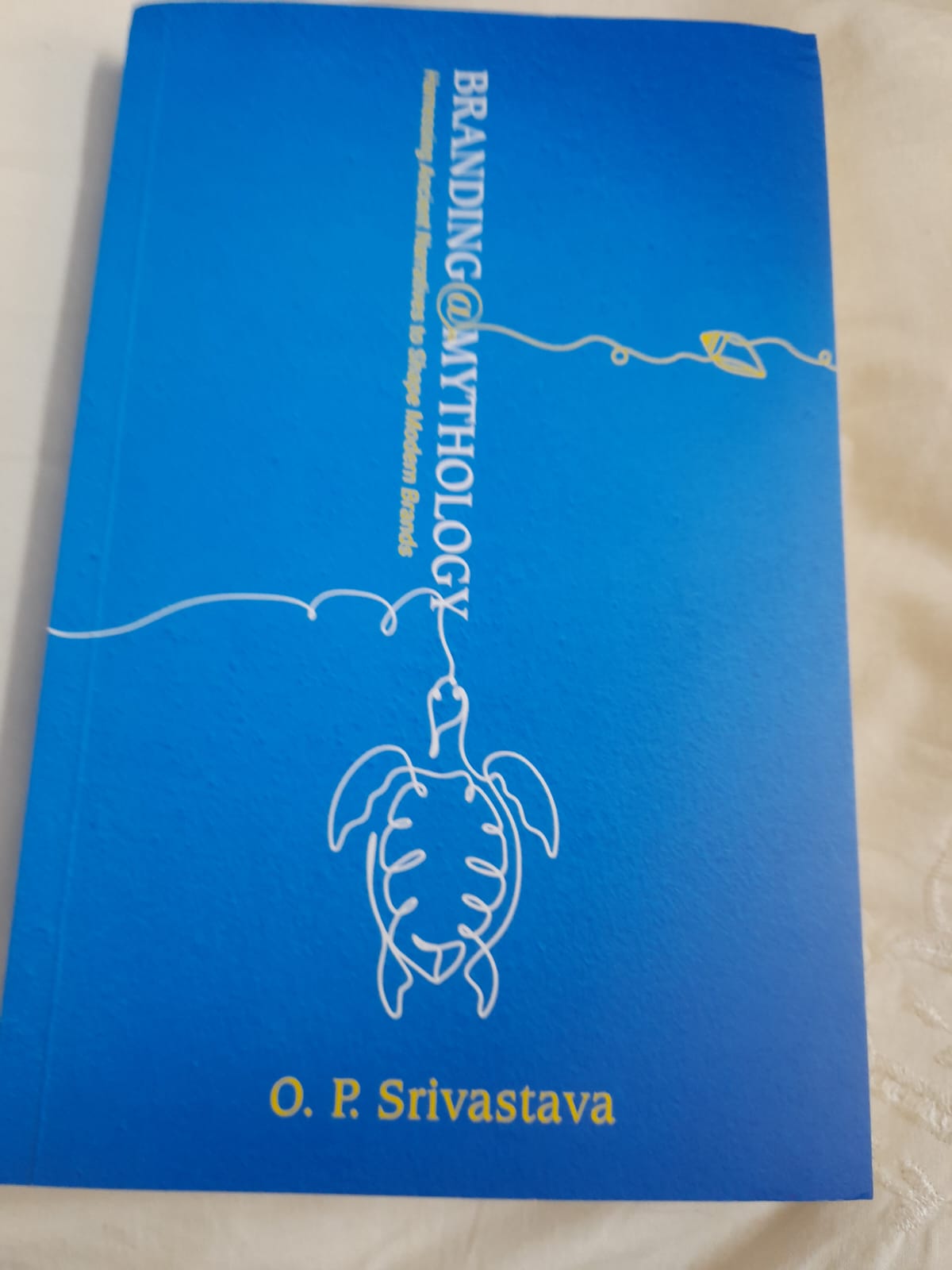
His latest book, Branding@Mythology, shows the vast range of his work. This distinctive and thought-provoking book bridges the worlds of ancient storytelling and modern brand strategy. Rather than treating branding as a purely commercial or visual exercise, he explains it as a cultural and psychological process, rooted in timeless human narratives. His central idea is simple yet powerful: great brands behave like modern myths. They endure because they connect with deep-seated human values, archetypes, and emotions.
Srivastava’s book draws heavily on Indian mythology—especially stories and characters from Hindu epics such as the Ramayana and Mahabharata—to illustrate how archetypes like the hero, the mentor, the rebel, or the ruler shape perception and loyalty. He argues that just as myths once guided societies, today’s brands guide consumer identity, aspiration, and decision. A successful brand, he says, is not just a product or service but a story people would like to believe in.
For instance, what do Nike, Tesla, and Amul have in common with the Mahabharata? A story, a myth, a meaning that transcends time.
Among the book’s biggest strengths is its conceptual depth. Instead of focusing on logos, slogans, or ad campaigns, the author pushes readers to think about meaning, purpose, and cultural resonance. He invites marketers and leaders to ask bigger questions: What does your brand stand for? What values does it embody? What kind of “character” would it be if it were a person? This makes the book particularly appealing to founders, senior leaders, and strategists who are concerned with long-term identity rather than short-term promotion.
Another notable strength is its cultural grounding. By using Indian mythological frameworks, the book offers a refreshing alternative to Western-centric branding theory. Moreover, the archetypes discussed are universal, which allows the insights to travel across cultures. Those familiar with Indian epics may find the parallels especially engaging, while others may appreciate the broader idea that storytelling is central to how humans relate to institutions and symbols.
However, Branding@Mythology is not a conventional “how-to” branding manual. It leans more toward philosophy and narrative thinking than tactical execution. Its tone is reflective and exploratory. Srivastava writes more like a thinker and storyteller than a marketing technician. This makes the book inspiring, but also means it requires patience and openness from the reader.
This book is best understood as a strategic and cultural meditation on what brands really are. It reminds us that people don’t just buy products—they buy meanings, identities, and stories. For readers interested in brand purpose, leadership, and the deeper psychology of markets, it offers a fresh and intellectually rich perspective. It may not tell you exactly how to run your next campaign, but it will certainly change the way you think about what a brand truly represents.
A must-read for businessmen, marketers, brand managers—and buyers!
(Virendra Pandit)