Birth control: Now, IMF rejects Pak’s request for cheaper contraceptives!






Virendra Pandit
New Delhi: Crisis-prone Pakistan now has a fresh problem to handle.
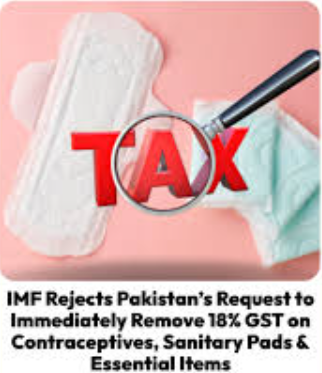
The economy saviour International Monetary Fund (IMF), has rejected Islamabad’s request to waive taxes on condoms, contraceptives, and even sanitary napkins, as part of the government’s efforts at controlling births, the media reported on Thursday.
Pakistani Prime Minister Shehbaz Sharif, hoping for cheaper condoms and other birth-control supplies, was disappointed after the global lender rejected his government’s plea to slash the 18 percent GST on contraceptives.
The IMF insisted that any tax relief on condoms and other birth-control supplies could be considered only during the next fiscal budget.
Pakistan, which is surviving on doles and loans, has to adhere to the 64 terms and conditions laid out by the IMF. The cost of defying could lead to default, isolation, and economic chaos.
Pakistan is leaning, for the 24th time since 1947, on IMF support to steady its faltering economy, drawing on recent loans under a 37-month Extended Fund Facility (EFF) and a Resilience and Sustainability Facility (RSF) aimed at boosting growth, fiscal discipline, and climate resilience. The IMF has already disbursed around USD 3.3 billion, with an additional USD 1.2 billion approved later.
The IMF’s arrangements come with strict conditions, pressing Islamabad to implement reforms in governance, revenue generation, and anti-corruption measures. Pakistan is currently moving ahead with the privatization of its debt-laden flag carrier Pakistan International Airlines (PIA), which is a key condition tied to the lender’s USD 7 billion bailout programme.
Although Pakistan’s population growth rate currently stands at 2.55 percent (one of the highest globally) with nearly six million people added each year, the government cannot properly implement birth control due to IMF restrictions. While this may help Pakistan improve its finances, it could spell trouble for family planning and force people to pay more for basic commodities.
Months after PM Shehbaz Sharif directed Pakistan’s Federal Board of Revenue (FBR) to formally approach the IMF seeking approval to immediately remove the 18 percent GST on contraceptives, the lender made it clear that the proposal was impossible to be honoured, reported Pakistani daily, The New International.
IMF officials said tax exemptions cannot be granted mid-fiscal year under the ongoing programme and can only be discussed during budget preparations for the next fiscal year (2026–27), according to the Geo News.
Scrapping the GST on condoms would alone cost the exchequer PKR 400-600 million, which the IMF found unacceptable amid Pakistan’s struggle to meet its revised revenue target of PKR 13.979 trillion for the current fiscal year.
Pakistani officials also proposed to reduce GST on sanitary pads and baby diapers, but these too were rejected by the IMF. The Washington DC-based lender warned that such reliefs could complicate tax enforcement and encourage smuggling.
Keeping contraceptives expensive may hurt Pakistan’s efforts to control population growth, and place additional strain on public services, especially health and education, in a nearly bankrupt country already struggling with limited resources.
The bidding for PIA is scheduled for December 23, with initial offers focusing on a 75 percent share and an option for buyers to acquire the remaining 25 percent at a premium. Many bidders have signalled that they want complete managerial control with no ongoing government role, prompting the Sharif government to move toward a full sale of its 100 percent stake.
Among the four pre-qualified bidders is the Fauji Fertiliser Company Limited, which is a military-run conglomerate and is linked to all-powerful Army Chief and CDF Asim Munir who wields an indirect influence on the company.
These developments are taking place amid Pakistan’s fragile economy, which continues to rely on IMF support to manage its balance-of-payments pressures and fiscal shortfalls. The IMF has imposed multiple conditions, including revenue reforms and privatisations, to ensure fiscal discipline. However, reviews by the IMF have shown scrutiny over Pakistan’s commitment to structural and tax reforms.
For ordinary Pakistanis, the IMF’s refusal to slash GST on contraceptives means condoms and other birth-control products remain expensive, while family planning efforts take a hit.